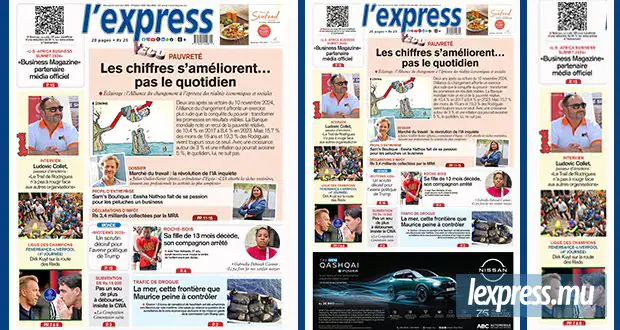
The front page of L'Express on November 4, 2026, highlights several key issues affecting Mauritius. Poverty rates have shown improvement, but the daily lives of citizens have not seen a corresponding change. The newspaper notes that while statistics may indicate progress, the reality on the ground remains challenging for many Mauritians. This dichotomy sets the tone for an in-depth look at the socio-economic conditions in the country.
Another significant focus of the newspaper is the impact of artificial intelligence (AI) on the job market. The article suggests that the revolution brought about by AI has raised concerns among workers and industry experts. As technology continues to advance, there is a growing fear that many jobs will become obsolete, leading to potential widespread unemployment and social unrest. This issue is of particular relevance in Mauritius, where the workforce is increasingly expected to adapt to a rapidly changing economic environment.
In a tragic turn of events, a 13-month-old girl died in Roche-Bois, and her companion was arrested in connection with her death. The incident has shocked the local community and raised questions about safety and justice. The suspect, identified as the child's mother, Gabriella Deborah Casimir, made a heart-wrenching statement, "Li pa finn fer mo zanfan nanye," which translates to "They did not do anything to my child." This case has garnered significant attention and has sparked discussions about violence against children and the need for protective services.
The issue of drug trafficking is also a major concern in Mauritius, with the country struggling to control its vast coastline. The newspaper reports that the sea remains a porous frontier, making it difficult for authorities to curb the flow of illegal substances. This has significant implications for national security and public health, as drug trafficking can lead to increased crime rates and addiction problems.
On a more positive note, Sam's Boutique, owned by Eesha Nathoo, has turned her passion for plush toys into a successful business. This entrepreneurial venture is an inspiring example of how innovation and hard work can lead to success in Mauritius' competitive market. The story highlights the importance of supporting local businesses and encouraging entrepreneurship as a means of driving economic growth.
The Mauritius Revenue Authority (MRA) has collected Rs 3.4 billion in tax declarations, a significant achievement in the country's efforts to boost revenue. This collection is crucial for funding public services and infrastructure projects that benefit the population. The MRA's success in tax collection also underscores the importance of a fair and efficient tax system in supporting national development.
Finally, the Competition Commission has been approached to investigate certain matters, including a subvention of Rs 15,000. The Commission's role in ensuring fair competition and protecting consumers is vital in maintaining a healthy and transparent market. As Mauritius continues to navigate its economic challenges, the work of regulatory bodies like the Competition Commission will be essential in promoting a level playing field for all businesses and consumers.
Key points
- Poverty rates in Mauritius have improved, but daily life remains tough for many citizens.
- The AI revolution is causing concern among workers and industry experts in Mauritius.
- The country continues to struggle with crime and drug trafficking, particularly along its coastline.