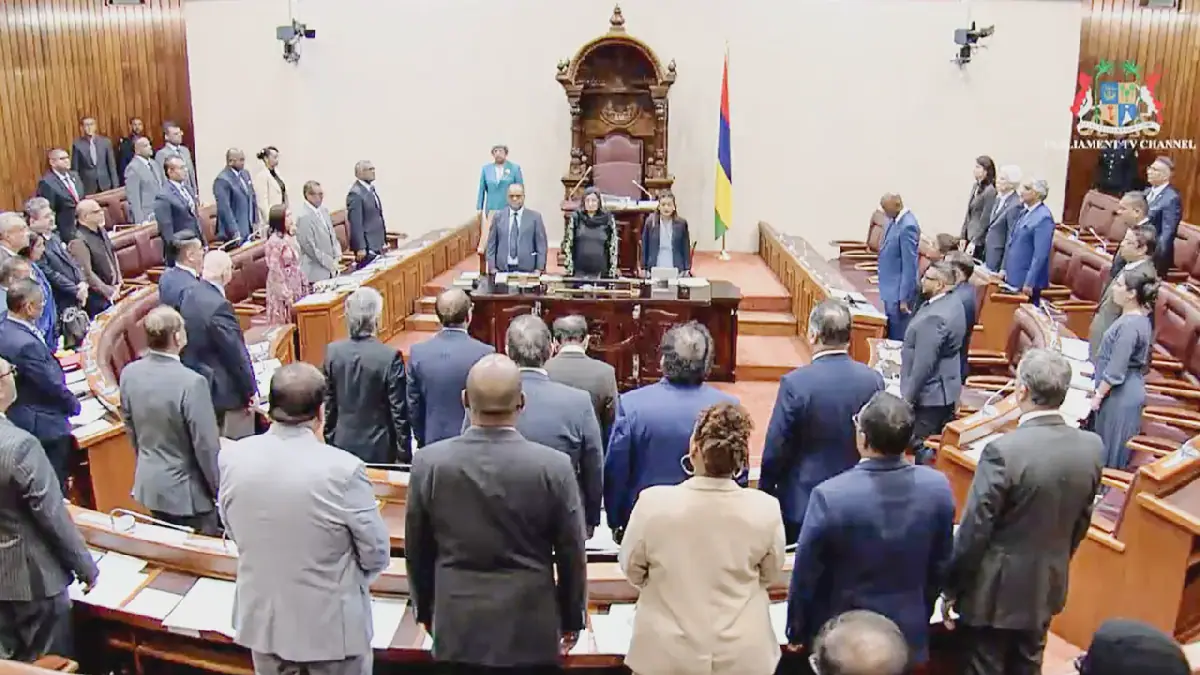
The National Human Rights Commission (NHRC) of Mauritius has released a Position Paper on Language Rights in the National Assembly, dated September 22, 2026. The report follows a complaint filed by Dr. Sarita Boodhoo on August 31, 2026, regarding language rights in parliament. The NHRC did not find discrimination under Article 16 of the Constitution but identified a gap in the country's laws. The commission recommends that the government consider adding language to the list of prohibited grounds for discrimination in Article 16(3) of the Constitution.
The NHRC's recommendations aim to align Mauritius' internal laws with international commitments, specifically the International Covenant on Civil and Political Rights (ICCPR). The ICCPR, ratified by Mauritius, explicitly mentions language as a prohibited ground for discrimination in Articles 2(1) and 26. In contrast, Article 16(3) of the Mauritian Constitution does not include language as a ground for discrimination. The NHRC suggests that the government consider adding language to Article 16(3) or introducing equivalent legislative protection.
The NHRC also examined the rules governing language use in parliament, specifically Articles 33(d) and 49 of the Constitution. Article 33(d) requires parliamentarians to have a sufficient command of English to participate actively in Assembly proceedings. Article 49 establishes English as the official language of the Assembly, while allowing deputies to address the presiding officer in French. The NHRC recommends that the government review whether these provisions are compatible with Article 1 of the Constitution.
The NHRC addressed the issue of introducing Kreol Morisien and other languages in parliamentary proceedings. The commission recommended that the Select Committee examining the introduction of Kreol Morisien consider the scope of its mandate and determine whether it can receive submissions on introducing other Mauritian languages. If the committee's mandate is deemed too narrow, the NHRC suggests amending it to allow for explicit examination of other languages, such as Tamil, Bhojpuri, Hindi, and others.
The NHRC emphasized that any clarification or modification of the Select Committee's mandate should not delay, suspend, or reopen the examination of introducing Kreol Morisien. The commission also noted that the use of ancestral languages in parliament is a matter of public policy and falls within the competence of the state. The NHRC did not conclude that ancestral languages should be admitted in parliamentary proceedings.
The NHRC's Position Paper is a 33-page document that examines the Select Committee's mandate regarding the use of Kreol Morisien in the National Assembly. The report provides an in-depth analysis of the constitutional and international law implications of language rights in Mauritius. The NHRC's recommendations aim to promote equality and non-discrimination in the country.
The NHRC's conclusions have significant implications for language rights in Mauritius. The commission's recommendations will likely inform future discussions on language policy and constitutional reform in the country. The government will need to consider the NHRC's suggestions and determine the best course of action to address the gaps in the country's laws and align them with international standards.
Key points
- The NHRC recommends adding language to Article 16(3) of the Constitution to prohibit discrimination based on language.
- The commission suggests reviewing the English language requirements for parliamentarians under Articles 33(d) and 49 of the Constitution.
- The NHRC emphasizes that introducing Kreol Morisien and other languages in parliamentary proceedings should be considered in a manner that promotes equality and non-discrimination.