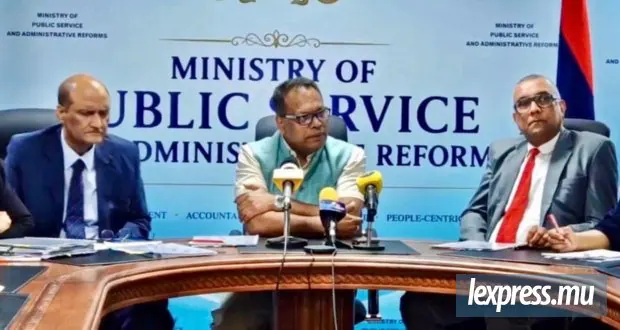
On September 25, 2026, Mauritius' Minister of Public Service and Administrative Reforms, Raj Pentiah, emphasized the importance of adhering to rules and regulations regarding private activities by public servants. Following a meeting with public sector unions, Pentiah clarified that public servants are allowed to engage in private activities, but only with prior authorization and under specific conditions. He referenced the Human Resource Management Manual and the Code of Ethics for Public Officers as guidelines.
According to Pentiah, public servants may be granted exceptional permission to engage in private activities outside of work hours, provided they do not conflict with their official duties. He stressed that activities must not utilize government resources or information for personal gain and must not involve the use of public property. The minister also mentioned that additional authorizations may be required for commercial or professional activities.
Pentiah highlighted a 2017 correspondence from the Independent Commission Against Corruption, which drew attention to instances where public servants failed to respect procedures and conditions surrounding private activities. He emphasized that this issue should be addressed through administrative procedures and official documents, rather than on a case-by-case basis.
The minister explained his role in reviewing certain dossiers, stating that he has requested that administrative decisions be accompanied by justifying documents. He asserted that if a decision is sound, it should be supported by documentation. Pentiah emphasized that he does not intend to interfere with administrative decisions but, as the responsible minister, he must ensure that procedures are followed.
Jane Ragoo, Secretary of the Confederation of Public and Private Sector Workers, shares similar views, suggesting that public servants should be allowed to engage in additional activities outside of work hours, provided they adhere to specific rules, similar to those in the private sector. Ragoo proposed three conditions: the activity must be outside normal working hours, not compete with the primary job, and not affect performance.
Ragoo noted that economic realities must be considered, as salaries are often insufficient to cover living expenses. She raised concerns about fairness, citing the example of a parliamentarian being allowed to practice law while a low-income public servant is restricted from engaging in a side business.
The modernization of the administration remains a priority for the ministry, with plans to digitize administrative documents and launch an Electronic Scheme of Service. Minister Pentiah aims to implement a system for electronic processing of citizen complaints with a set response time, emphasizing that reforming the public service requires clear rules and a more efficient and accountable administration.
Key points
- Public servants in Mauritius are allowed to engage in private activities but must obtain prior authorization and adhere to specific conditions.
- The rules aim to prevent conflicts of interest, misuse of government resources, and ensure that public servants do not engage in activities that compromise their official duties.
- The minister and union representatives emphasize the need for clear rules and consideration of economic realities to ensure fairness and accountability in the public service.