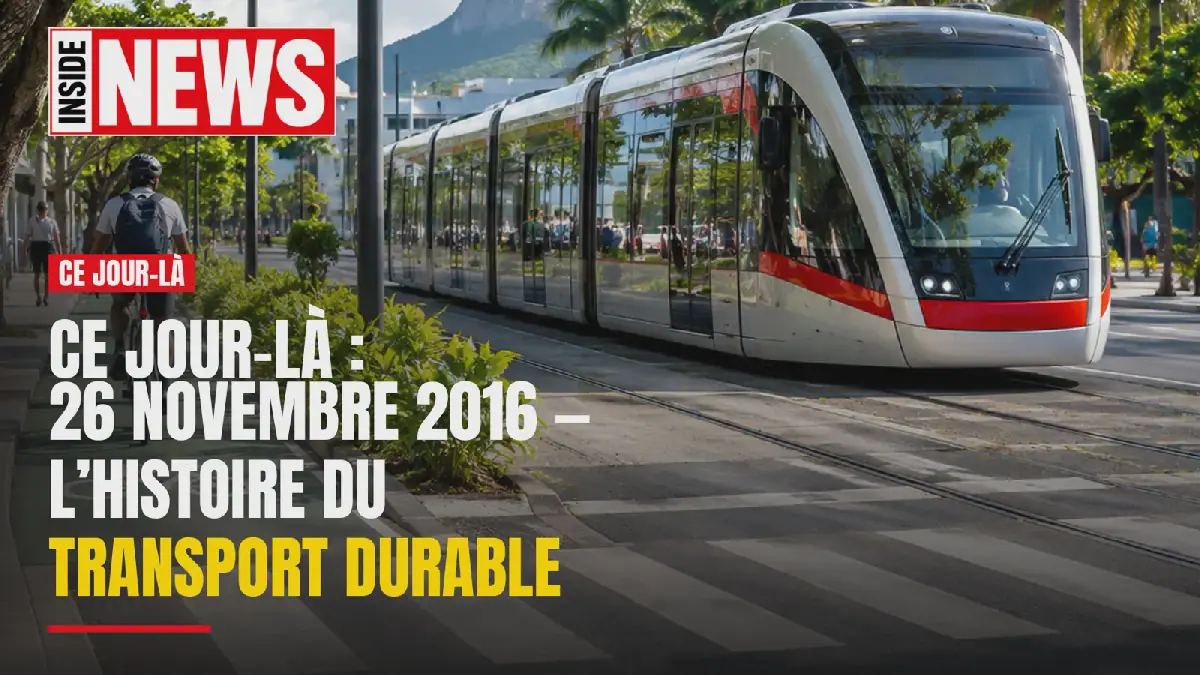
The first UN global conference on sustainable transport took place on November 26, 2016, in Ashgabat, Turkmenistan. This conference brought together governments, international organizations, the private sector, and civil society to rethink transportation. It emphasized that transport is not just about infrastructure but also about access to employment, education, healthcare, and trade. This perspective is crucial for island nations like Mauritius, where mobility depends on domestic networks, maritime and air links, and energy availability.
Ten years after the conference, November 26 has become an international day of mobilization around mobility. In 2023, the UN General Assembly established the World Sustainable Transport Day through resolution 77/286. The year 2026 marks the beginning of the UN Decade for Sustainable Transport, which will run until 2035. This decade-long initiative aims to improve transportation systems globally, focusing on sustainability and accessibility.
In Mauritius, improving public transport, ensuring pedestrian and motorcyclist safety, and managing daily commutes are closely linked challenges. The quality of a transport network is not solely measured by speed; regularity, connections, fares, and accessibility are also important. Recently, an official review of the penalty point system highlighted the need to prioritize road safety in these discussions. The November 26 day provides a framework for evaluating the concrete results of mobility policies.
The 2016 conference was a turning point in how the world views transportation. It encouraged participants to consider the broader social and economic impacts of transport systems. For Mauritius, this means focusing on developing public transport, enhancing road safety, and ensuring that transportation systems support economic growth and social well-being.
The World Sustainable Transport Day serves as a reminder of the progress made and the challenges ahead. In Mauritius and other countries, there is a growing recognition of the need for sustainable transport solutions that balance economic development with environmental protection and social equity. This involves investing in infrastructure, promoting public transport, and implementing policies that encourage sustainable mobility.
As the world looks to the future, the experience of the past decade provides valuable lessons. The shift towards sustainable transport is not just about environmental concerns but also about creating more livable cities and improving the quality of life for all citizens. In Mauritius, as in many other places, the journey towards sustainable transport is ongoing, with a focus on creating a more accessible, affordable, and reliable transport system for everyone.
The commemoration of World Sustainable Transport Day in Mauritius and globally underscores the importance of continued commitment and action towards sustainable transport. It highlights the need for collaboration among governments, the private sector, and civil society to address the challenges and opportunities in this sector. By working together, it is possible to create a future where transportation is sustainable, equitable, and accessible to all.
Key points
- The UN's World Sustainable Transport Day, observed on November 26, highlights progress in making transportation more accessible, affordable, and reliable worldwide.
- The day marks the beginning of the UN Decade for Sustainable Transport, which will run from 2026 to 2035.
- In Mauritius, improving public transport, ensuring road safety, and managing daily commutes are key challenges in the push for sustainable mobility.