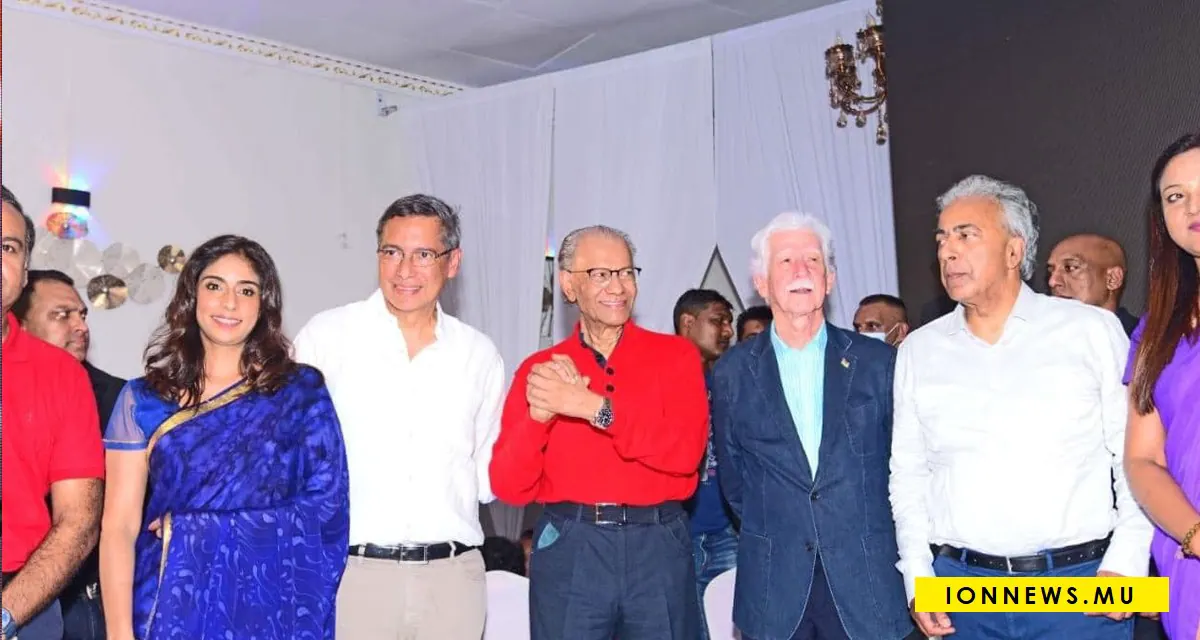
The dispute over the Chagos archipelago has sparked a heated debate among three of Mauritius' most experienced leaders. Former Prime Minister Navinchandra Ramgoolam, Paul Bérenger, leader of the FMP, and Xavier-Luc Duval, leader of the PMSD, have shared their insights on the matter. Each leader brings a unique perspective, shaped by their extensive experience in Mauritian politics. Their divergent views have significant implications for the country's claim to sovereignty over the archipelago.
Ramgoolam advocates for a cautious approach, emphasizing the importance of "diplomatie tranquille" in resolving the dispute. He cites his experience as a reason for not attending the United Nations General Assembly, where he would have faced pressure to respond publicly to US President Donald Trump's stance on the issue. Instead, Ramgoolam plans to pursue the matter in London, meeting with Jonathan Powell, the UK's National Security Adviser. He believes that sensitive issues like this require discreet handling.
In contrast, Bérenger takes a more assertive stance, arguing that Mauritius should not be excluded from discussions between London and Washington on the Chagos archipelago. He criticizes Ramgoolam for not delivering a speech at the UN, particularly during a critical moment in the dispute. Bérenger believes that speaking out strongly is essential in this situation, and that Ramgoolam's approach is misguided. He also questions Ramgoolam's decision to seek an audience with Powell rather than the UK Prime Minister.
Duval, meanwhile, identifies two individuals whom he holds responsible for the current impasse: the government and Bérenger. According to Duval, the government's "arrogance" led it to challenge the UK and US, requesting additional financing and changing lawyers, which ultimately jeopardized the agreement. Duval credits former Prime Minister Anerood Jugnauth with securing the initial agreement. He also implicates Bérenger in supporting the government's approach, which Duval believes has harmed the country.
The disagreement among these experienced leaders has not shed light on a resolution to the Chagos dispute. The accord signed in 2025, which would have secured Mauritius' sovereignty over the archipelago, remains suspended. The UK is re-examining the agreement due to a lack of US support, and the financial implications for Mauritius are significant. The suspended agreement reportedly includes annual payments of Rs 10 billion over 99 years.
The financial stakes are high, with Mauritius potentially losing substantial revenue due to the suspended agreement. The country's claim to sovereignty over the Chagos archipelago remains unresolved, with the UK maintaining control for the time being. The leaders' debate highlights the complexities and challenges involved in resolving this long-standing dispute.
Ultimately, the disagreement among Ramgoolam, Bérenger, and Duval underscores the difficulties in finding a unified approach to the Chagos issue. As the situation continues to unfold, the Mauritian government must navigate the complexities of international diplomacy to secure its claim to the archipelago. The consequences of their actions will have far-reaching implications for the country's future.
Key points
- The Mauritian leaders' disagreement on the Chagos strategy has significant implications for the country's claim to sovereignty over the archipelago.
- The suspended agreement reportedly includes annual payments of Rs 10 billion over 99 years.
- The UK is re-examining the agreement due to a lack of US support.