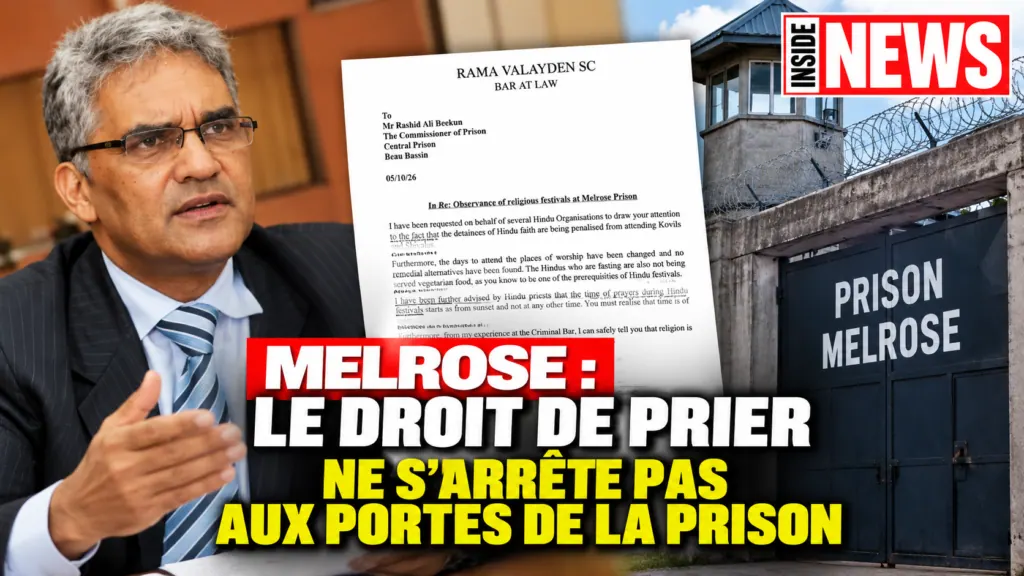
A prominent lawyer in Mauritius has written to the Commissioner of Prisons, Rashid Ali Beekun, expressing concerns over the treatment of Hindu inmates at Melrose prison. Rama Valayden's letter, dated October 5, 2026, claims that changes to worship days and restricted access to kovils and shivalas are affecting the prisoners' right to practice their faith. The lawyer, who represents several Hindu organizations, says that the restrictions have been implemented without providing alternative solutions.
According to Valayden, the restrictions on worship days have not been accompanied by alternative arrangements, and the timing of prayer sessions is also a concern. Hindu priests have informed him that the sunset is crucial for certain celebrations, but the letter does not specify which festivals are affected or the number of inmates impacted. The lawyer's intervention highlights the need for prison authorities to balance security concerns with the need to respect inmates' religious rights.
The Prisons Regulations, as published by the Mauritius Prison Service, already provide for the accommodation of prisoners' religious needs. Rule 19 of the regulations stipulates that prisoners should be allowed to observe their faith, including exemptions from work on recognized religious days and access to places of worship within the prison. Additionally, the rule allows for prisoners to observe fasts, provided they do not compromise order, discipline, and security.
The regulations also provide for prisoners to receive adequate, nutritious, and varied meals. While there is no explicit provision for a vegetarian menu on religious occasions, the rules require that meals be served in sufficient quantity and quality. The prison authorities must clarify the dietary arrangements in place at Melrose and how they cater to prisoners observing religious fasts.
The issue of prisoners' religious rights is also protected by the Constitution of Mauritius. Article 11 guarantees the right to freedom of conscience, including the practice of one's faith. While restrictions on this right are permissible, they must be justified and reasonable in a democratic society. The prison authorities must demonstrate that any restrictions on prisoners' religious practices are necessary and proportionate.
Valayden's letter emphasizes the importance of respecting prisoners' religious rights, not only for their individual benefit but also for their rehabilitation. He argues that allowing prisoners to practice their faith can contribute to their reintegration into society. However, the lawyer also stresses that respect for prisoners' conscience should not depend on its utility for rehabilitation, but rather on the inherent value of individual freedom.
The prison authorities have yet to respond to Valayden's concerns, but it is clear that the issue requires a nuanced and balanced approach. The Commissioner of Prisons must investigate the allegations and provide a clear explanation for any restrictions on prisoners' religious practices. Ultimately, the goal is to ensure that prisoners' rights are respected while maintaining order and security within the prison.
Key points
- - The lawyer Rama Valayden has raised concerns over alleged restrictions on Hindu inmates' religious practices at Melrose prison in Mauritius. - The Prisons Regulations in Mauritius provide for the accommodation of prisoners' religious needs, including exemptions from work on recognized religious days and access to places of worship. - The issue of prisoners' religious rights is protected by the Constitution of Mauritius, which guarantees the right to freedom of conscience.