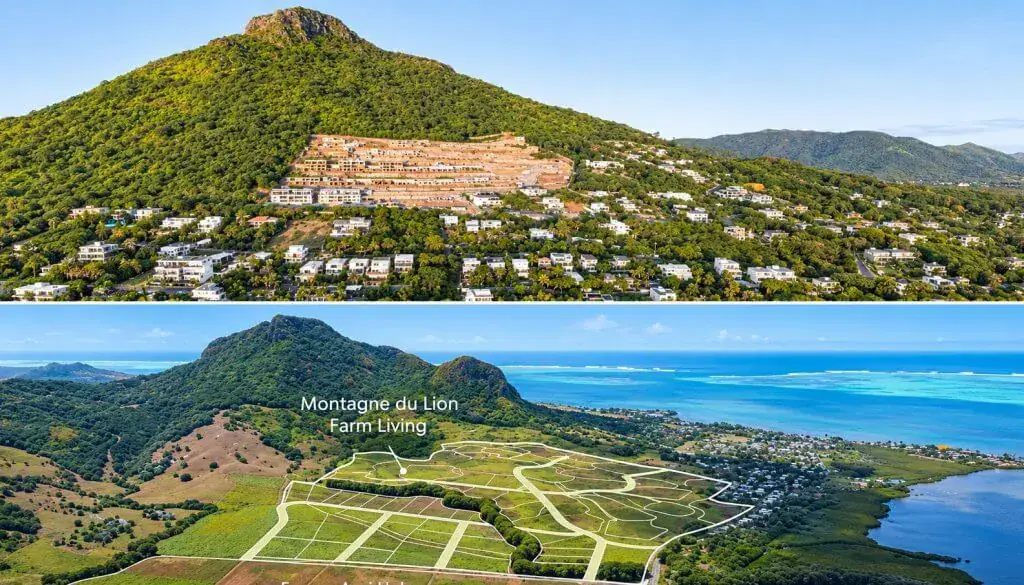
The Mauritian government is under scrutiny for its handling of land development, with concerns raised about the rapid degradation of natural areas. In a recent parliamentary session, Joanna Bérenger asked the environment minister about the extent of land covered by impermeable surfaces such as concrete and bitumen. The minister's response was that no data or studies were available on this issue, sparking concerns about the effectiveness of environmental protection measures.
The lack of data on land degradation has been criticized by environmental advocates, who argue that it hinders efforts to develop sustainable development strategies. Bérenger expressed frustration with the minister's response, stating that the government needs to take concrete actions to protect the environment. The issue is particularly pressing in Mauritius, where development projects are increasingly encroaching on mountains and natural areas.
The development of residential projects on mountainous terrain has raised concerns about soil erosion and landslides. In 2022 and 2023, several landslides occurred in areas such as Corps-de-Garde, Le Pouce, and Le Morne. Environmental impact assessments (EIAs) have been conducted for some projects, but concerns remain about the adequacy of these assessments in protecting sensitive ecosystems.
The example of Tamarin illustrates the concerns about unchecked development. A recent project, Legend Hill, involved the destruction of part of a mountain to make way for luxury villas and apartments. Residents expressed concerns about the impact on their safety and the environment, but the project proceeded despite their objections.
The issue of land degradation is closely tied to the country's economic model, which has been criticized for prioritizing rent-seeking over sustainable development. In the first half of 2026, 77% of foreign investment in Mauritius went into real estate, with many projects catering to wealthy foreigners. This has driven up property prices, making it increasingly difficult for locals to afford land or housing.
The consequences of this economic model are stark. Between 2019 and 2024, house prices increased by 80%, while wages rose by only 20%. As a result, many Mauritians are being priced out of the housing market, with foreigners accounting for 91% of purchases under programs such as IRS, PDS, and Smart City.
Environmental advocates are calling for the government to take urgent action to address land degradation and promote sustainable development. This includes developing a national strategy to limit land degradation, increasing transparency and accountability in the development process, and prioritizing the needs of local communities over those of foreign investors.
Key points
- The Mauritian government lacks data on land degradation, hindering efforts to develop effective environmental protection measures.
- Development projects are increasingly encroaching on mountains and natural areas, with concerns raised about soil erosion and landslides.
- The country's economic model prioritizes rent-seeking over sustainable development, driving up property prices and pricing locals out of the housing market.