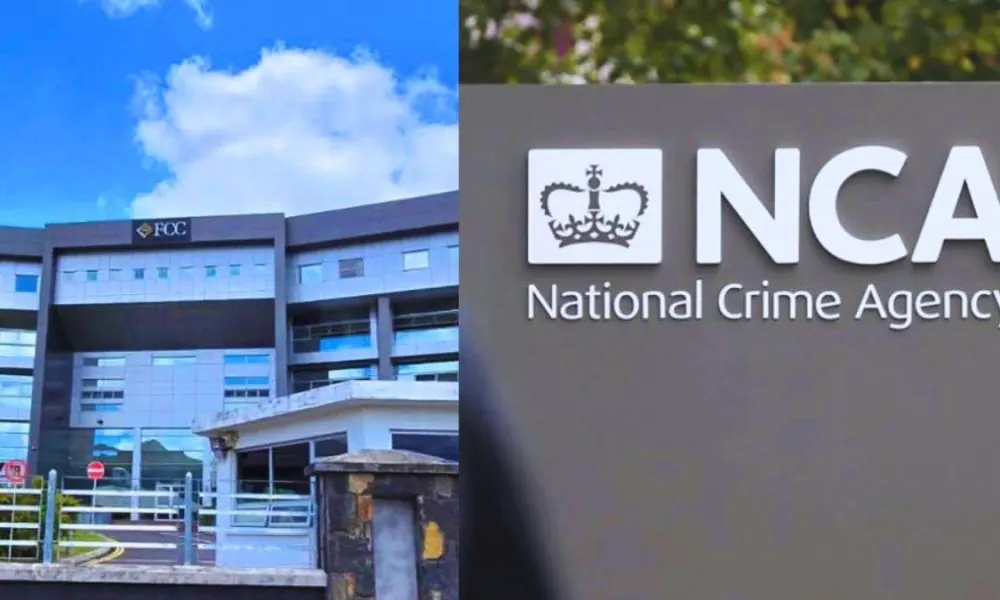
The government of Mauritius is set to introduce a new National Crime Agency (NCA), replacing the existing Financial Crimes Commission (FCC). This move marks a significant shift from a specialized financial crimes watchdog to a comprehensive major crime agency. The NCA will have a broader mandate to tackle cybercrime, complex serious and organised crime, and will have the power to take over police investigations. The new agency will serve as the lead investigative agency across three core pillars: financial crime, cybercrime, and complex, serious and organised crime.
The NCA will have a different command structure and constitutional protections compared to the FCC. The agency will be led by a Director-General (DG) who will hold administrative and operational control. The DG will be supported by a Governance Advisory Board for strategy and organization, and a Senior Leadership Board for daily operations, resource allocation, and opening investigations. To guarantee independence, a Constitution Amendment Bill will anchor the office of the DG directly into the Constitution, removing subjection to any outside authority.
The NCA will operate across nine distinct divisions, including Anti-Money Laundering and Anti-Corruption, Cybercrime, Complex, Serious and Organised Crime, Asset Recovery and Unexplained Wealth, Intelligence, Legal and Advisory, Education and Preventive, Management and Human Resources, and Internal Affairs. The agency will also house a Digital Forensic Laboratory for extracting, analyzing, and preserving digital media from computers and phones. A National Flagging Database will be established to utilize overt and covert “markers” on individuals, properties, and vehicles to prevent duplicate parallel probes.
The NCA will inherit and expand upon existing powers like searches, seizures, arrests, and financial tracking. The agency will also introduce enhanced digital legal mechanisms such as production orders, traffic data conservation, real-time data collection, content data interception, and digital forensics. Operationally, the NCA can refer files back to the police, conduct joint investigations, or entirely take over cases from police or other investigative bodies.
The NCA will have reciprocal mandatory reporting duties, forcing a wide net of public officials to disclose improprieties when encountering suspected NCA-level crimes. Continuity remains strong regarding the Director of Public Prosecutions (DPP); no prosecutions under the framework can proceed without DPP consent. Complementary new legislation introduces the Criminal Justice (Offenders Assisting Investigations and Prosecutions) Bill, empowering the DPP to issue exceptional “Immunity Notices,” “Restricted-use Undertakings,” or “Sentencing Reduction Agreements” for cooperating offenders.
The NCA will have an autonomous Asset Recovery and Unexplained Wealth Act, feeding a new NCA Recovered Assets Fund used for victim compensation and rewards. Internally, an Internal Affairs Division will monitor the assets, declarations, and potential unexplained wealth of agency officers and their families, reporting directly to the Independent Advisory Panel if the DG or Deputy DG is scrutinized. The incumbent head of the National Crime Interim Agency will automatically transition to become the NCA’s first DG, while the current FCC DG will automatically become the Deputy DG.
The 2023 FCC Act will be abrogated, but ongoing investigations, active prosecutions, assets, and eligible staff will seamlessly transfer to the NCA. The transition aims to ensure a structural evolution defined not as a simple rebranding, but as a scale-up to a robust national major crime fighting force. The NCA is expected to play a critical role in tackling major crimes in Mauritius, and its introduction is seen as a significant step towards strengthening the country's law enforcement capabilities.
Key points
- The NCA will have a broader mandate to tackle cybercrime, complex serious and organised crime, and will have the power to take over police investigations.
- The agency will be led by a Director-General (DG) who will hold administrative and operational control, and will be supported by a Governance Advisory Board and a Senior Leadership Board.
- The NCA will operate across nine distinct divisions, including Anti-Money Laundering and Anti-Corruption, Cybercrime, and Asset Recovery and Unexplained Wealth.