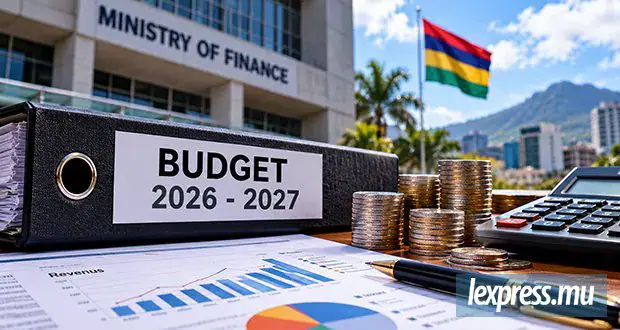
The Mauritian government is projecting a significant increase in tax revenue from companies, with a target of Rs 58.9 billion for the 2026-2027 financial year. This projection comes as the government considers introducing a new temporary solidarity tax on large enterprises to fund national priorities. The proposal was raised by Deputy Ram Etwareea during a recent parliamentary session.
Prime Minister and Minister of Finance Navinchandra Ramgoolam addressed the issue, defending existing fiscal measures while cautioning against excessive taxation. He noted that the past two budgets had already required the private sector to make additional efforts. A Fair Share Contribution of up to 5% of taxable income was introduced for three years for local companies with an annual taxable income exceeding Rs 24 million.
The government has also implemented an additional 2.5% contribution on taxable income from domestic activities in the banking sector. Furthermore, the cap on the special tax on banks has been lifted. According to Ramgoolam, corporate tax revenue reached Rs 49.2 billion in the 2025-2026 financial year, excluding Corporate Social Responsibility contributions, with Rs 13.7 billion coming from banks.
The Fair Share and Additional Fair Share contributions generated an additional Rs 4.3 billion. For the 2026-2027 financial year, the government expects to collect Rs 2.7 billion in additional revenue, including Rs 1.5 billion from the Corporate Climate Responsibility Levy, Rs 700 million from the lifted cap on the special tax on banks, and Rs 500 million from an increase in tax on companies exporting live animals.
The Prime Minister warned that excessive taxation could harm the competitiveness of companies, particularly in the banking and financial sectors, and encourage the relocation of certain activities. He also highlighted the introduction of an alternative minimum tax targeting hotels, insurance companies, and telecommunications firms to ensure a minimum tax rate of 10% on adjusted accounting profits.
A high-level committee, chaired by the Financial Secretary, has been established to review the Mauritian tax system with the aim of improving its fairness, efficiency, and international competitiveness. The committee's recommendations are expected to shape the country's future tax policies.
The government's efforts to balance tax revenue with economic competitiveness will be crucial in determining the country's economic growth and development. The outcome of the proposed temporary solidarity tax on large enterprises and the review of the tax system will be closely watched by businesses and stakeholders.
Key points
- The Mauritian government expects to collect Rs 58.9 billion in tax revenue from companies in 2026-2027.
- A new temporary solidarity tax on large enterprises is being considered to fund national priorities.
- The government aims to improve the fairness, efficiency, and international competitiveness of the tax system.