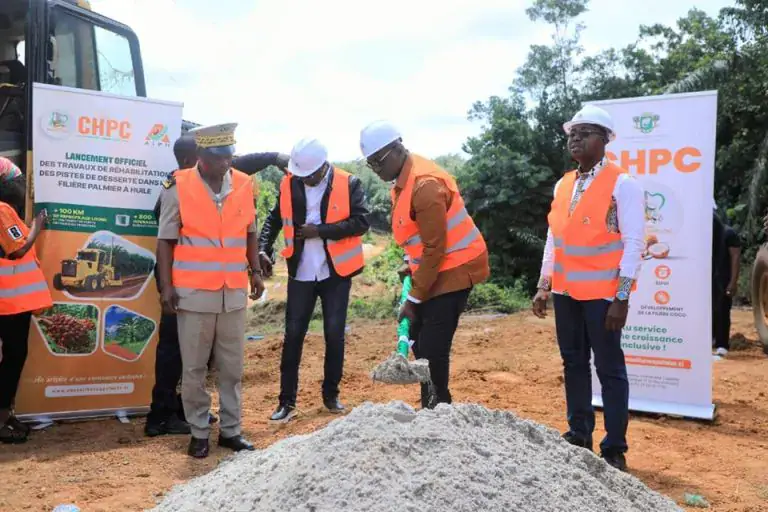
The Conseil hévéa-palmier à huile-coco (CHPC) has initiated a rural road rehabilitation project in Tabou, Côte d'Ivoire, to enhance access to palm oil production areas. The project aims to facilitate the evacuation of harvests and limit revenue losses for farmers, particularly during the rainy season. The program includes the construction of 800 crossing structures and the reprofiling of 100 km of roads in palm oil production areas in 2026.
The project will focus on 52 km of heavy reprofiling and the construction of 336 crossing structures in the San Pedro and Gboklê areas. In Tabou, the work includes the installation of 217 buses of different formats, the construction of seven dalots, and the treatment of critical points on several routes. The CHPC's director-general, Edmond Coulibaly, emphasized that the goal is to achieve "zero cut roads," citing the challenges posed by heavy rainfall and numerous watercourses in the production basins.
The program plans to reprofile 2,000 km of roads and heavily treat 500 km of linear over the 2026-2027 period. CHPC President Anoblé Félix noted that the rehabilitation of access roads to plantations will enable producers to transport their harvests more easily to transformation units. The project is part of the Interim Program for the Development of Palm Oil and Coconut, launched by Côte d'Ivoire's Minister of Agriculture, Bruno Nabagné Koné, on July 31.
Local cooperative representatives have welcomed the project, citing the difficulties caused by degraded roads, including delayed evacuation of palm oil and revenue losses for farmer families. Tako Raymond, representing the palm oil cooperatives in Tabou, expressed gratitude for the project's launch, which comes after several years of maintenance challenges.
Planters have also expressed relief, citing the losses incurred due to impassable roads and additional expenses for vehicle repairs. Atté Adja David, a beneficiary planter, welcomed the project, highlighting its potential to improve their livelihoods. The project's success is expected to have a positive impact on the local agricultural sector.
The Secretary-General of Tabou Prefecture, Zoumana Diomandé, encouraged local populations to take ownership of the project and support the companies responsible for its execution, given its anticipated benefits for various agricultural sectors in the department. The project's infrastructure component aims to strengthen the competitiveness and sustainability of the palm oil and coconut sectors.
The CHPC's efforts to improve rural infrastructure are expected to have a significant impact on the palm oil sector in Côte d'Ivoire. With the project's implementation, local farmers and producers are likely to experience improved access to markets, reduced transportation costs, and increased revenue. The project's success will be closely monitored, and its outcomes will be evaluated in the coming years.
Key points
- The CHPC's rural road rehabilitation project aims to improve access to palm oil production areas and reduce losses for local farmers.
- The project includes the construction of 800 crossing structures and the reprofiling of 100 km of roads in palm oil production areas in 2026.
- The program plans to reprofile 2,000 km of roads and heavily treat 500 km of linear over the 2026-2027 period.