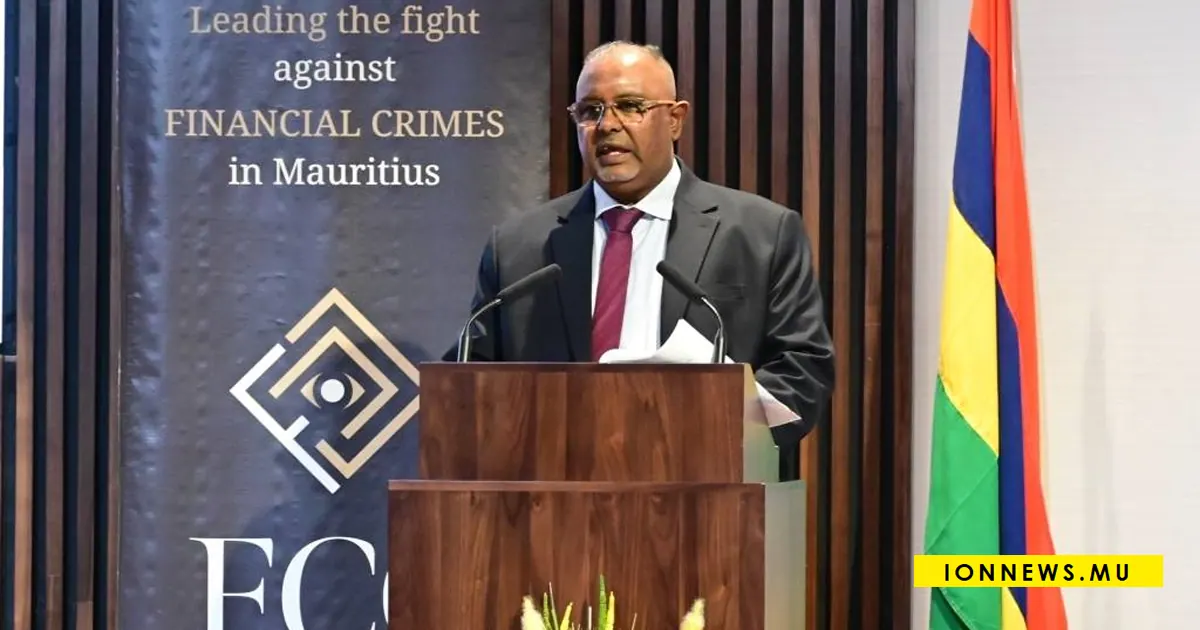
The Financial Crimes Commission (FCC) of Mauritius held its first-ever press conference on September 8, where Director General Sanjay Dawoodarry presented a robust defense of the institution, emphasizing its commitment to accountability and determination in pursuing corruption cases. The event was well-attended, and the tone was assertive, with Dawoodarry stating that the FCC would not be intimidated. This move was seen as an attempt to regain public trust amid mounting criticism.
However, subsequent developments have raised questions about the FCC's consistency in handling sensitive cases. The case of the audio recording allegedly featuring a voice close to the Prime Minister's Office, known as the Ravatomanga scandal, has sparked concerns. A whistleblower who provided the recording was arrested in 2025, while the individual in question has not been summoned by the FCC for questioning. This has led to speculation about whether the FCC's assertiveness applies uniformly across all cases.
The issue of accountability has also been raised, with Dawoodarry acknowledging that the FCC is not infallible and has two levels of oversight: the commission itself and a parliamentary committee. Nevertheless, questions remain about the extent of accountability, particularly regarding the appointment of the director general. The FCC's handling of high-profile cases, including those involving Rs 55 billion in secured assets, has been touted as a success, but some episodes require further clarification.
One such case involves the declaration of assets by Minister Shakeel Mohamed, which was absent from the website due to a technical issue confirmed by an external audit. Additionally, a "diary" circulating online, linked to the Reward Money case, has raised questions about the FCC's investigation. Dawoodarry has suggested that a coordinated campaign against the FCC may be underway, but this explanation has not addressed concerns about the handling of sensitive cases and the director general's appointment.
The appointment of the director general has become a contentious issue, with Paul Bérenger, former Deputy Prime Minister and leader of the FMP, promising to reveal more about the circumstances surrounding Dawoodarry's appointment. Bérenger compared the appointment process to a proposed interim arrangement for the National Crime Agency, suggesting that the FCC's case is even more problematic. He has promised to disclose more information about the director general's appointment in the future.
The FCC's press conference was intended to address criticism, but it may have raised more questions than it answered. The institution's credibility is at stake, and its ability to convince the public will depend on its response to concerns about its handling of high-profile cases and the appointment of its director general. The FCC's commitment to accountability and transparency will be closely watched in the coming days.
As the FCC continues to investigate high-profile cases, including those related to Mamy Ravatomanga and State Capture, the scrutiny surrounding its operations is likely to intensify. The institution's leadership and appointment processes will come under closer examination, and its response to these challenges will be crucial in determining its effectiveness in fighting corruption in Mauritius.
Key points
- The Financial Crimes Commission's handling of high-profile cases and the appointment of its director general have raised concerns about its accountability and transparency.
- The institution's credibility is at stake, and its ability to convince the public will depend on its response to these concerns.
- The FCC's commitment to accountability and transparency will be closely watched in the coming days as it continues to investigate high-profile cases.