The water level in Mauritius' primary reservoir, Mare-aux-Vacoas, is expected to decline to 20% capacity by the end of November, prompting concerns about the island nation's water supply. The government attributes the shortage to a lack of rainfall, but Professor Prem Saddul, a hydrogeology consultant, offers a different perspective. He notes that the reservoir's capacity is 25.89 cubic meters and that it regularly falls below 45% during this time of year.
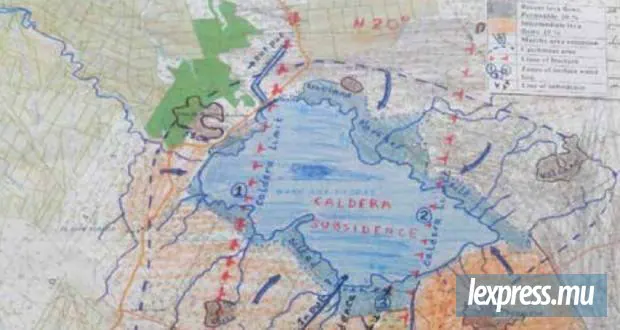
Professor Saddul points out that the Mare-aux-Vacoas reservoir has a history of low water levels, with the lowest recorded level being 29% in November 2011. He explains that the reservoir is a 48-meter-deep depression covering 13 square kilometers, formed by the collapse of a caldera 5.5 million years ago. The site is bordered by three or four volcanic structures, which may contribute to water loss.
According to Professor Saddul, a significant issue with Mare-aux-Vacoas is the N20 fracture, which runs through the reservoir's floor and may cause water to seep into an underground aquifer. This aquifer feeds the Tamarin River and forms wetlands in the south. Additionally, water may be lost through a subsidence line south of the reservoir, where marshes are expanding.
Professor Saddul advocates for increasing Mauritius' water storage capacity, suggesting the construction of mini-reservoirs along rivers and water towers in various regions. He estimates that over 100 cubic meters of surface water and 10 cubic meters of groundwater are lost to the sea annually. To address this, he recommends building mini-reservoirs with capacities of 5,000 to 6,000 cubic meters.
The Central Water Authority (CWA) is also facing challenges, with Professor Saddul stating that it loses Rs 450 million monthly due to water treatment losses and leaks. He attributes the high rate of leaks, up to 62% in some areas, to aging pipes. Replacing these pipes is essential to conserve potable water.
Professor Saddul disagrees with the government's plan to implement desalination, citing concerns about its economic and ecological viability. He argues that the process, which uses fossil fuels and produces highly saline wastewater, could harm Mauritius' sensitive marine ecosystems. Instead, he emphasizes the need for education and awareness campaigns to encourage responsible water usage.
In the short term, Professor Saddul urges consumers to collaborate in conserving water, as the current situation is challenging. He notes that Mauritians consume an average of 174 liters of potable water daily, exceeding usage in Singapore and Europe. He advocates for proactive measures, such as planning a large-scale reforestation program around Mare-aux-Vacoas and addressing water conservation from April or May, when reserves are at their maximum.
Key points
- Mauritius' main reservoir may drop to 20% capacity by November due to water loss and lack of rainfall.
- Professor Prem Saddul attributes water shortage to loss through fractures and subsidence lines rather than just lack of rainfall.
- Expert recommends proactive measures, including mini-reservoirs, water towers, and pipe replacements, to address water supply concerns.