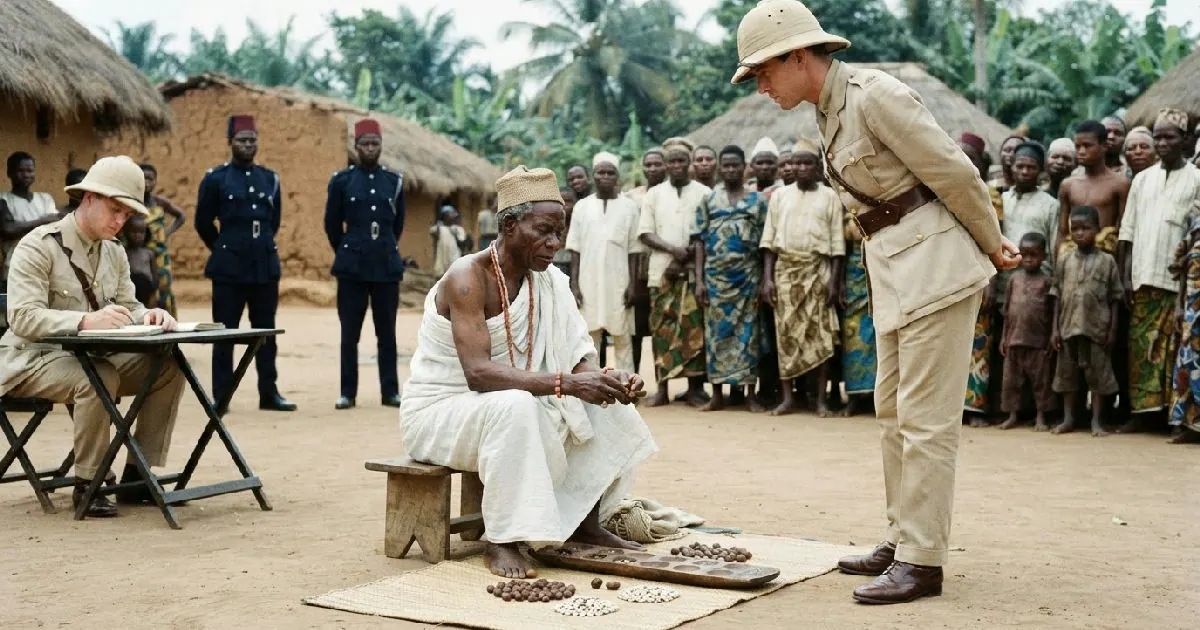
In early 20th-century Nigeria, British officials typically dismissed indigenous spiritual practices as superstition, seeking to undermine local traditions. However, in Aguleri, an Igbo community, this stance faced a remarkable challenge. Chinwuba Onumba, a respected Dibia Afa, or diviner, was put to a public test by British officials. Onumba not only passed but gained official recognition, contradicting the colonial narrative of "primitive" African beliefs. This extraordinary event showcased the complex relationship between colonial rule and indigenous institutions.
Afa, a sophisticated form of divination, was widely practiced in Igboland. A `dibia afa`, or diviner, interpreted signs based on specialized knowledge, helping communities navigate life's uncertainties. People consulted diviners for insights into illness, family disputes, and crucial ritual actions. Afa provided explanations for events that defied ordinary observation. Within Igbo religious thought, Afa divination was closely linked to Agwu, a spiritual force or deity connected with diviners, healers, and specialized knowledge.
Chinwuba Onumba, born in Ivite-Aguleri, showed spiritual insights from a young age. His reputation as a traditional healer and spiritual specialist grew substantially, extending far beyond his immediate community. Onumba trained under three renowned elders, mastering divination and herbal medicine. He reportedly predicted the birth details of Nwafor Orizu, who later became Nigeria's second Senate President, foretelling Orizu's birth on an "Afa day," an assassination attempt, and a future of greatness.
The direct confrontation with British colonial authorities became a defining moment for Onumba. At Olamme in Aguleri, officials, including District Officer O'Connor, challenged Onumba, accusing him of sorcery. They presented him with a sealed object and demanded he declare the number of seeds hidden inside. Onumba invoked his `Ezumezu` and cast his Afa, confidently declaring that precisely seven seeds were concealed within the object. When the container was opened, exactly seven seeds were counted.
The aftermath of the seven-seed episode was surprising. Impressed by Onumba's validated accuracy, the British judge awarded him a Certificate of Merit in the science of divination, licensing him as a diviner under colonial rule. Onumba was reportedly the first recognized native healer in Nigeria to receive such an official license. This act highlighted the complex and often contradictory relationship between colonial rule and indigenous institutions.
Onumba lived through a period of profound transformation in southeastern Nigeria, with British colonial expansion introducing new systems of power. Traditional specialists like the `dibia` remained vital to their communities, functioning across medicine, spirituality, and social interpretation. Their reputations, built on successful healing and divination, extended through settlements.
The simple act of divining seven seeds became a powerful and enduring narrative, symbolizing the ability of indigenous traditions to retain authority and meaning. The episode dramatized a critical historical encounter between the colonial system and an indigenous knowledge system. Onumba's status derived from a deeply ingrained local belief system, representing more than just an individual's reputation.
Key points
- Chinwuba Onumba, a renowned Igbo diviner, passed a test by British officials, accurately determining the number of seeds in a sealed object.
- Onumba's success led to official recognition, as he was awarded a Certificate of Merit in the science of divination, licensing him as a diviner under colonial rule.
- The event highlighted the complex relationship between colonial rule and indigenous institutions, showcasing the ability of traditional specialists to retain authority and meaning.