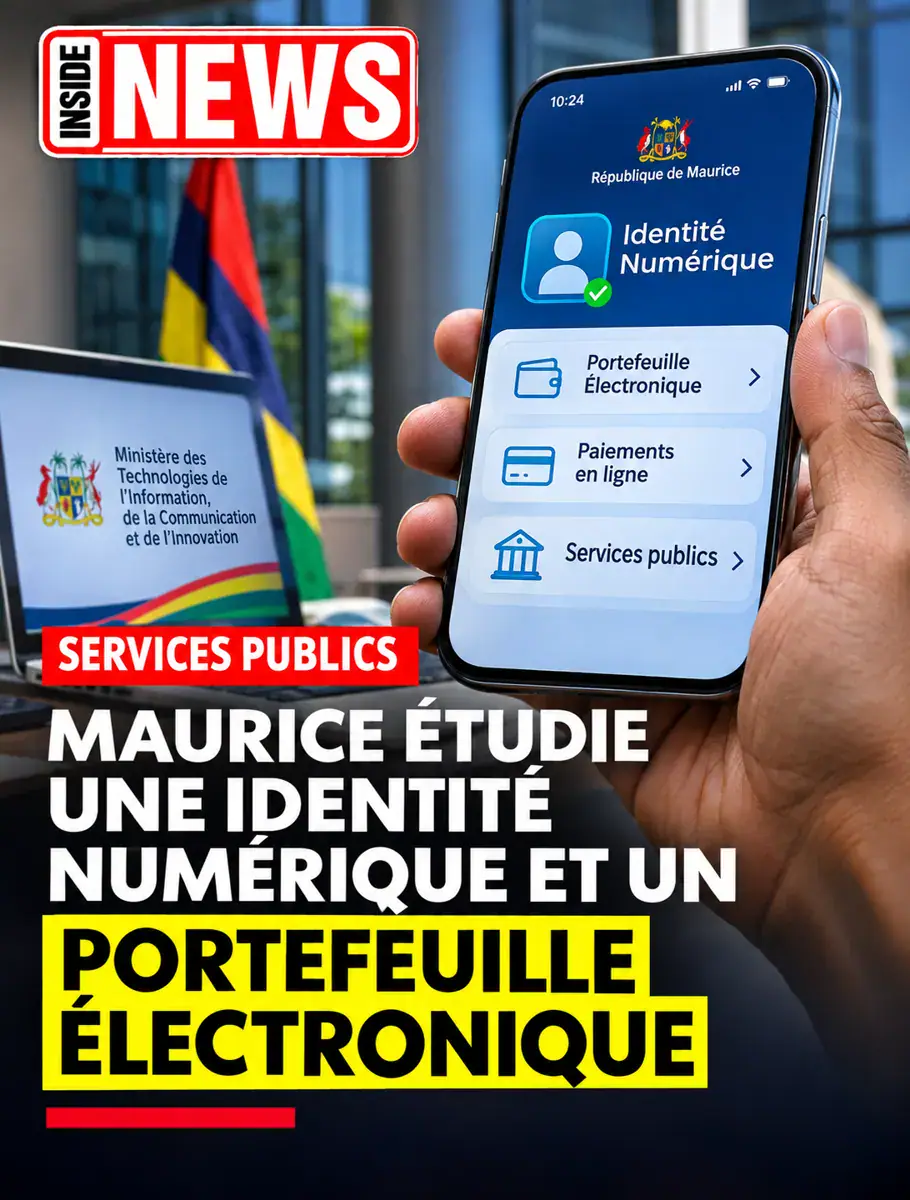
The Mauritian government is exploring a digital public infrastructure to facilitate secure information exchange between administrations and improve citizens' access to public services. The Ministry of Information Technology recently hosted a workshop on Digital Public Infrastructure in Ebene, focusing on reducing fragmentation of information across different administrations. This fragmentation currently hampers the updating of files and slows down certain services.
The proposed system would comprise a digital identity, an e-wallet for storing and presenting electronic documents, and integrated payment methods. Businesses could also utilize the system to verify client information, subject to applicable authorizations and rules. The workshop brought together the Bank of Mauritius, financial sector representatives, telecom operators, academics, and an Indian delegation to discuss the project.
The Indian experience in large-scale digital service deployment was a key point of interest for the Mauritian government. A similar system could help reduce repetitive forms, facilitate online requests, and enable administrations to offer services based on updated files. However, concerns about consent, consultation traceability, error correction, and identity theft protection need to be addressed.
The government has not announced a budget, timeline, or definitive technical architecture for the project. The list of sharable information between institutions and redress mechanisms has also not been published. The workshop marked a design stage, rather than the immediate launch of a usable digital wallet for the population.
The proposed digital infrastructure aims to enhance public services by minimizing information duplication and improving data accuracy. Avinash Ramtohul, Minister of Information Technology, emphasized that the current dispersion of information complicates file updates and slows down services. A digital identity and e-wallet system could help streamline these processes.
Key stakeholders, including the Bank of Mauritius and financial sector representatives, participated in the workshop to discuss the project's feasibility and potential impact. The government is expected to consider the input from these stakeholders as it moves forward with the design and potential implementation of the digital public infrastructure.
The Mauritian government's exploration of digital public infrastructure reflects its efforts to modernize and improve public services. The proposed system has the potential to increase efficiency, reduce bureaucracy, and enhance citizens' experience with public services. However, careful consideration of the associated challenges and risks will be crucial to its success.
Key points
- The proposed system would include a digital identity and e-wallet for secure information exchange and improved access to public services.
- The government is drawing on the Indian experience in large-scale digital service deployment.
- The project aims to reduce information duplication and improve data accuracy to enhance public services.