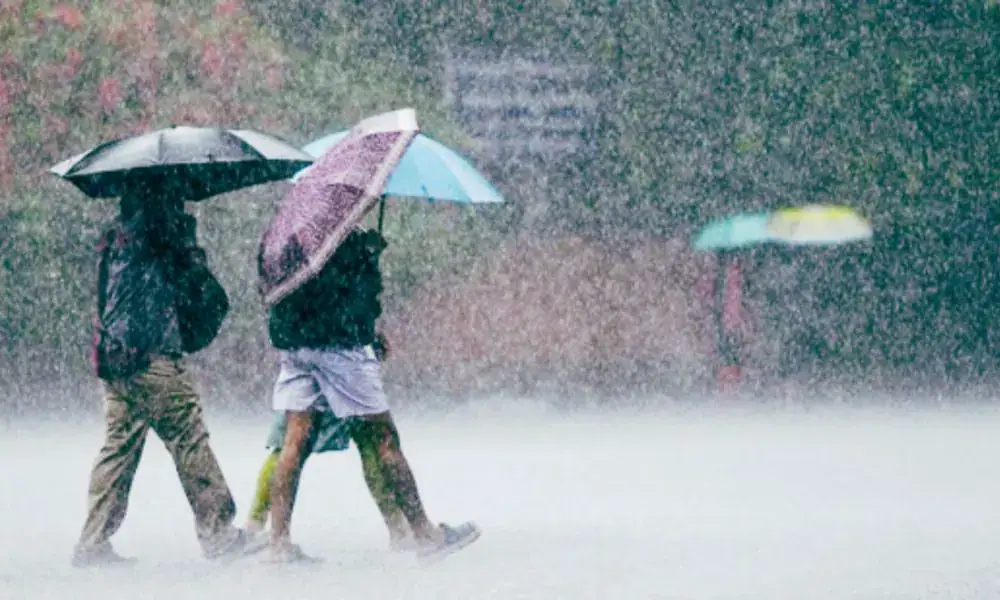
The government of Mauritius has approved a new law that prohibits employers from requiring staff to travel to work or remain on duty during torrential rain warnings. The National Disaster Risk Reduction and Management (Amendment) Bill, which was approved by the Cabinet on November 13, aims to protect human lives and introduce a single protocol for public and private sector workers. The bill amends the Workers’ Rights Act 2019 to clearly define employee rights and employer duties during extreme weather.
The new legislation draws a clear distinction between heavy rain warnings and torrential rain warnings. During heavy rain warnings, employees are expected to report to work unless the National Crisis Committee issues an order or communiqué requiring evacuation, lockdown, or a halt to travel and activities. However, during torrential rain warnings, all workers are exempt from attending work, except for emergency services personnel who may be mobilised or kept on duty as needed for response operations.
The law also outlines the procedures for leaving work and returning safely during extreme weather conditions. If the weather worsens during working hours, employers must organise staff departures based on vulnerability and travel risks, staggering departures according to distance and road conditions. Priority must be given to pregnant women, people with disabilities or reduced mobility, employees who need to collect minor children, staff living in flood-prone areas, and public transport users.
Employers are also required to ensure that staff are able to leave the workplace safely, and provide transport home if public transport has stopped. If it is safe to leave but public transport has stopped, employers must arrange transport home. Any worker who chooses to leave against reasonable safety advice will have to sign a waiver acknowledging the risk. Employers cannot require staff to return to work until the National Crisis Committee confirms that travel and the resumption of activities are safe.
The law also provides for protected salaries, remote working, and workplace rules. Private sector workers unable to work due to Class III or IV cyclones, torrential rain warnings, or safety bulletins will keep their normal pay. Remote working can only be required if the job allows it, if the employee, their family, and their home are safe, and if electricity and telecommunications are working. Remote hours must be paid at least double the normal hourly rate.
The legislation also introduces stricter safeguards for schools and nurseries. If an institution closes during class hours, no minor pupil may leave unless handed over to a responsible person, and parents or legal guardians must be contacted to arrange collection. The head of the school or nursery and designated staff must remain on site until every child has left. Anyone who obstructs the enforcement of these regulations or refuses to provide data and resources needed for risk management faces a fine of up to Rs 50,000 and up to 12 months in prison.
The government has stated that the new law aims to protect Mauritian workers and preserve their lives, regardless of their sector of employment. The Minister of Social Integration, Social Security and National Solidarity, Ashok Subron, said that Mauritius is experiencing more frequent torrential rains due to climate change, and it is not possible for there to be differences in the law between the public sector and the private sector.
Key points
- The new law provides protected salaries for private sector workers unable to work due to extreme weather conditions.
- Employers must organise staff departures based on vulnerability and travel risks during extreme weather conditions.
- The law introduces stricter safeguards for schools and nurseries during extreme weather conditions.
Reporting sources
- Mauritius Enacts New Law Banning Work Orders During Torrential Rain Warnings · https://newsmoris.com