Ghana receives between 42.5 and 62 tonnes of mercury annually through illicit channels, primarily for use in artisanal and small-scale gold mining. This has raised concerns among stakeholders, who warn that the continued use of the toxic substance in mining communities poses significant risks to water resources, the environment, and public health. The mercury enters the country through unidentified routes and is used in various mining communities.
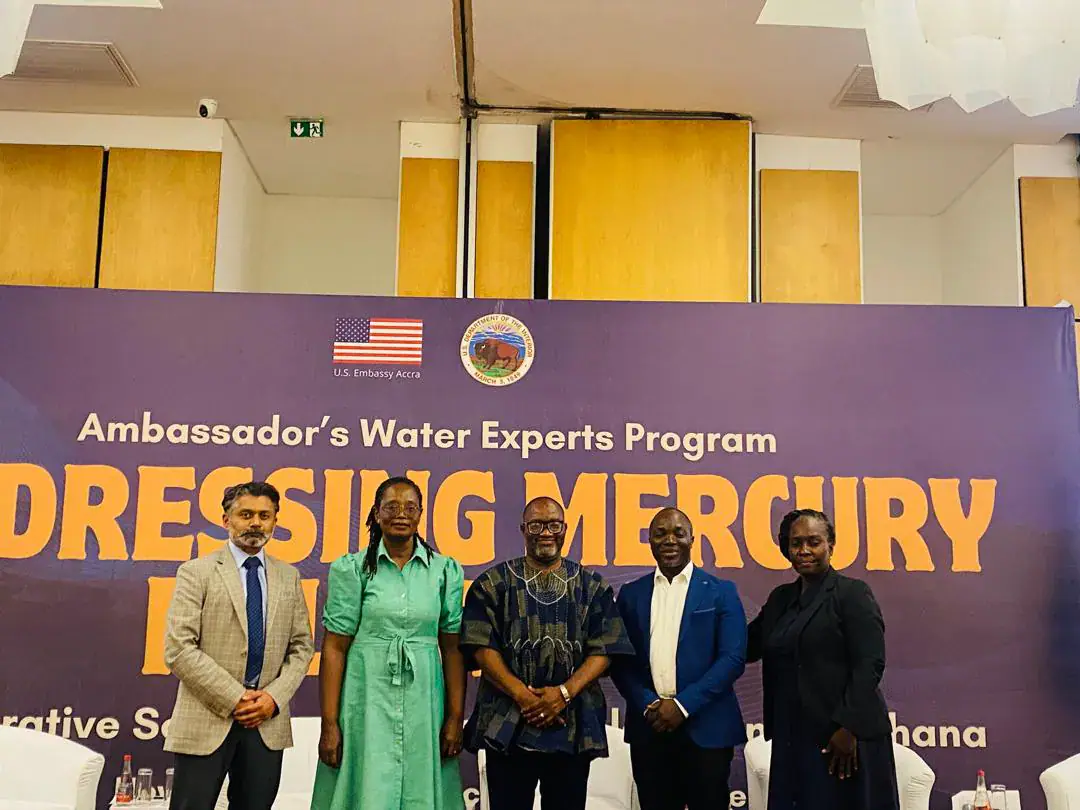
The uncontrolled use of mercury is a major concern, given that more than 2.5 million people depend directly or indirectly on small-scale mining for their livelihoods. Mining communities in the Western, Ashanti, Eastern, and Central regions are particularly affected by mercury pollution, with several water bodies contaminated. Dr. Sylvester Akpah, Chief Executive Officer of Smart Innovation Ghana Limited, highlighted these issues at a symposium organised by the United States Embassy in Accra.
Dr. Akpah identified Tarkwa and surrounding communities as areas under severe environmental pressure, warning that continued pollution could threaten access to safe drinking water. He noted that mercury continues to enter the country through illicit channels despite existing controls at the ports. The absence of a dedicated national directorate to oversee mercury use and related controls in the mining sector is a significant challenge to effective regulation.
Miners and residents of nearby communities face exposure to mercury through routine gold-processing activities, which can affect the kidneys, lungs, and brain. Dr. Akpah called for stricter enforcement of existing regulations and the adoption of technologies to reduce and eventually eliminate mercury use in small-scale mining. He cited gold-catching technologies as an alternative but noted that their adoption remains limited despite investments in importing the equipment.
Ghana has ratified the Minamata Convention on Mercury, an international agreement aimed at protecting human health and the environment from mercury pollution. However, enforcement remains a challenge. Professor Daniel Nukpezah of the Institute for Environment and Sanitation Studies, University of Ghana, emphasised that mercury pollution requires stronger surveillance and management systems. He noted that mercury is a toxic heavy metal that does not break down in the environment.
Prof. Nukpezah explained that bacteria in sediments convert mercury deposited in water bodies into methylmercury, which is absorbed by aquatic organisms. This can lead to increased human exposure through the food chain, as mercury concentrations increase as larger fish consume smaller organisms. He identified artisanal and small-scale gold mining as a major source of mercury pollution in Ghana, as miners use the substance as a relatively inexpensive means of extracting gold from ore.
The symposium sought to identify measures to reduce mercury use and promote environmentally sustainable mining practices. The two-day forum brought together government officials, academics, civil society organisations, development partners, and private-sector representatives to discuss measures to address mercury pollution and protect Ghana’s water resources. Effective interventions require a better understanding of mercury sources, its movement through the environment, and the pathways through which it enters human populations.
Key points
- Ghana receives 42.5-62 tonnes of mercury annually through illicit channels for use in artisanal and small-scale gold mining.
- The uncontrolled use of mercury poses significant risks to water resources, environment, and public health.
- Enforcement of existing regulations and adoption of alternative technologies are crucial to reducing mercury use in small-scale mining.
Reporting sources
- Ghana receives up to 62 tonnes of mercury annually through illicit channels · Ghana News Agency