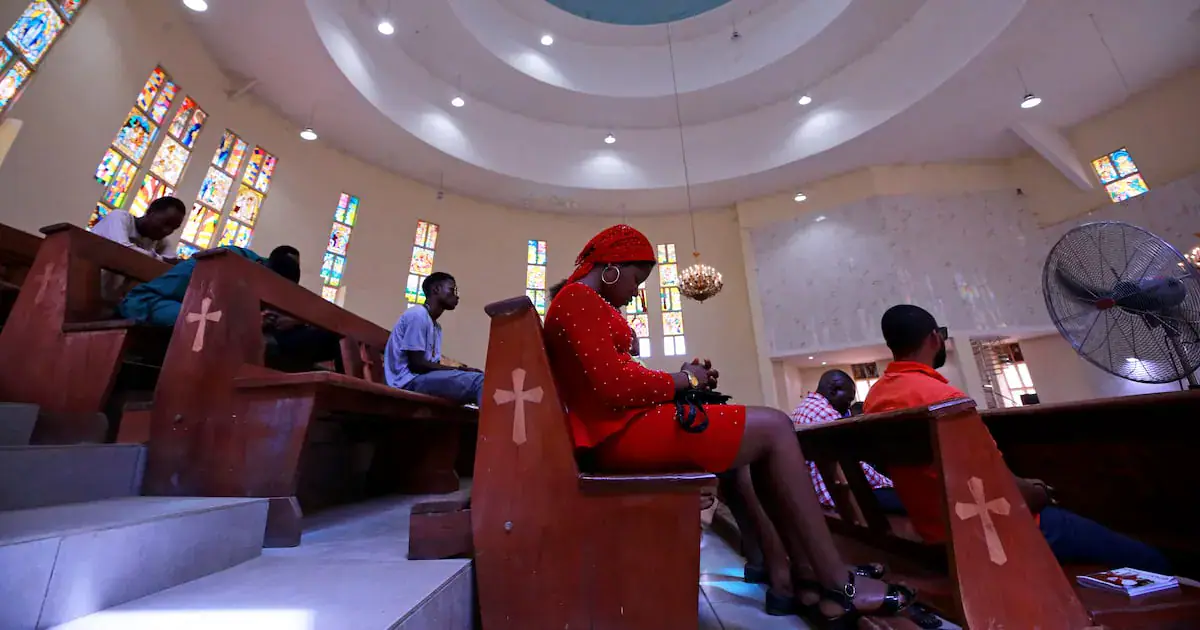
The US state department has expressed ongoing concern over violence against Nigerian Christians, a year after the Trump administration designated Nigeria as a "country of particular concern" (CPC) due to alleged violations of religious freedoms. The designation was rejected by the Nigerian government, which claimed it was based on misinformation and faulty data. The US has been working closely with Nigerian authorities to address the violence.
Assistant secretary of state Frank Garcia stated that the state department is treating the issue as a priority, aiming to hold those responsible for the violence to account. However, Garcia noted that the violence has not stopped, despite efforts by the Nigerian government to address the issue. The US had threatened military action against Nigeria over the treatment of Christians, but the Nigerian government has maintained that it is dealing with terrorism, not persecution of Christians.
Nigerian leaders have welcomed US help in fighting Islamist insurgents, but have insisted that the country's territorial integrity must be respected. The Nigerian government has taken some steps to address the violence, including hiring police, deploying forest guards, and increasing prosecutions and arrests. However, these efforts have not led to greater safety for Christians in the country's Middle Belt region, according to US assistant secretary of state Riley Barnes.
The issue of violence against Christians in Nigeria is likely to feature prominently in the upcoming presidential and parliamentary elections, scheduled for January 16. Insecurity is a top campaign issue, with the country battling an Islamist insurgency, banditry, and farmer-herder clashes in its northern regions, as well as kidnapping for ransom in the south. The US has expressed concern over the sharp increase in violence against Christians in Nigeria's central Plateau state.
US representative Riley Moore, a West Virginia Republican, has questioned what the state department is doing to ensure that the Nigerian government brings the fight to the militias responsible for the violence against Christians. Moore emphasized that the US cannot remove the CPC designation from Nigeria until it has done more to address the issue. Nigeria has a history of coexistence among its more than 200 ethnic groups, but has also experienced sporadic violence driven by ethnic tension and competition over resources.
The Nigerian government has previously stated that it is committed to protecting its citizens, but has faced criticism for its handling of the violence against Christians. The country's information minister, Mohammed Idris, did not immediately respond to a request for comment on the issue. The US state department has reiterated its commitment to working with the Nigerian government to address the violence and promote greater safety for all citizens.
The ongoing violence against Christians in Nigeria has raised concerns about the country's ability to protect its citizens and maintain stability. The US has emphasized the need for the Nigerian government to take concrete steps to address the issue, including holding those responsible for the violence to account. The situation remains a key concern for the international community, with many calling for greater action to be taken to promote peace and stability in the region.
Key points
- The US state department has expressed ongoing concern over violence against Nigerian Christians.
- The Nigerian government has taken steps to address the violence, but these efforts have not led to greater safety for Christians.
- The issue of violence against Christians is likely to feature prominently in Nigeria's upcoming presidential and parliamentary elections.
Reporting sources
- The Sowetan · The Sowetan