Mauritius has been a member of the United Nations Human Rights Council since January, with a mandate that runs until 2028. The council's primary goal is to promote and protect human rights globally. However, its effectiveness has been questioned due to the presence of authoritarian governments that often hinder its actions. Despite this, the council has managed to denounce human rights abuses in various regions.
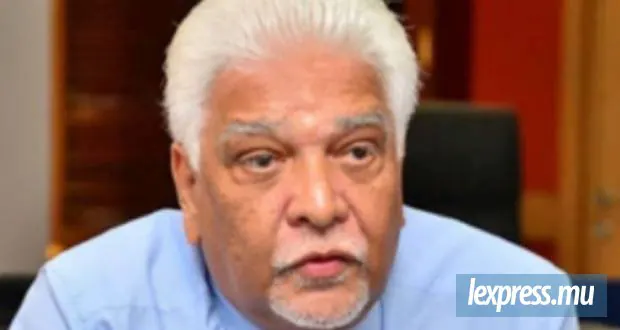
Jean Claude de l'Estrac, a former Mauritian Foreign Minister, shared his insights on the country's diplomatic strategies. He noted that the government's recent decision to support Morocco's autonomy plan for Western Sahara was likely influenced by the persistent stalemate in the conflict and the international community's shifting stance. De l'Estrac recalled that in 1982, Mauritius recognized the Polisario Front, but the situation remained unresolved.
De l'Estrac emphasized that a country's diplomatic strategy should not be publicly debated. He explained that there are often confidential reasons behind a government's decisions, and it is essential to consider these factors when evaluating diplomatic moves. The former minister highlighted that the United Nations has largely dismissed the option of a referendum on independence for Western Sahara.
The conversation also touched on the reputation of Mauritius' financial center. De l'Estrac downplayed concerns that the center's reputation would be a significant concern for world leaders at the UN General Assembly. Instead, he noted that global geopolitics would take center stage.
As the former head of the Indian Ocean Commission, de l'Estrac shared his views on the collective influence of island nations in the region. He stated that, unfortunately, island nations, whether individually or collectively, have limited weight in global affairs. De l'Estrac suggested that regional groupings, such as the Indian Ocean Commission, could become strategic instruments for cooperation and potentially carry more influence.
De l'Estrac expressed his desire for Mauritius, as the host country of the Indian Ocean Commission, to take the initiative to transform the commission into a more robust entity, such as a Community of the Indian Ocean. He argued that the region's geopolitical situation necessitates this evolution.
Mauritius' recent shift in stance on Western Sahara has sparked debate about the country's diplomatic influence and its role in regional and global affairs. As the country continues to navigate complex international relationships, its actions will likely face close scrutiny from various stakeholders.
Key points
- Mauritius has shifted its stance on the Western Sahara conflict, now supporting Morocco's autonomy plan.
- The country's diplomatic strategies are often influenced by confidential factors and global geopolitics.
- Island nations, including Mauritius, have limited collective influence in global affairs.