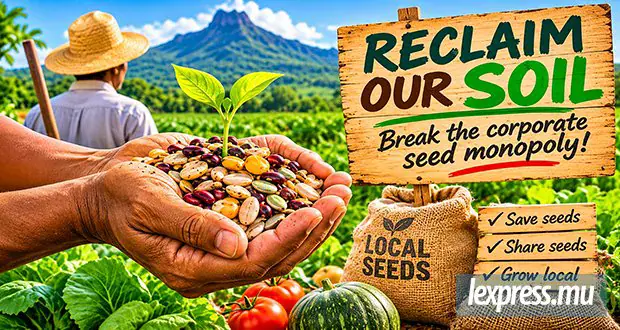
For generations, the earth belonged to the people in Mauritius, with backyard gardeners and small-scale farmers saving and exchanging seeds freely. However, corporate hegemony is quietly suffocating agricultural freedom, shifting control from community-driven agriculture to commercial monopolies. When corporations own the seeds, they own the food security, heritage, and future of the nation. The battle lines are drawn, and it is time to dismantle the corporate seed industrial complex and reclaim the right to save, breed, share, and replant heirloom crops.
Globally, resistance against corporate giants is growing, with Greenpeace Africa fighting back against predatory international frameworks like UPOV 91 and restrictive Plant Variety Protection acts. These laws have restricted smallholders' ability to save or sell seeds from their own harvests, particularly when protected varieties are involved. In many nations, commercial hybrid seeds are not always true-to-type when replanted, encouraging farmers to purchase new seeds each season and increasing dependence on commercial suppliers.
A landmark victory has been achieved in Kenya, where the High Court declared several provisions of the Seed and Plant Varieties Act unconstitutional, marking a significant victory for farmers' rights to save, exchange, and share indigenous seeds. Greenpeace Environmental Kenya was listed as an interested party in the proceedings. This judgment has set a precedent for other countries to challenge restrictive seed laws and promote seed sovereignty.
In Mauritius, the seed landscape is precarious, with 98% of the country's seed requirements imported over the three financial years ending June 2025. This dependence leaves local agriculture vulnerable to global supply chain disruptions, phytosanitary restrictions, and currency fluctuations. Re-establishing locally adapted, open-pollinated heirloom seeds bred by local farmers will ensure biodiversity and freedom.
Regulatory control in Mauritius is tightly exerted by the National Plant Varieties and Seeds Office under the formal Seeds Act. However, returning seed management directly to the hands of farming communities as a sacred, shared public commons is imperative. Fragile, single-use hybrid varieties can contribute to a cycle of financial dependency, and it is essential to respect the eternal cycles of life.
Despite legal and structural limitations, grassroots action is alive and fighting back in Mauritius. The Rural Women's Assembly in Rodrigues has turned traditional maize cultivation into a symbol of food autonomy, passing down indigenous farming knowledge and protecting local seeds from extinction. Local civil society groups and passionate home gardeners are campaigning tirelessly to popularize open-pollinated, traditional varieties that thrive in local soils.
To practice seed sovereignty, Mauritians can support "Made in Moris" seeds by bypassing corporate agro-dealers and promoting the bazar network, which is the backbone of informal sovereignty. Traditional bazars in Port-Louis, Flacq, and Vacoas are the ultimate grassroots seed-sharing hubs, where loose seeds in handwritten paper packets can be found. This is where Mauritians can find traditional, locally adapted seeds to ensure food security and agricultural freedom.
Key points
- The battle for seed sovereignty in Mauritius is critical to ensuring food security, biodiversity, and agricultural freedom.
- Greenpeace Africa is actively supporting grassroots initiatives to preserve, clean, and store indigenous seeds, strengthening local communities' ability to protect their agricultural heritage and seed diversity.
- The Mauritian government must take action to support local seed production and promote seed sovereignty to reduce dependence on imported seeds and ensure a sustainable agricultural future.