The Alliance du Changement, which came to power with an overwhelming victory on November 10, 2024, is now confronted with transforming campaign promises into tangible results. The party's victory was driven by a desire to move away from ten years of MSM governance and address pressing issues such as purchasing power, good governance, security, and the fight against drugs. Two years later, the question remains whether the promised change is perceptible in the daily lives of Mauritians.
On the economic front, the situation is mixed. Despite the promise of a more affordable basket of goods, the cost of living remains high, fueling social discontent. The most modest households, exposed to rising food prices and incompressible expenses, struggle to accept that their purchasing power remains under pressure. Although the rupee has stabilized after losing about 46% of its value against the US dollar between December 2014 and November 2024, this stabilization has not translated into lower prices.
The country's dependence on food and energy imports exacerbates the situation, as international tensions and conflicts, such as the one in the Middle East involving the US and Iran, drive up energy prices. This has a ripple effect on transport, production, and distribution costs, ultimately impacting consumer prices. Inflation is expected to reach 5% in 2026, according to Statistics Mauritius, with the International Monetary Fund predicting an even sharper acceleration.
The government has implemented stabilization mechanisms and measures to mitigate the impact of the energy crisis, but households expect concrete answers. The promise of a more affordable basket of goods remains a key commitment that will determine the government's performance. It is, however, essential to consider the economic legacy left by the previous government, which has limited the current administration's budgetary maneuverability.
The previous government's expansion of public spending, social transfers, and support measures, financed without sustainable resources, has contributed to macroeconomic instability. The massive creation of money, including around Rs 181 billion mobilized by the Bank of Mauritius over the previous decade, has also fueled monetary imbalances and pressure on the rupee. Therefore, the new government had to prioritize restoring order to public finances before implementing a genuine recovery policy.
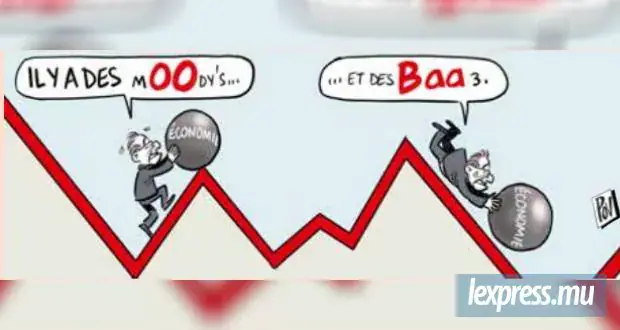
Prime Minister Navin Ramgoolam's strategy involves rebuilding the economy's fundamentals, restoring financial credibility, and avoiding a downgrade in the country's sovereign rating. With a Baa3 rating from Moody's, Mauritius is at the last echelon of the investment category, and a downgrade to speculative category would be a serious setback for the country's financial reputation and would increase its access costs to international markets.
The government's commitment to fiscal consolidation is not a policy option but a necessity. The IMF emphasizes the importance of restoring budgetary margins, containing debt, and laying the groundwork for growth driven by productivity and investment. The reform of the universal pension system illustrates this dilemma, with the proposed gradual increase in the eligibility age from 60 to 65 being a politically sensitive but financially necessary measure.
Key points
- The Alliance du Changement faces challenges in delivering on campaign promises, particularly regarding the cost of living and economic recovery.