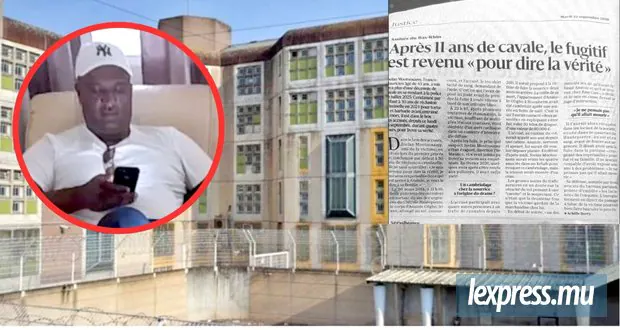
Joelan Mootoosamy, a 34-year-old Mauritian man, was sentenced to 20 years of imprisonment by the Assizes Court of Bas-Rhin on September 24. He was found guilty of his role in the death of Anatole Luther Oligbo, a 30-year-old man who was beaten to death in a car wash facility in Schiltigheim, France, on March 30, 2014. Mootoosamy had been on the run for 11 years, living in Mauritius under an assumed identity.
The incident occurred when Oligbo was allegedly robbed of 30 kilograms of cannabis resin, valued at approximately €60,000. Suspicion fell on Oligbo, and Mootoosamy, who had known Oligbo since childhood, was implicated in the crime. According to the prosecution, Mootoosamy had the key to the facility and knew what was going to happen. A voice message recorded on Oligbo's uncle's voicemail played a crucial role in the trial, with several voices demanding that Oligbo reveal the name of the person who had stolen or hidden the merchandise.
During the trial, which lasted several days, Mootoosamy's defense team argued that there was no direct evidence linking him to the violent acts that led to Oligbo's death. His lawyer, Amar Bouaou, claimed that the prosecution's case relied on circumstantial evidence and that his client was not present at the scene of the crime when the fatal blows were inflicted. However, the prosecution and the victim's family maintained that Mootoosamy's presence at the scene and his involvement in the events leading up to Oligbo's death were clear.
After the incident, Mootoosamy disappeared and fled to Mauritius, where he lived under an assumed identity for 11 years. He allegedly led a discreet life as an entrepreneur in the Rivière-Noire region, engaging in construction and real estate activities. Despite being the subject of a red Interpol notice, Mootoosamy was able to live and work in Mauritius without being detected. Questions have been raised about how he managed to evade detection and whether he used an alias.
Mootoosamy's return to France in July 2025 led to his trial and subsequent sentencing. During the trial, he acknowledged a moral responsibility for Oligbo's death, stating that he had tried to save his friend and bring him to the hospital quickly. However, he continued to deny direct involvement in the violent acts that led to Oligbo's death. His lawyers have announced their intention to appeal the verdict, citing contradictions in the case and an alleged miscarriage of justice.
The case has sparked interest in Mauritius, particularly regarding the circumstances of Mootoosamy's life on the run. The Mauritian authorities have faced questions about how Mootoosamy was able to live and work in the country without being identified or apprehended. The incident has also raised concerns about the involvement of Mauritian nationals in international crime and the challenges of extradition and prosecution.
The sentencing of Joelan Mootoosamy brings closure to the family of Anatole Luther Oligbo, who had been seeking justice for over a decade. However, the case also highlights the complexities of international crime and the challenges of prosecuting individuals who flee across borders. The incident serves as a reminder of the need for cooperation between law enforcement agencies and the importance of addressing the root causes of crime.
Key points
- Joelan Mootoosamy was sentenced to 20 years in prison for his role in the death of his friend, Anatole Luther Oligbo.
- Mootoosamy had been on the run for 11 years, living in Mauritius under an assumed identity.
- The case has raised questions about Mootoosamy's life in Mauritius and how he was able to evade detection despite being the subject of a red Interpol notice.