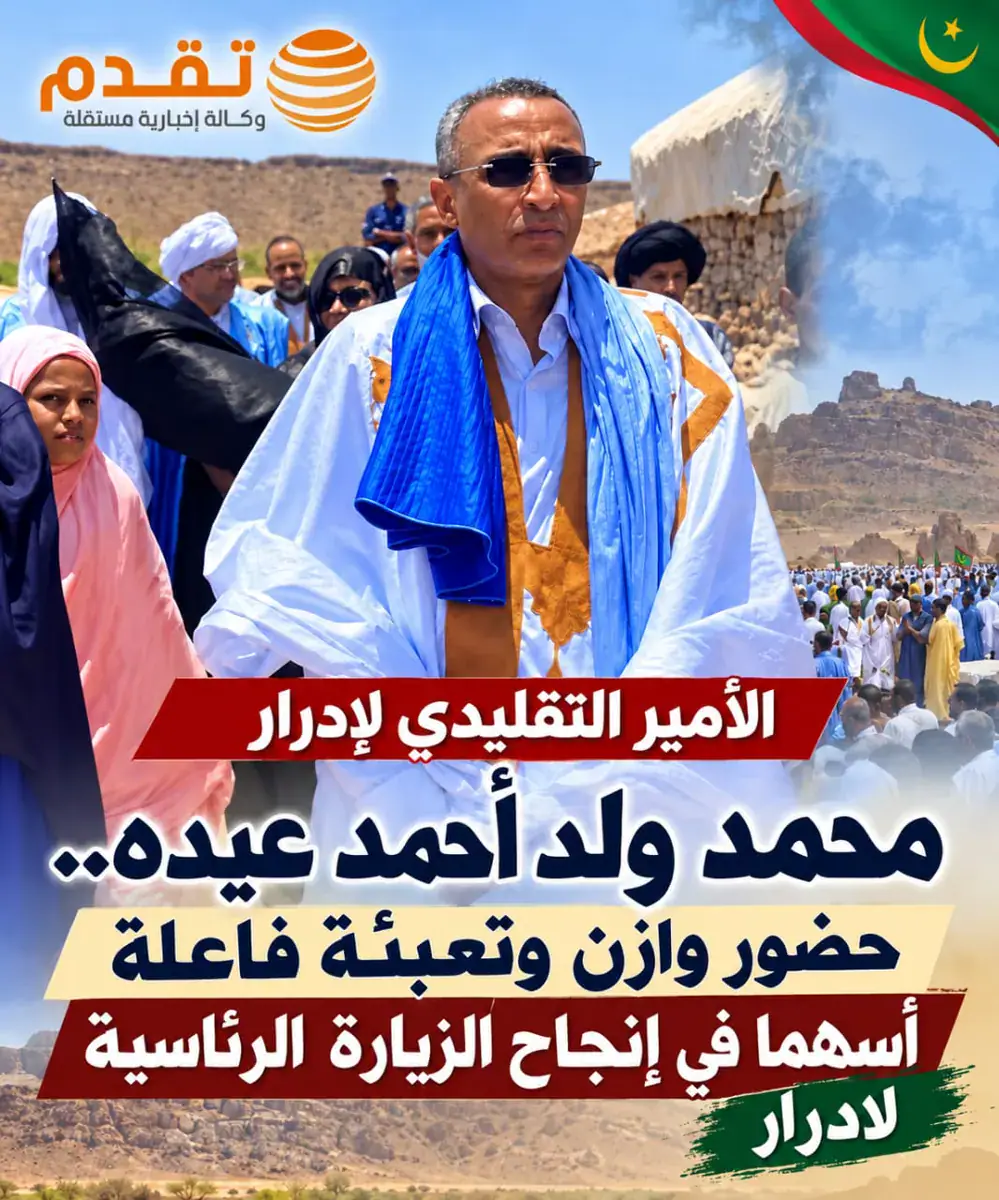
The recent presidential visit to Mauritania's Adrar region was marked by the significant presence of local traditional leaders, including Emir Muhammad Ould Ahmed Eideh, who played a crucial role in mobilizing and organizing the local population. As a respected figure in Adrar, Eideh has a long history of serving the region and following its issues, built on a foundation of social, traditional, and political relationships that have earned him the respect of a wide range of residents.
During the visit, Eideh's mobilization efforts and the enthusiasm of his supporters and activists reflected the level of influence he wields in the region. He contributed to organizing the crowds and marshaling energies, helping to ensure a successful reception and showcasing the extent of popular interaction with the visit. This role is not an isolated incident, as observers of local affairs note that Eideh has been consistently present in various events important to the region.
Eideh's position is largely derived from his social presence and extensive relationships within different components of Adrar society, in addition to his ability to communicate and bring together various stakeholders around common issues. His involvement in the presidential visit was an extension of his ongoing social, traditional, and political role, reaffirming that the success of major national events depends not only on official arrangements but also on the contributions of influential local figures.
The Mauritanian president's visit to Adrar aimed to strengthen ties with the local population and address regional concerns. Eideh's efforts helped create a positive atmosphere, demonstrating the value of collaboration between traditional leaders and government officials. By engaging with local communities, the president's visit sought to promote development and improve living conditions in the region.
Eideh's reputation as a unifying figure has been built over years of dedicated service to Adrar. His commitment to seriousness, discipline, and communication has earned him the trust of local residents. As a result, his involvement in the presidential visit was seen as a significant factor in its success, highlighting the importance of traditional leaders in Mauritanian society.
The visit also underscored the significance of Adrar in Mauritania's national landscape. The region's rich cultural heritage and strategic location make it a vital area for economic and social development. By engaging with local leaders like Eideh, the government can better understand regional needs and develop targeted initiatives to support growth and stability.
The collaboration between traditional leaders like Eideh and government officials is crucial for addressing regional challenges. By working together, they can develop effective solutions to promote development, improve living conditions, and enhance national unity. Eideh's role in the presidential visit serves as a model for future partnerships between traditional leaders and government officials in Mauritania.
Key points
- Traditional leaders play a vital role in promoting national unity and development in Mauritania.
- The success of the presidential visit to Adrar highlights the importance of collaboration between government officials and local leaders.
- Emir Muhammad Ould Ahmed Eideh's efforts in mobilizing and organizing the local population were instrumental in the success of the presidential visit.