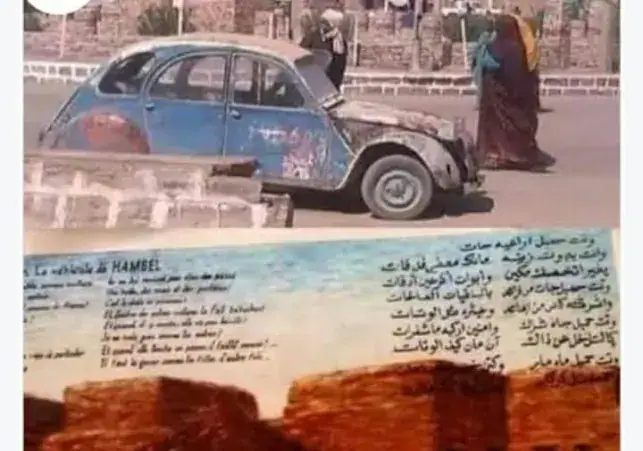
In the town of Atar, Mauritania, a vintage car has become an enduring legend, remembered for its role in the daily lives of residents. The car, affectionately known as "Wettet Hanbel," was owned by Mohamed Ould Hanbel, a generous and simple man who lived in the Kenwal neighborhood. He acquired the car in the 1960s and used it to transport people, particularly women, from the local market to their homes. The car's impact on the community went beyond its practical use, as it became an integral part of the town's culture and folklore.
Mohamed Ould Hanbel was a well-known figure in Atar, respected for his kindness and sportsmanship. He was part of the town's first sports team in 1956 and participated in a 800-meter race in Madagascar in 1958. However, it was his old car that cemented his place in the town's collective memory. The vehicle, a 2 Cheveaux model, was old and sometimes temperamental but provided invaluable services to the community. It facilitated transportation, alleviated the burden on residents, and represented a blessing in a town where means of transport were scarce.
The car's popularity was fueled by its regular route between the Abjiye market and the Kenwal neighborhood. Residents grew accustomed to its presence, recognizing its distinctive sound and anticipating its arrival. Over time, the car became a subject of local poetry and humor, with verses describing its fragile tires and gentle pace. One popular passage humorously described the car's cargo, including a piece of camel meat, a small watermelon, and seven dates.
The story of "Wettet Hanbel" offers a glimpse into Atar's past, where simplicity was valued and human relationships gave daily life its warmth. The car's legacy has been preserved through oral tradition, with residents recalling its impact on their lives. Mohamed Ould Hanbel may have passed away, but his car's memory lives on, symbolizing an era when generosity was not dependent on wealth and prestige was measured by one's actions.
The cultural significance of "Wettet Hanbel" extends beyond its role as a mode of transportation. It represents a time when community and human connection were paramount. The car's story has been immortalized in local poetry, with verses addressing the vehicle as if it were a person. This creative expression highlights the town's humor, imagination, and sensitivity.
Atar's history is characterized by its ability to preserve memories of its people, places, and objects. The town's residents have a unique way of transforming ordinary objects into familiar characters and everyday scenes into collective memories. The story of "Wettet Hanbel" serves as a testament to the power of community and the importance of preserving cultural heritage.
As a cultural icon, "Wettet Hanbel" continues to inspire nostalgia and appreciation for the town's history. Its legacy serves as a reminder of the value of generosity, simplicity, and human connection. The car's story will continue to be told and retold, ensuring its place in the collective memory of Atar's residents for generations to come.
Key points
- The car "Wettet Hanbel" has become a legendary symbol of community spirit and generosity in Mauritania's Atar town.
Reporting sources
- « La voiture de Hanbel » : quand une vieille automobile devient une légende dans la mémoire d’une ville · L'Authentique (Mauritania)