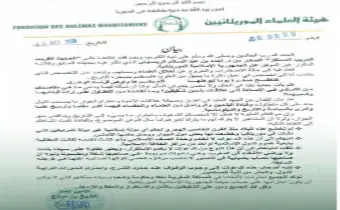
Mauritania's Council of Scholars has issued a statement criticizing comments made by Ahmed Al-Raisouni, the former president of the International Union of Muslim Scholars. Al-Raisouni had expressed views that Mauritania has historically been part of Morocco, sparking a reaction from the Mauritanian academic community. The Council described Al-Raisouni's statements as "surprising, suspicious, and provocative," and accused him of overstepping boundaries and undermining Mauritania's sovereignty.
The Council of Scholars emphasized that Mauritania has not been under the rule of any Islamic state other than the Almoravid dynasty, which originated in Mauritania and extended its influence to neighboring countries and even Al-Andalus. This historical context, according to the Council, contradicts Al-Raisouni's claims. The statement also highlighted that such calls for unity do not serve the broader Islamic community, suggesting instead that they could lead to fragmentation.
The Mauritanian scholars' body expressed its respect for the Kingdom of Morocco, including its monarch, government, and people. They stressed the importance of fostering brotherly relations and cooperation between Mauritania and Morocco, with the aim of promoting mutual interests and preserving peace and stability in the region. This approach reflects a desire to maintain positive ties between the two nations.
The criticism from Mauritania's scholars comes at a time when discussions about historical and cultural ties between countries in the region are ongoing. The Council's statement suggests a sensitivity to narratives that might be perceived as challenging national sovereignty or historical facts. By addressing Al-Raisouni's comments directly, the scholars aimed to clarify Mauritania's stance on its historical identity and political independence.
Ahmed Al-Raisouni's original statements have sparked debate, reflecting the complex interplay of historical narratives and contemporary politics in the region. While the International Union of Muslim Scholars has not publicly responded to the controversy, Al-Raisouni's views have evidently struck a chord with various academic and religious communities. The discussion surrounding his comments is likely to continue, given the significance of historical and cultural ties in the region.
The Mauritanian Council of Scholars' response underscores the importance of careful consideration in discussions about historical affiliations and national identities. By framing Al-Raisouni's comments as a challenge to Mauritania's sovereignty, the Council has positioned itself as a guardian of national interests and historical accuracy. This stance reflects broader concerns about how narratives of history and identity are constructed and presented.
The situation highlights the delicate balance between fostering Islamic unity and respecting national sovereignty. As discussions about regional ties and historical legacies continue, the Mauritanian scholars' critique of Al-Raisouni's statements serves as a reminder of the complexities involved in navigating these issues. The emphasis on mutual respect and cooperation between Mauritania and Morocco suggests a path forward for constructive dialogue and collaboration.
Key points
- The Mauritanian Council of Scholars criticized Ahmed Al-Raisouni's comments on Mauritania's historical ties to Morocco.
- The Council emphasized Mauritania's historical independence and its role as the origin of the Almoravid dynasty.
- The scholars reaffirmed their respect for Morocco and called for strengthened cooperation between the two countries.