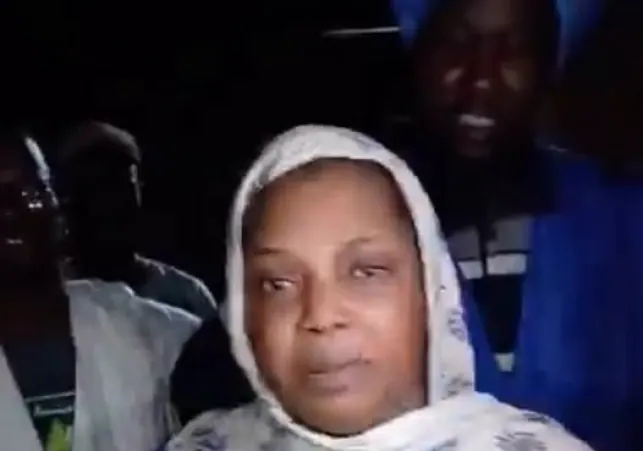
On September 28, 2026, Mauritanian President Mohamed Cheikh Ghazouani granted a presidential pardon to Marième Souleymane, also known as Warda, a prominent anti-slavery activist. Warda, a member of the IRA movement, had been sentenced to five years in prison, with three years to be served, for her criticism of the government's handling of slavery issues. The pardon, which was unexpected by many, completely absolves her of all penalties, including prison time, fines, and court costs.
The decision to grant clemency to Warda has received a mixed response from various quarters. Birame Dah Abeid, the president of the IRA movement and a prominent anti-slavery activist, reacted strongly to the pardon, stating that his movement and its members do not need or want Ghazouani's forgiveness. According to Dah Abeid, the IRA movement has been fighting against slavery and its entrenched systems since 2008, and their actions have been guided by a commitment to legality and international human rights standards.
Dah Abeid emphasized that his movement and its members are prepared for sacrifice and view imprisonment as a necessary part of their struggle against slavery. He noted that Warda effectively used her detention to draw attention to the injustices faced by her community and to call for the downfall of Ghazouani's regime, which she views as based on injustice and slavery. Dah Abeid also questioned the motivations behind Ghazouani's pardon, suggesting that it was an attempt to present the president as a champion of forgiveness and compassion.
The IRA movement's rejection of the pardon is rooted in its conviction that its members have not committed crimes and therefore do not require forgiveness. Dah Abeid recalled that in 2011 and 2016, he personally rejected pardons offered by former President Mohamed Abdel Aziz, viewing them as an attempt to buy off critics and undermine the movement's legitimacy. According to Dah Abeid, Ghazouani's regime is characterized by corruption, cronyism, and a failure to address the entrenched problems of slavery and impunity.
Warda Souleymane was arrested on October 31, 2025, shortly after returning to Mauritania from the Gambia, where she had attended a session of the African Commission on Human and Peoples' Rights. Her arrest was prompted by her criticism of the Mauritanian government's handling of slavery issues, which she claimed perpetuated discrimination against certain black communities. Warda's case has drawn widespread attention and support, both domestically and internationally, with many organizations and individuals calling for her release.
The case highlights the ongoing challenges faced by activists and critics of the Mauritanian government, who often face harassment, intimidation, and imprisonment for expressing their views. Dah Abeid's reaction to the pardon underscores the deep-seated tensions between the government and anti-slavery activists, who view Ghazouani's regime as complicit in the perpetuation of slavery and human rights abuses. The situation remains a contentious issue in Mauritania, with many calling for greater accountability and action to address the country's entrenched social and economic problems.
The granting of clemency to Warda Souleymane has raised questions about the prospects for human rights and social justice in Mauritania. While some have welcomed the pardon as a positive step, others view it as a tactical move aimed at deflecting criticism and maintaining the status quo. As the country continues to grapple with its complex social and economic challenges, the case of Warda Souleymane serves as a reminder of the ongoing struggles faced by activists and critics of the government.
Key points
- President Mohamed Cheikh Ghazouani grants clemency to anti-slavery activist Warda Souleymane, sparking mixed reactions from various quarters.
- The IRA movement, led by Birame Dah Abeid, rejects the pardon, viewing it as an attempt to undermine their legitimacy and struggle against slavery.
- The case highlights the ongoing challenges faced by activists and critics of the Mauritanian government, who often face harassment, intimidation, and imprisonment for expressing their views.