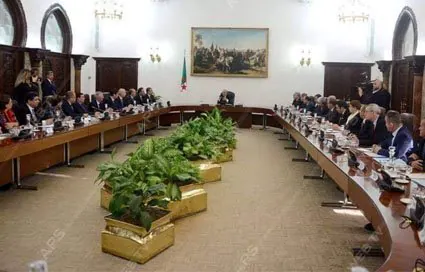
Algerian President Abdelmadjid Tebboune has identified key sectors for reform and development, including health, industry, agriculture, housing, trade, and small enterprises. At his second Council of Ministers meeting, Tebboune emphasized the need for swift reforms to address the country's critical economic and social situation. The council discussed plans to revitalize and develop sectoral activities in these areas. Tebboune aims to accelerate reforms and decision-making to mitigate the crisis affecting the social front. The President's priorities reflect his campaign promises to improve the economy and social conditions.
The Council of Ministers focused on urgent dossiers, including the development of small enterprises and start-ups. Tebboune wants to encourage entrepreneurship and job creation by alleviating fiscal burdens on public and private companies. He plans to introduce mechanisms to achieve this goal and strengthen the knowledge-based economy. The President's vision for economic growth includes promoting start-ups and small and medium-sized enterprises (SMEs). By doing so, Tebboune aims to reduce the country's reliance on oil revenue, which has declined drastically.
Tebboune's reform agenda includes a thorough overhaul of the fiscal system. He believes this will generate revenue to compensate for the decline in oil-based revenue. The President plans to introduce fiscal incentives to stimulate the national economy, particularly for start-ups and SMEs. His campaign promises included a commitment to transparent and honest governance, eliminating waste in certain import sectors. Tebboune's administration will prioritize good governance to restore public trust and promote economic growth.
The housing sector is a significant concern for Tebboune, who has pledged to address the housing crisis. He believes the state has a responsibility to provide adequate housing for its citizens. The President has repeatedly stated that he will not tolerate Algerians living in precarious or makeshift housing. His administration will prioritize housing development to alleviate social precariousness. The housing crisis is a pressing issue that Tebboune is determined to address.
Tebboune's Council of Ministers meeting was rescheduled to accommodate his trip to Berlin for an international conference on Libya. The conference, hosted by German Chancellor Angela Merkel, brings together global leaders to discuss the Libyan crisis. Tebboune's participation in the conference reflects Algeria's commitment to regional stability and security. His trip highlights the importance of international cooperation in addressing regional challenges.
The Algerian President's reform agenda is built around his campaign promises to improve economic and social conditions. Tebboune has emphasized the need for swift and decisive action to address the country's critical situation. His priorities include promoting entrepreneurship, stimulating economic growth, and addressing social precariousness. The President's administration will focus on implementing reforms to achieve these goals.
Tebboune's commitment to reform and development reflects his vision for a more prosperous Algeria. His administration will prioritize good governance, transparency, and accountability to promote economic growth and social stability. The President's efforts to address the country's challenges have been welcomed by Algerians, who expect tangible results from his administration.
Key points
- Algerian President Abdelmadjid Tebboune has outlined his priorities for economic and social reforms.
- The President's reform agenda includes a thorough overhaul of the fiscal system and promotion of entrepreneurship.
- Tebboune's administration will prioritize good governance, transparency, and accountability to promote economic growth and social stability.