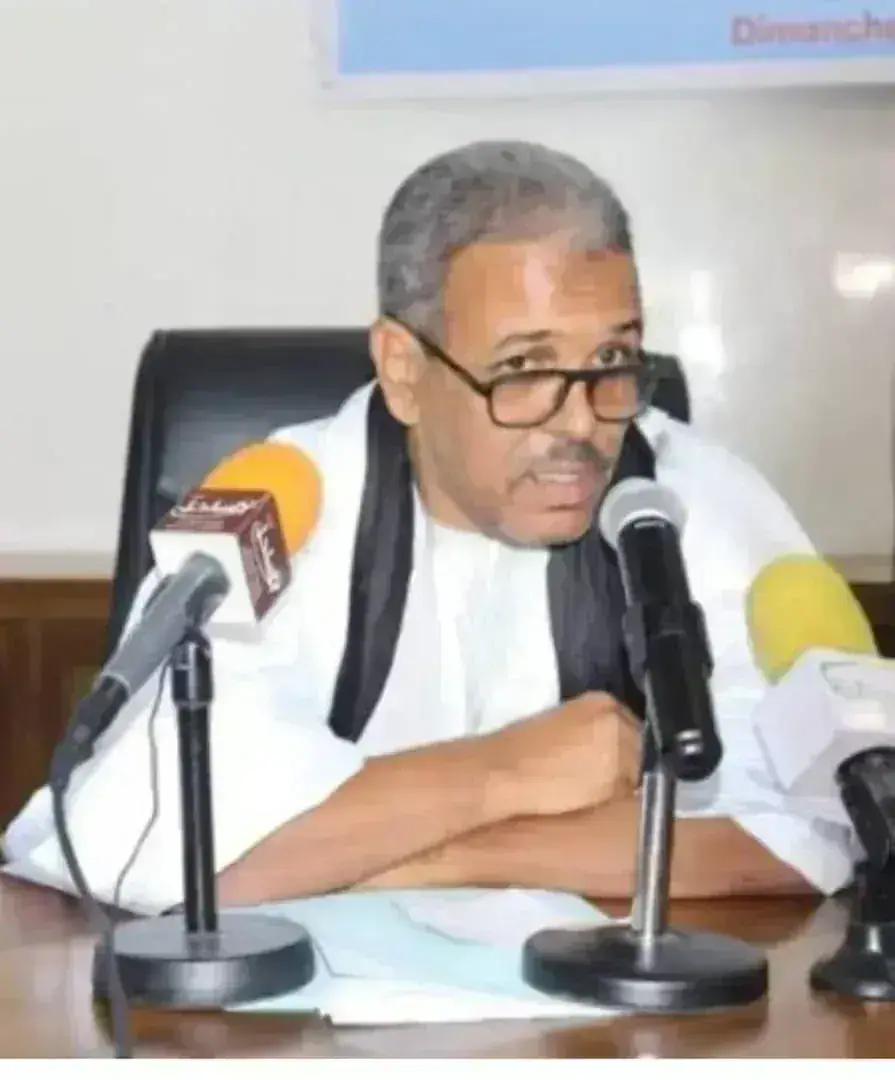
Mauritanian politician Biram Diah Abeid resigned from the National Assembly on November 9, 2026, in a move that has sparked significant attention in the country's political landscape. His resignation was announced during a session dedicated to discussing the government's general policy, a timing that holds considerable significance. By choosing to leave the legislative body in such a public manner, Diah Abeid aimed to convey a political message to both the government and the public.
According to Diah Abeid, the parliament had lost its true purpose, and discussions within it had become unproductive, prompting him to take a stand from outside the institution through field struggle and legal means. However, beyond the legitimacy of his criticisms of parliament's performance and the government, a more crucial question arises: does a deputy have the moral and political right to relinquish their representative position simply because they believe the institution they belong to is no longer fulfilling its role adequately?
The deputy does not lose the right to protest or take escalating positions, and resignation remains one of the available political means to express rejection of a particular institutional reality. However, the parliamentary seat is not a personal property of the deputy but a electoral mandate and popular trust that assumes the interest of those who granted this mandate should be present in every decision related to its exercise.
Voters who gave their votes to Diah Abeid did not elect him to be merely an external opponent but granted him a position that allows him to hold the government accountable, discuss public policies, raise social and economic issues, and express citizens' aspirations and grievances. From this perspective, he could have continued his parliamentary mission, even if it required turning his seat into a permanent platform for protest, accountability, and exposing irregularities.
Another aspect of this resignation concerns Biram Diah Abeid's future political calculations. This step cannot be read in isolation from the politician's ambitions, his presence in the opposition scene, or the 2029 presidential election, which remains an important milestone in the calculations of various political actors. Diah Abeid had previously expressed his presidential ambitions and presented positions related to his political future and the upcoming election.
The resignation can be seen as an attempt at political repositioning, transitioning from parliamentary opposition to field opposition, which may allow him to present himself as a politician who does not merely object from within institutions but rejects continuing in an institution he sees as having lost its effectiveness. However, it is essential to distinguish between reading the political implications of the decision and speculating about its motivations.
The actual test of this move will not lie in the commotion it caused or the reactions it provoked but in its practical outcomes. Will the resignation mark the beginning of a new political path with a clear vision for reform and change, or will it remain a mere protest message that ends with the moment of its announcement?
Key points
- Biram Diah Abeid's resignation from the Mauritanian parliament sparks debate about political responsibility and the effectiveness of opposition within institutions.