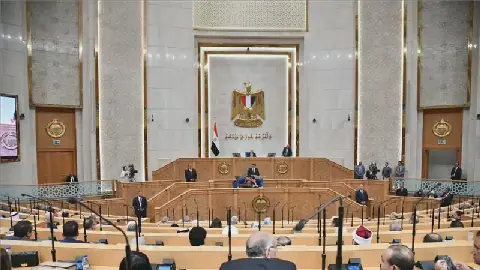
The parliamentary group of the Mauritanian party "Tawassul" has expressed concerns over the delayed implementation of large-scale projects announced by the government. According to the group, 81 out of 113 projects have missed their deadlines, accounting for 72% of the total. This has raised fundamental questions about the government's ability to manage and execute large-scale projects. The group's concerns were voiced by parliamentarian Ahmadou Ould Imbaleh during a session with the Prime Minister.
Ould Imbaleh emphasized that the delays not only hinder the country's development but also result in significant financial burdens on the state. The accumulated delay penalties for the stalled projects are estimated to be around 34 billion ouguiya, a substantial amount that could have been allocated to essential public services such as education, healthcare, and infrastructure. The parliamentary group is seeking answers on who is responsible for the delays and what measures the government has taken to address the issues.
The Tawassul parliamentary group also raised concerns about the country's external debt, which stands at approximately 2192 billion ouguiya as of October 31, 2026. The group is questioning the government's borrowing strategy and its impact on the national economy and basic services. Ould Imbaleh highlighted that the low execution rate of loans in 2024-2025, which did not exceed 80%, is particularly worrying, especially with 27 projects having been ongoing for over eight years.
The parliamentary group presented a detailed table of the delayed projects, which has sparked concerns about the government's ability to manage large-scale projects and utilize available funding effectively. Ould Imbaleh questioned the continued expansion of borrowing policies while the country's project implementation capacity remains below par. He warned that this could turn external debt into a growing burden on public finances and future generations.
The Tawassul group's concerns are centered on the impact of delayed projects on citizens' lives and the country's development. The group's criticism is focused on the need for greater transparency and accountability in the management of large-scale projects. Ould Imbaleh emphasized that citizens have the right to know how their money is being spent and what benefits they can expect from these projects.
The Mauritanian government's ability to address these concerns and provide satisfactory answers to the parliamentary group remains to be seen. The Tawassul group's criticism highlights the need for improved project management and greater transparency in the allocation of resources. The issue is likely to continue to be a topic of debate in the country's parliament.
The delayed projects and growing external debt have significant implications for Mauritania's economic development and citizens' well-being. The government's response to the Tawassul group's concerns will be crucial in determining the country's future development trajectory.
Key points
- 72% of large projects announced by government have missed implementation deadlines
- Accumulated delay penalties for stalled projects estimated at 34 billion ouguiya
- External debt stands at approximately 2192 billion ouguiya as of October 31, 2026