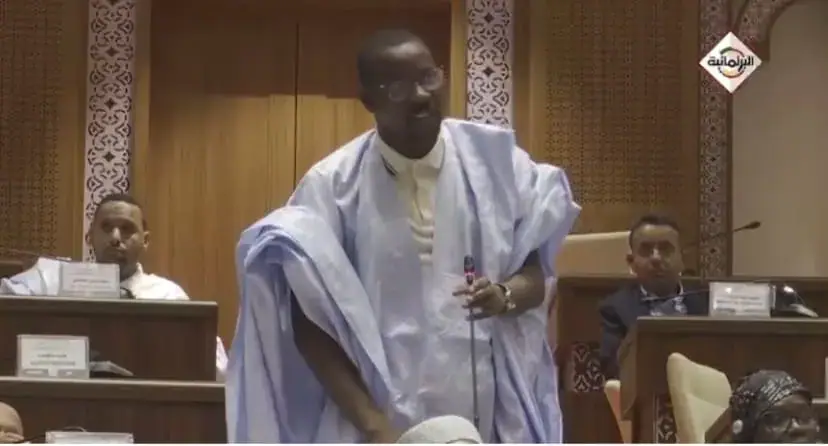
Mauritanian lawmaker Yahya Abubakar has spoken out against the country's approach to tackling drug abuse, stating that small-time offenders are often jailed while big-time dealers escape accountability. During a parliamentary session discussing a new anti-drug law, Abubakar, head of the parliamentary group for the "Tawwal" party, lamented that those who really need to be held accountable are not being targeted. He drew parallels with corruption, saying that in both cases, only low-level perpetrators are pursued.
Abubakar noted that many young people caught up in drug-related offenses come from marginalized communities and may be suffering from addiction as a medical condition. He argued that these individuals require treatment and support rather than imprisonment. In contrast, high-level dealers and those with influence often avoid punishment, he said. This, he believes, perpetuates a cycle of crime and addiction that can be difficult to break.
The lawmaker expressed concern that the current approach can have unintended consequences, such as turning non-violent offenders into hardened criminals while in prison. He called for a change in approach, urging the government to provide support and care for vulnerable young people rather than simply locking them up. Abubakar emphasized that this is not about stigmatizing certain groups, but about addressing a painful reality that needs to be confronted.
Abubakar highlighted a disturbing trend in Mauritania's prisons, where one group dominates the prison population. He noted that visitors to prisons and courtrooms often observe that a particular segment of society is overrepresented among those detained or imprisoned. This, he believes, is a sign of a deeper social issue that needs to be addressed through targeted policies and interventions.
The lawmaker also criticized the government's approach to empowering vulnerable groups, saying it is contradictory to talk about supporting these communities while allowing them to be driven into crime due to a lack of care and support. He argued that the government needs to take a more holistic approach to addressing social issues, including poverty, inequality, and addiction.
Abubakar also raised concerns about the connection between money laundering and the drug trade in Mauritania. He asked the Minister of Justice about the government's knowledge of this issue and what steps are being taken to address it. Specifically, he wanted to know if there is any evidence to support claims that the drug trade is being used to launder money in the country.
Abubakar's comments reflect growing concerns about the effectiveness of Mauritania's approach to tackling drug abuse and related social issues. His call for a more nuanced and supportive approach to addressing these problems is likely to resonate with many in the country who are concerned about the welfare of vulnerable young people and the impact of crime on communities.
Key points
- Mauritanian lawmaker Yahya Abubakar criticizes the country's approach to tackling drug abuse.
- Abubakar says small-time offenders are jailed while big-time dealers escape accountability.
- He calls for a more supportive approach to addressing drug addiction and related social issues.