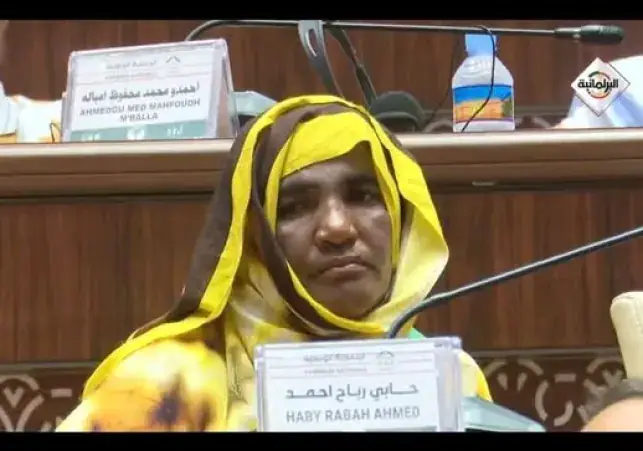
In a significant development, Haby Mint Rabah, a former slave who has risen to become a deputy in Mauritania's parliament, has been welcomed into the country's legislative body. This move marks a crucial milestone in the fight against slavery and social injustice in the West African nation. Rabah's journey serves as a testament to the power of resilience and determination in the face of adversity. Her entry into parliament is seen as a beacon of hope for those who have been marginalized and excluded from society.
Rabah's story is closely tied to that of Biram Dah Abeid, president of the IRA-Mauritania, a prominent anti-slavery activist. Abeid has been instrumental in breaking the silence around slavery and giving a voice to those who have been silenced by society. Despite facing insults, vilification, and pressure, Abeid and other abolitionist activists continue to push for an end to slavery and social injustice in Mauritania. Their efforts have not gone unnoticed, as Rabah's entry into parliament serves as a reminder that emancipation can lead to representation.
The fight against slavery and social injustice in Mauritania is an ongoing challenge. The country's history of slavery has left deep scars, and many continue to face marginalization and exclusion. However, with activists like Abeid and Rabah pushing for change, there is hope for a more just and equal society. The Mauritanian government has faced criticism for its handling of slavery and human rights issues, but Rabah's entry into parliament may signal a shift towards greater accountability and action.
The IRA-Mauritania, led by Abeid, has been at the forefront of the fight against slavery and social injustice. The organization has worked tirelessly to raise awareness about the issue and to push for policy changes that would protect the rights of marginalized communities. Rabah's entry into parliament is seen as a major victory for the organization and for the broader movement to end slavery and social injustice in Mauritania.
Rabah's story serves as a reminder that the fight against slavery and social injustice is far from over. Despite progress, many in Mauritania continue to face marginalization and exclusion. However, with activists like Rabah and Abeid pushing for change, there is hope for a more just and equal society. The Mauritanian government has a critical role to play in addressing these issues, and Rabah's entry into parliament may signal a shift towards greater accountability and action.
The Mauritanian government has faced criticism for its handling of human rights issues, including slavery. However, Rabah's entry into parliament may signal a shift towards greater accountability and action. The government has taken steps to address the issue of slavery, including the establishment of a national commission to combat slavery. However, more work remains to be done to address the root causes of slavery and social injustice in Mauritania.
As Mauritania continues to grapple with the legacy of slavery and social injustice, the entry of Haby Mint Rabah into parliament serves as a beacon of hope for those who have been marginalized and excluded. Rabah's story serves as a reminder that emancipation can lead to representation, and that with determination and resilience, individuals can overcome even the most daunting challenges. The fight against slavery and social injustice in Mauritania is far from over, but with activists like Rabah and Abeid pushing for change, there is hope for a more just and equal society.
Key points
- Haby Mint Rabah, a former slave, has entered Mauritania's parliament, marking a significant milestone in the fight against slavery and social injustice.
- Biram Dah Abeid, president of the IRA-Mauritania, has been instrumental in pushing for an end to slavery and social injustice in Mauritania.
- The fight against slavery and social injustice in Mauritania is ongoing, but with activists like Rabah and Abeid pushing for change, there is hope for a more just and equal society.