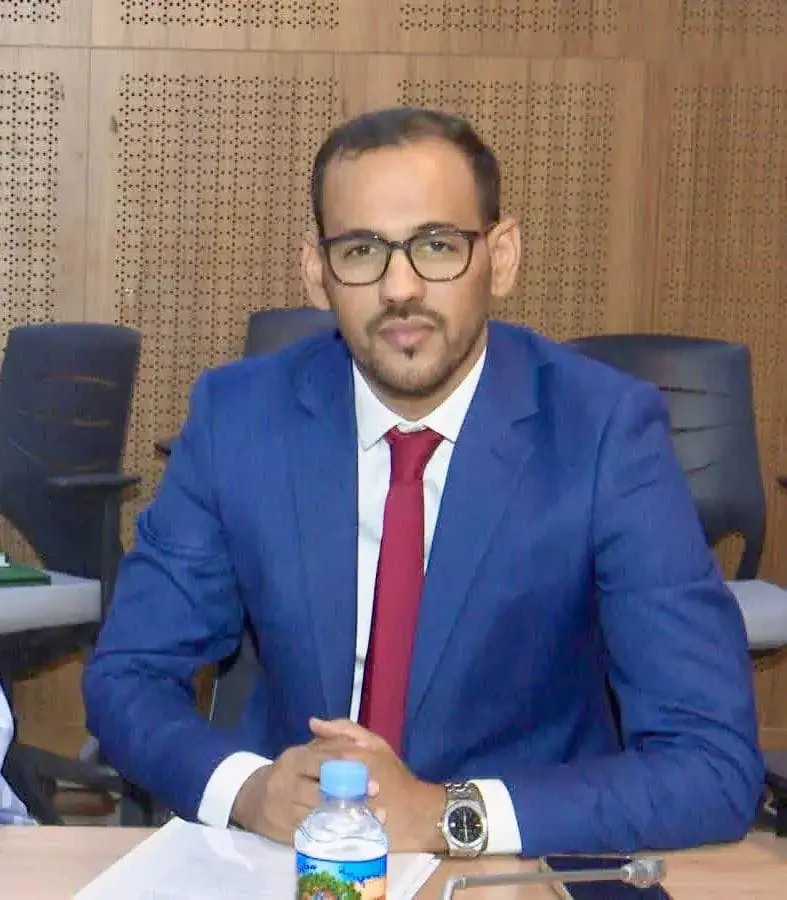
Mauritania's ruling party has responded to opposition claims that it is limiting debate time on the government's program. Zine El Abidine Ould Alamine, head of the parliamentary group of the ruling party, said that respecting MPs' rights and adhering to internal regulations are mutually responsible. He emphasized that a disagreement over time allocation does not justify accusations of suppressing the right to expression and oversight.
Ould Alamine was responding to comments by Ahmed Ould Imbaleh, a parliamentarian from the opposition party "Tawassoul". Ould Imbaleh had described the decision by the parliamentary conference to limit debate time as a "restriction on MPs". Ould Alamine questioned where the restriction lies, citing that the same time allocated for debating the government's program in 2024 was being proposed. He also asked whether adhering to internal regulations and resorting to decision-making mechanisms was a restriction on MPs.
Ould Alamine stated that he had read Ould Imbaleh's comments, which described the parliamentary conference's decision as a restriction on MPs. He noted that the allocated time for each MP's intervention, two and a half minutes, was the same as that adopted for discussing the government's program in 2024. He wondered what new development justified talk of reducing time or preventing MPs from conveying their opinions and concerns of their constituents.
The parliamentarian emphasized that the total time available to MPs from the "Tawassoul" party, one of the opposition factions, was nearly half an hour, which he considered a significant space to present their position on the program. He added that these MPs could also raise key criticisms, observations, and proposals if any. Ould Alamine pointed out that organizing debate time falls under the purview of the parliamentary conference.
According to Ould Alamine, Article 53 of the National Assembly's internal regulations empowers the parliamentary conference to distribute speaking time. Article 131, paragraph 4, specifies that the conference determines the overall debate duration, not less than four hours, and distributes it among groups according to their membership. These provisions apply to discussions on the general policy statement under Article 132, paragraph 3.
Ould Alamine also highlighted that the three minutes allocated for discussing the government's report were not a minimum imposed by the articles regulating the discussion of the general policy statement. He explained that determining intervention times falls to the parliamentary conference within the controls set by the internal regulations. He further noted that procedures for discussing the report differ from those for discussing the general policy statement.
The decision on debate time was taken by a vote within the parliamentary conference, according to Article 52, paragraph 2, which stipulates recourse to voting when consensus cannot be reached. Ould Alamine stressed that the allocated intervention duration applies to majority and opposition MPs equally.
Key points
- The ruling party in Mauritania has countered opposition claims that it is restricting debate time on the government's program.
- The disagreement centers on time allocation for discussing the government's program in the parliament.
- The internal regulations of the parliament empower the parliamentary conference to determine debate time and its distribution among MPs.