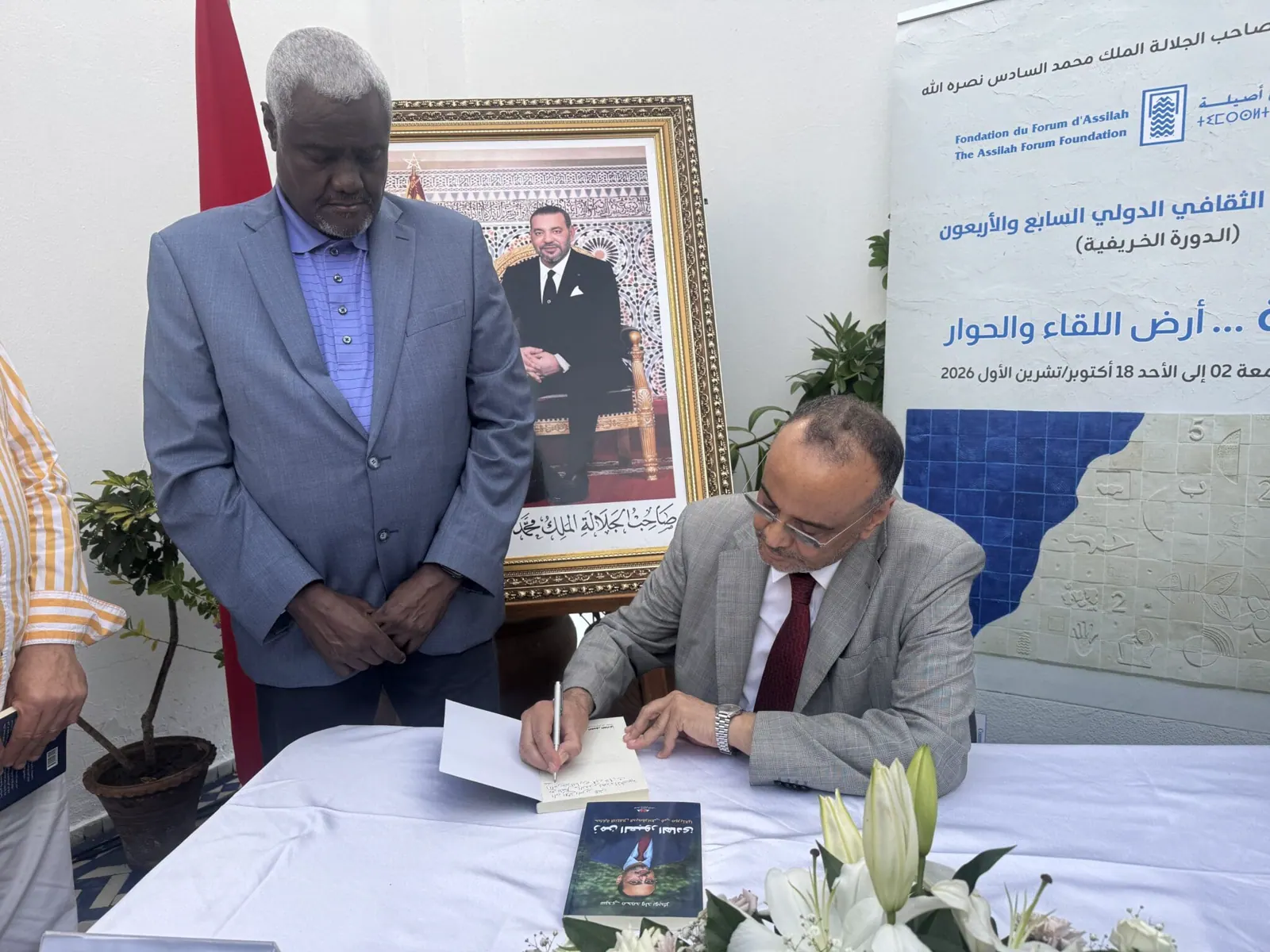
On the sidelines of the Asila Cultural Festival, Mauritanian former Prime Minister Sidi Mohamed Ould Boukher signed his book "A Time of Quiet Transition". The book recounts the country's transition to democracy between 2005 and 2007. Ould Boukher describes this period as a significant milestone in Mauritania's modern political history. He aims to provide an objective account of this period, which he believes has been shrouded in mystery.
The events described in the book took place after the 2005 political change in Mauritania, when a civilian government led a transitional phase that ended with presidential, legislative, and local elections. Ould Boukher was a key figure during this period, serving as transitional Prime Minister. Prior to this, he held several positions, including Minister of Finance and Prime Minister in 1992. His book examines various reforms implemented during this period.
The book covers a range of political, economic, and administrative reforms, including those related to human rights, press and media, health, financial management, and relations with international donors and institutions. Ould Boukher's work also explores the restructuring of territorial administration, public contracts, budget management, and the establishment of transparency rules. These reforms aimed to establish a foundation for sustained democratic progress.
Moroccan writer Abdelilah Tahanani praises Ould Boukher's experience as remarkable, given that a civilian government was installed during a transitional phase and given considerable autonomy to implement reforms. Tahanani notes that the book provides detailed insights into the measures taken during this period and the laws, decrees, and institutional frameworks established. Ould Boukher's account offers a unique perspective on Mauritania's transition to democracy.
Ould Boukher's book is not a traditional memoir but rather a "story" for history, as he seeks to provide an objective account of the transition. By adopting this approach, he moves beyond personal reflections to offer a broader analysis of the experience and its significance for Mauritania's democratic development. The book raises important questions about the legitimacy of reforms implemented during a transitional period.
The book's introduction highlights several key questions, including the legitimacy of reforms without electoral mandate and the capacity of temporary authorities to establish lasting reforms. Ould Boukher's work contributes to ongoing discussions about Mauritania's democratic trajectory and offers insights into the challenges of transitioning to democracy. A French edition of the book is also available.
The launch of "A Time of Quiet Transition" has sparked interest in Mauritania's recent history and its ongoing democratic journey. As the country continues to navigate its development, Ould Boukher's account provides valuable lessons for policymakers, scholars, and citizens. The book offers a nuanced understanding of the complexities and opportunities presented by democratic transitions in Africa.
Key points
- The book examines the 2005-2007 democratic transition in Mauritania.
- Ould Boukher aims to provide an objective account of this period.
- The book covers various reforms implemented during the transitional phase.