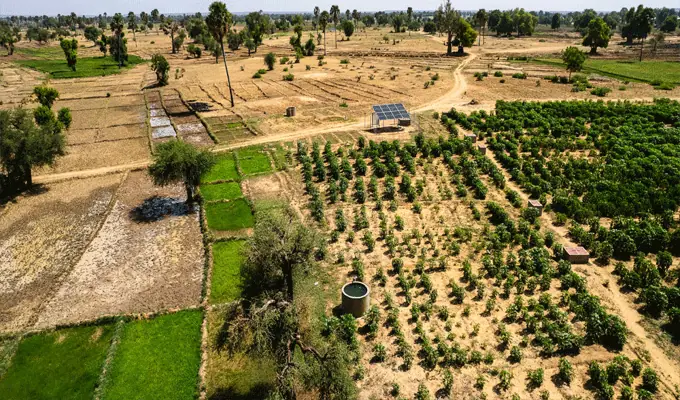
The Mauritanian government is set to participate in Maurital Agri, a major agricultural project developed in partnership with Italy's BF International. The project aims to cultivate 15,000 hectares in the Brakna region, with plans to produce wheat, maize, and selected rice seeds. The government's participation in the project is expected to be around 49-49.9%, although a slight discrepancy exists between the Arabic and French versions of the presidential communiqué.
The project has three main objectives: mastering water resources, sharing financial risks, and reducing cereal dependence. The Brakna region will be irrigated using the new Louweid canal, which will play a crucial role in the project's success. However, the communiqué does not provide a detailed hydraulic balance to assess the project's sustainability. The government's participation will help mitigate financial risks, but the actual exposure will depend on various factors, including infrastructure financing and public guarantees.
The project's impact on food security will depend on several factors, including crop yields, production costs, and commercialization. The government hopes that increased local production will limit cereal imports, but the project's success will be measured by its ability to produce cereals sustainably at a competitive cost. The water requirements for the project will need to be carefully managed to avoid compromising the region's hydrological balance.
The Mauritanian Council of Ministers adopted a decree authorizing the state's participation in Maurital Agri on November 25, 2026. The project is expected to have a significant impact on the country's food security, but details about the investment amount and operational timeline remain unclear. The government will provide 15,000 hectares for the project, which will be developed in partnership with BF International.
The project's agricultural program includes wheat production during the cold season, maize in the off-season, and a selected rice seed production line. The Louweid canal will be used to irrigate the 15,000 hectares in the Brakna region. However, the project's sustainability will depend on careful management of water resources, financial risks, and agricultural yields.
The Mauritanian government's participation in Maurital Agri is seen as a strategic move to enhance food security. The project will help reduce the country's dependence on cereal imports and promote sustainable agriculture practices. However, the project's success will depend on various factors, including the management of water resources, financial risks, and crop yields.
The project's development will be closely monitored, with a focus on its impact on food security and sustainable agriculture practices. The Mauritanian government's investment in Maurital Agri reflects its commitment to enhancing the country's agricultural sector and promoting economic growth. Key aspects of the project include its 15,000-hectare scope, partnership with BF International, and focus on sustainable agriculture practices.
Key points
- The Mauritanian government plans to invest in a 15,000-hectare agricultural project to enhance food security.
- The project, developed with Italy's BF International, aims to produce wheat, maize, and selected rice seeds.
- The government's participation in the project is expected to be around 49-49.9%.