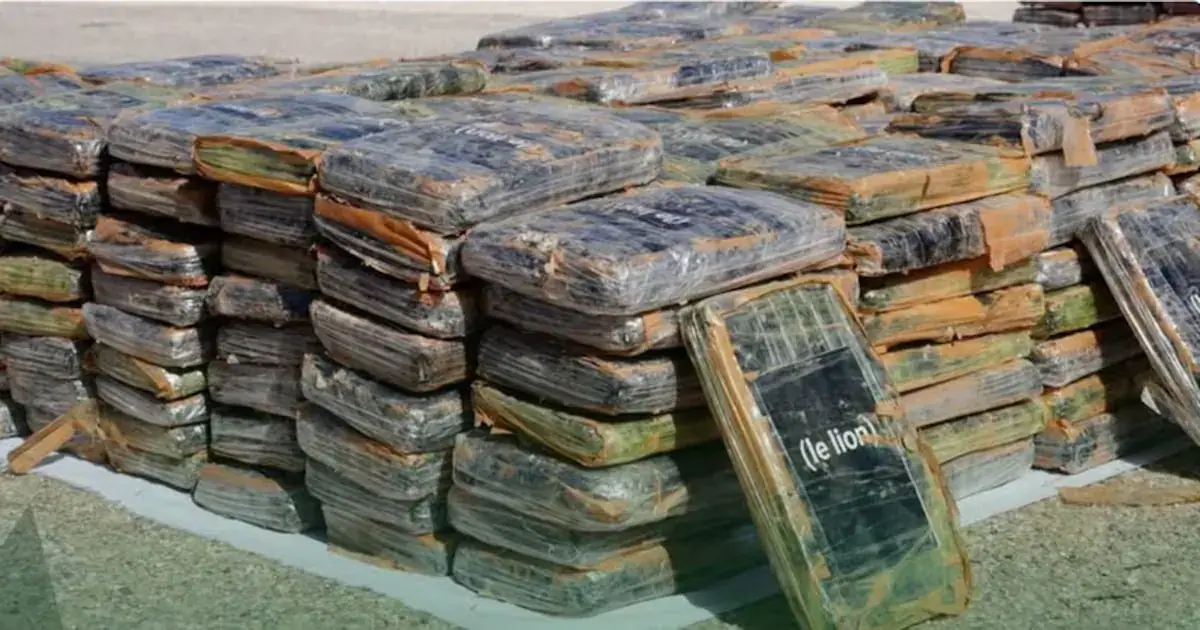
Mauritanian police announced on November 21, 2026, that they had seized 1,700 kilograms of cocaine in the Hodh Ech Chargui region, east of the country. The operation, which was the result of three months of investigations, led to the dismantling of a part of an international drug trafficking network and the arrest of two foreign suspects. This seizure is considered one of the largest ever made in the sub-region.
The investigation, conducted by the Central Office for the Fight Against Narcotics and Psychotropic Substances, was supported by modern surveillance and monitoring means. It led to the identification of a criminal network operating in several neighboring countries and suspected of wanting to extend its activities to Mauritanian territory. The police located the network's operatives to the "Daché" area in the Hodh Ech Chargui region.
A specialized team intercepted a Toyota Hilux vehicle transporting 1.7 tons of high-quality cocaine. Two foreign nationals were also arrested during the operation. Initial statements from the suspects indicated that the cargo came from a neighboring country and was destined for another bordering state. The cocaine was to be transported through several areas along Mauritania's eastern and north-eastern borders.
The two suspects and the seized cocaine were presented to the prosecutor's office on November 19, 2026. The police are still searching for three other individuals of the same nationality, suspected of having direct links with the network. Mauritanian police describe this operation as the largest cocaine seizure ever made in the sub-region.
This seizure highlights the extent of transnational narcotics trafficking networks and their attempts to establish themselves in Sahelian countries. The case comes as West Africa is increasingly becoming a significant route for international cocaine trafficking. The region's coastal countries, ports, and land corridors to the Sahel are being used by criminal networks to transport cocaine to North Africa and Europe.
Mali and Niger are among the territories used by these networks. The seizure emphasizes that the fight against narcotics trafficking in the region goes beyond national borders. The search for the three remaining suspects will be crucial in further dismantling the network and identifying its international ramifications.
The successful operation demonstrates the capabilities of Mauritanian security services in combating transnational organized crime. The collaboration between law enforcement agencies and the use of modern surveillance tools were instrumental in achieving this significant seizure. The case also underscores the need for continued regional cooperation to address the growing threat of narcotics trafficking in West Africa.
Key points
- The Mauritanian police seized 1.7 tons of cocaine in a major operation, arresting two foreign suspects and dismantling a transnational trafficking network.
- The seizure highlights the growing threat of narcotics trafficking in West Africa, with the region increasingly being used as a route for international cocaine trafficking.
- The operation demonstrates the importance of regional cooperation in combating transnational organized crime and the need for continued efforts to address the threat of narcotics trafficking.