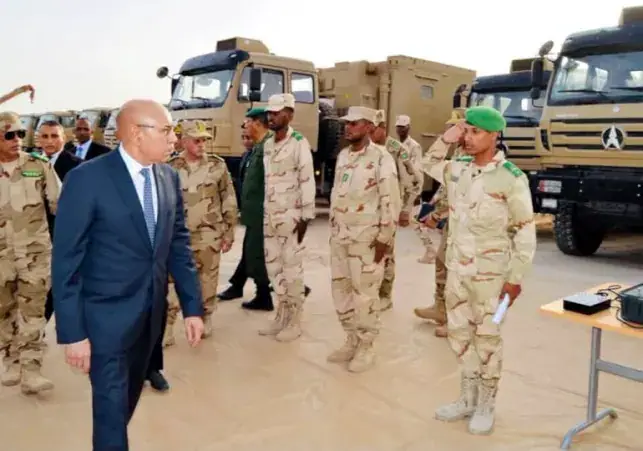
In June 2005, Mauritania's army was severely tested when its Lemgheity outpost was overrun by a column of the GSPC, a terrorist group. The attack resulted in the deaths of 15 soldiers, injuries to others, and the capture of weapons and vehicles. The assailants spared the survivors, intending for them to report back to Nouakchott and demonstrate the country's vulnerability to terrorist attacks. This event was a harbinger of further assaults.
Over the following years, Mauritania faced numerous terrorist attacks. In October 2007, a convoy carrying funds was ambushed on the road to Nouakchott's port, with the loot being taken towards northern Mali. In December of the same year, four French tourists were killed near Aleg, and three days later, three soldiers died in an ambush in the El Ghallaouiya region. These incidents continued, with targets including an Israeli embassy and a nearby nightclub in February 2008, and a thwarted attempt to kidnap a Western diplomat in April.
The year 2009 saw the terrorist threat escalate further into Nouakchott. An American teacher, Christopher Leggett, was assassinated in June, and in August, a suicide bomber attacked near the French embassy, injuring two gendarmes. This was the first suicide bombing in Mauritania's history. Later, three Spanish humanitarian workers were kidnapped on the Nouadhibou-Nouakchott axis, and an Italian couple was captured near the border. All hostages were taken towards northern Mali.
However, the tide turned in early 2010 when Mauritanian forces intercepted a drug convoy escorted by jihadists at Lemzereb, and another similar interception occurred in December north of Lemgheity. In August 2010, a vehicle loaded with explosives was stopped at the entrance of the Néma garrison, and its driver was killed. By February 2011, two cars loaded with explosives were halted at Nouakchott's gates, one destroyed and the other seized.
A significant turning point came in December 2011 with the abduction of a gendarme at Adel Bagrou, who was taken into northern Mali. Since then, nearly 15 years have passed without a terrorist attack on Mauritanian soil. This achievement is notable because Mauritania accomplished it without engaging a private military company or allowing foreign troops to operate on its territory.
The Mauritanian approach to combating terrorism involved a multi-faceted strategy. It included adopting a specific anti-terrorism law in 2010, enhancing its armed forces and security services, and bolstering intelligence capabilities. The legal framework allowed for the prosecution of terrorism suspects, while the military was restructured to create mobile and light intervention groups capable of operating in the desert.
The success of Mauritania in defeating terrorism offers a valuable lesson for its neighbors. Despite sharing a long border with Mali and facing similar challenges, Mauritania's strategies and commitment to national security have yielded results. The approach emphasizes the importance of national ownership in security efforts, suggesting that external solutions may not provide sustainable peace.
Key points
- Mauritania defeated terrorism through a combination of legal measures, military restructuring, and intelligence gathering.
- The country achieved this without foreign military intervention, relying on its own forces and strategies.
- The Mauritanian model offers a potential lesson for neighboring countries struggling with similar security challenges.