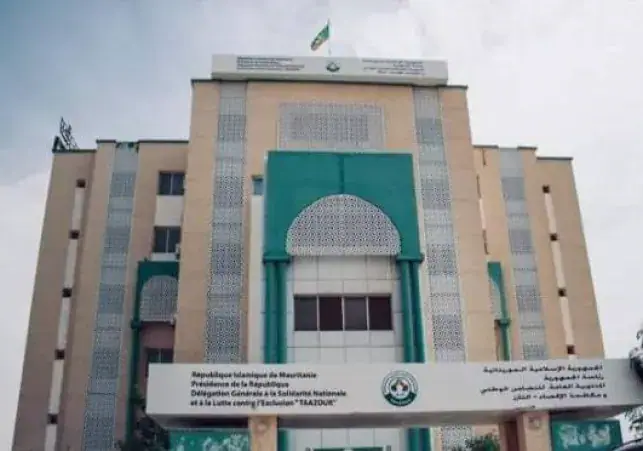
The Mauritanian government established the Delegation for National Solidarity and Poverty Reduction, known as TAAZOUR, in 2019 to centralize and strengthen the country's social protection efforts. Prior to TAAZOUR's creation, various entities, agencies, and ministerial cells were responsible for poverty reduction and social protection, leading to a fragmented landscape. TAAZOUR's establishment aimed to merge these entities into a single, more effective "super-ministry" for national solidarity.
Before TAAZOUR, three main pillars supported social action in Mauritania. The National Agency for the Fight Against Slavery, Insertion, and Poverty (TADAMOUN) was created in 2013 to target rural areas, support returnees, and construct infrastructure in Adwabas. The Food Security Commissariat (CSA) managed humanitarian crises, droughts, and food distributions, while other scattered structures and embryonic programs existed, such as the Social Registry Cell and the Tekavoul Program.
TAAZOUR has adopted a multisectoral and territorial approach to assist poor and vulnerable populations in Mauritania. The Social Registry is the central database that lists profiles of the poorest households, ensuring transparency and objectivity in aid distribution. Approximately 300,000 to 307,000 families are registered across the country. TAAZOUR collaborates with regional and local authorities to adjust interventions according to local realities in different wilayas.
TAAZOUR provides regular and exceptional monetary transfers to registered families, supporting their purchasing power against economic shocks. The program also distributes food kits and implements emergency programs, such as AOUN, which targets over 350,000 needy households. Additionally, TAAZOUR subsidizes basic products and reduces the cost of domestic gas through its TEMOUINE program and a network of subsidized stores.
TAAZOUR's program CHEYLA focuses on local development and basic services, constructing schools, health centers, and equipment for hundreds of thousands of students. The program also provides access to clean water by drilling hundreds of wells and establishing potable water networks in rural areas. In the social housing sector, TAAZOUR's DARI program constructs decent housing for disadvantaged populations.
TAAZOUR's ALBARKA program finances income-generating activities, such as individual projects, micro-enterprises, and rural infrastructure. The program also initiates Regional Development Plans (PDR) with specific development components for each wilaya, based on local concerns. These investments have resulted in concrete infrastructure, financial safety nets, and visible projects in rural areas and peri-urban zones.
The impacts of TAAZOUR's programs are evident on the ground, with nearly 300,000 families receiving regular financial allocations to mitigate inflation and climate shocks. In rural areas, immediate responses are deployed during crises, such as the distribution of 50,000 MRO to households affected by floods in Assaba. TAAZOUR has also launched large-scale construction projects, including 761 classrooms and dozens of health posts, to improve access to education and healthcare for isolated rural populations.
Key points
- TAAZOUR has mobilized over 249 billion MRO to support vulnerable populations in Mauritania since its creation in 2019.
- The program has registered approximately 300,000 to 307,000 families in its Social Registry, ensuring targeted support for the poorest households.
- TAAZOUR's multisectoral approach has resulted in concrete infrastructure, financial safety nets, and visible projects in rural areas and peri-urban zones.