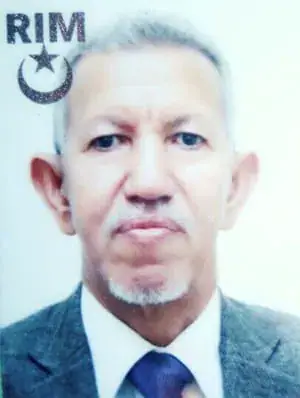
In Mauritania, a recent government reshuffle has sparked debate about the appointment of high-ranking officials who have reached retirement age. The country's constitution and laws govern the eligibility of individuals for public office. According to Article 1 of the Constitution, adopted on July 20, 1991, and amended, all citizens are equal before the law, and Article 12 states that citizens have the right to access public office without other conditions.
The Constitution grants the President the power to appoint civil and military officials, as stated in Article 32. A decree issued on April 7, 2016, defines high-level positions that fall under the President's authority. The decree categorizes these positions into two groups: those appointed by presidential decree and those appointed by a council of ministers' decree. This decree provides a framework for appointments to high-level positions.
The decree lists high-level positions that require a presidential decree, including ministers, the President of the Supreme Court, and the President of the Constitutional Council. Other positions, such as the Inspector General of the State and the President of the Economic and Social Council, are also included. The President has the discretion to appoint individuals to these positions.
The debate surrounding the appointment of retirees to high-level positions has raised questions about the interpretation of the law. Some argue that the law should be applied strictly, while others believe that the President has the authority to make appointments as they see fit. The issue has sparked discussion among the press, social media, and the public.
In Mauritania, the concept of retirement age is not a barrier to appointment to high-level positions. The law does not explicitly prohibit the appointment of retirees to these positions. The President's authority to make appointments is guided by the Constitution and the decree issued in 2016.
The appointment of retirees to high-level positions has implications for governance and the functioning of state institutions. It raises questions about the balance between experience and youth, as well as the role of the President in making appointments. The issue has sparked a national conversation about the country's governance and the application of the law.
Ultimately, the President's decision to appoint retirees to high-level positions is guided by their discretion and the law. The country's Constitution and laws provide a framework for appointments, and the President must work within this framework. The debate surrounding the appointment of retirees will likely continue, with different stakeholders offering their perspectives on the issue.
Key points
- The President of Mauritania has the authority to appoint retirees to high-level positions.
- The country's law does not explicitly prohibit the appointment of retirees to high-level positions.
- The appointment of retirees has sparked debate about governance and the application of the law in Mauritania.