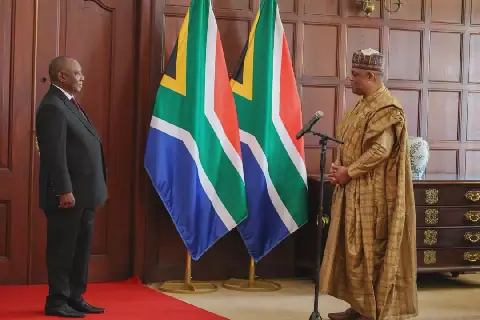
Mauritania's development strategy is focusing on digitalization as a key driver of progress, aiming to provide equal opportunities, transparent governance, and fair distribution of services to citizens. This digital transition is seen as a strategic necessity to break down bureaucratic barriers and open up opportunities for young people and skilled workers. The government's program, presented to parliament, outlines a vision for structural reforms, accountability, and measurable commitments to improve governance and meet citizens' expectations.
The country's national dialogue, set to take place soon, is a critical juncture that requires attention from all stakeholders, particularly given the significant events unfolding in Mauritania's Arab and African neighborhood. Recent developments in the Western Sahara conflict, the MINURSO mission's security gap, and turmoil in Mali and Senegal's political struggles, necessitate a responsible approach from national forces to unify ranks and safeguard the internal front against potential instability.
The political landscape is marked by significant events, including the presentation of the government's program to parliament and the resignation of Deputy Biram Dah Abeid, which drew attention due to its theatrical nature. However, this verbal resignation is not legally binding in Mauritania; it must follow a legal process and written procedures to become official. This situation highlights the need for national elites and stakeholders to rise to the level of national responsibility.
The current circumstances demand that Mauritania's stakeholders prioritize national interests over short-term calculations, necessitating an internal reckoning and acknowledgment of structural, social, and humanitarian shortcomings. A transparent path to reconciliation and rebuilding Mauritania on strong foundations is essential. Genuine national cohesion can only be achieved through a courageous examination of systemic flaws, addressing historical grievances, and establishing a comprehensive social contract that solidifies justice and the rule of law.
The success of the planned national dialogue is closely tied to the lessons learned from the turbulent surroundings and the adoption of a forward-looking vision based on national unity and the activation of institutional reforms. Accelerating the digital transformation is seen as a fundamental driver of development and stability. The belief is that building a better Mauritania requires collective effort, national consciousness, and prioritizing the country's security and cohesion.
A comprehensive national reconciliation that addresses structural imbalances and deepens e-governance is essential to ensure equal opportunities and unify the internal front in the face of regional challenges. This process aims to launch a national dialogue that brings together various stakeholders to discuss the country's future and the means to achieve stability and progress.
As Mauritania navigates its complex geopolitical environment, the country must balance its internal development needs with regional security concerns. The government's focus on digitalization, reconciliation, and institutional reforms is seen as crucial to achieving long-term stability and prosperity. The international community is watching closely, as Mauritania's progress could have implications for regional security and stability.
Key points
- Digitalization is a key driver of Mauritania's development strategy.
- National reconciliation is essential to addressing structural imbalances and achieving stability.
- The country's geopolitical environment is marked by significant challenges, including the Western Sahara conflict and turmoil in neighboring countries.