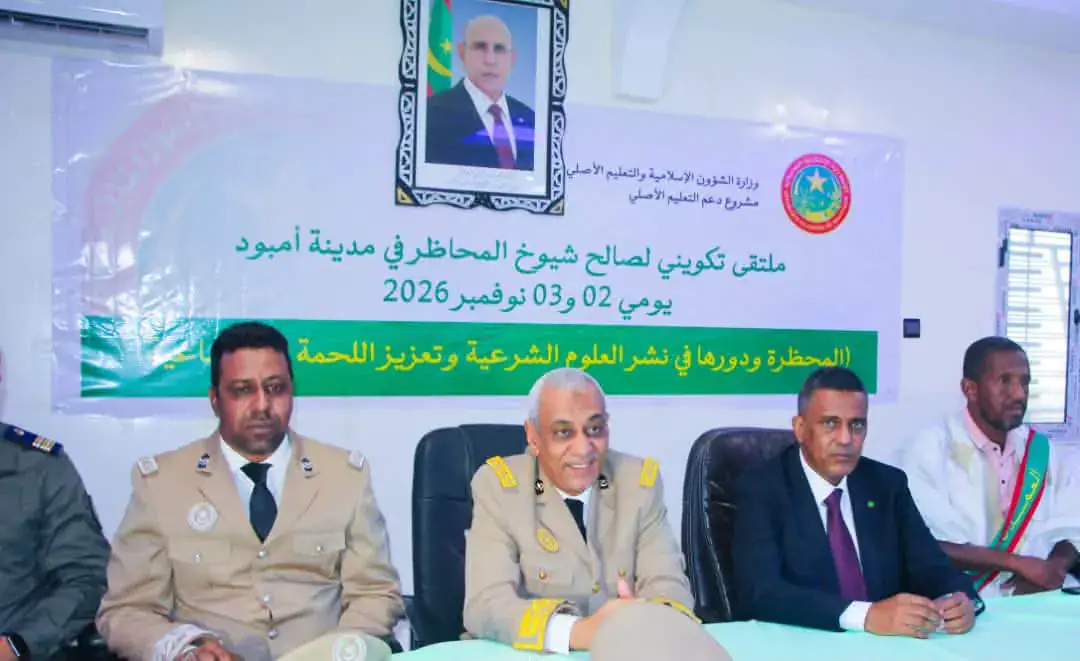
Mauritania's Islamic Affairs Minister, Sidi Mohamed Vall Ould Dah Abeid, announced a substantial increase in the number of Quranic schools supported by his ministry. The number has risen from 60 to 1767 over the past seven years. This growth reflects the government's efforts to promote Islamic education and preserve the country's cultural heritage. The minister made this announcement during the opening ceremony of a training forum for Quranic school leaders in the city of Amoud.
The minister emphasized that Quranic schools have played a vital role in Mauritania's history, serving not only as places for memorization and learning but also as institutions for producing scholars and preserving the country's identity. He highlighted the importance of these schools in promoting values such as brotherhood, tolerance, and social cohesion. The minister also noted that Quranic schools have been instrumental in preserving the country's religious and cultural memory.
According to the minister, the number of regional institutes for Islamic education has also increased from 4 to 9. This expansion aims to improve the quality of Islamic education and provide more opportunities for students to learn about their faith. The minister stressed that the growth of Quranic schools and institutes is a testament to the government's commitment to promoting Islamic education and preserving Mauritania's cultural heritage.
The training forum for Quranic school leaders, which took place in Amoud, brought together scholars and educators to discuss issues related to Islamic education. The minister emphasized that this forum is an opportunity to link the past with the present and to invest in the country's scientific and cultural heritage to build a better future. He also highlighted the importance of adapting Islamic education to meet the needs of modern society.
The minister noted that the Islamic Affairs sector has undergone a significant transformation in recent years. For the first time in Mauritania's history, the sector has been elevated to a sovereign level, alongside other key sectors. This development reflects the government's recognition of the importance of Islamic education and its role in shaping the country's identity.
As part of its efforts to promote Islamic education, the government has established a Quranic manuscript preservation center and a high council for zakat. Additionally, the president's prize for Quranic recitation and understanding has been launched to encourage students to excel in their studies. These initiatives demonstrate the government's commitment to promoting Islamic education and preserving Mauritania's cultural heritage.
The growth of Quranic schools and institutes in Mauritania reflects the government's efforts to promote Islamic education and preserve the country's cultural heritage. The minister's announcement highlights the importance of these institutions in shaping the country's identity and promoting values such as brotherhood, tolerance, and social cohesion. As Mauritania continues to develop its Islamic education sector, it is likely that these institutions will play an increasingly important role in the country's future.
Key points
- The number of Quranic schools supported by the Islamic Affairs ministry has risen from 60 to 1767 over the past seven years.
- The number of regional institutes for Islamic education has increased from 4 to 9.
- The government has established a Quranic manuscript preservation center and a high council for zakat to promote Islamic education and preserve Mauritania's cultural heritage.