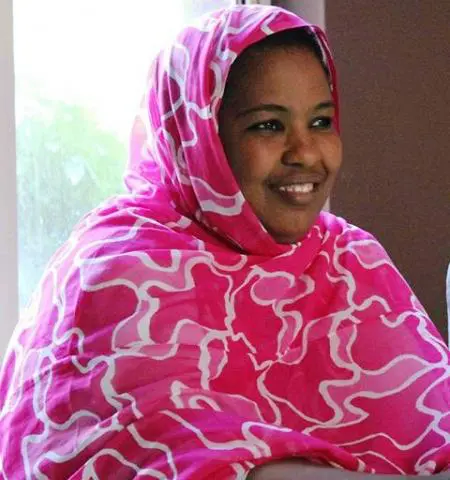
The Constitutional Council of Mauritania has confirmed the loss of their national assembly mandates for deputies Mariam Cheikh Samba Dieng and Ghamou Achour Salem. This decision comes after the Supreme Court rejected their appeal against a five-year ban on their national and civil rights. The two deputies were arrested in April for publishing and disseminating content on social media, and were charged with insulting national symbols, spreading racist remarks, inciting hatred, and defamation.
In May, the Nouakchott-Ouest penal court sentenced them to four years in prison, which was later reduced by the appeals court in July to four years, with two years suspended, and a five-year ban on their civil and political rights. On July 9, President Mohamed Ould Cheikh El Ghazouani granted a presidential pardon to the two deputies, covering the remainder of their prison sentence, fines, and court costs. However, the ban on their civil and political rights remained subject to judicial appeal.
The Constitutional Council had initially decided in July to maintain the two deputies in their functions, as the judgment was not yet final and could still be appealed to the Supreme Court. However, on September 29, the Supreme Court upheld the appeals court judgment regarding the five-year ban on their civil and political rights, rendering the judgment final.
According to the Constitutional Council, the organic law on the election of national assembly deputies grants it the power to confirm the loss of mandate if one of the cases of ineligibility provided by law occurs after the elections. The Council stated that its competence in this case was limited to verifying the existence of a legal reason justifying the loss of legal capacity and drawing the consequences provided by law.
The Constitutional Council's decision was based on the fact that the five-year ban on the deputies' civil and political rights constituted a case of ineligibility for the national assembly. This decision marks the end of the deputies' mandates, which were revoked due to their conviction and the subsequent ban on their rights.
The case has sparked controversy and raised concerns about freedom of expression and the limits of criticism in Mauritania. The deputies' arrest and conviction were seen as a test of the country's tolerance for dissent and criticism, and the Constitutional Council's decision has been interpreted as a significant development in the country's ongoing debate about human rights and the rule of law.
The implications of the Constitutional Council's decision are still unclear, but it is likely to have significant consequences for the two deputies and their constituents. The decision may also have broader implications for the country's democratic institutions and the protection of human rights, and may be seen as a significant development in Mauritania's ongoing efforts to strengthen its democratic institutions and protect the rights of its citizens.
Key points
- The Constitutional Council's decision was based on a law that grants it the power to confirm the loss of mandate if one of the cases of ineligibility provided by law occurs after the elections.