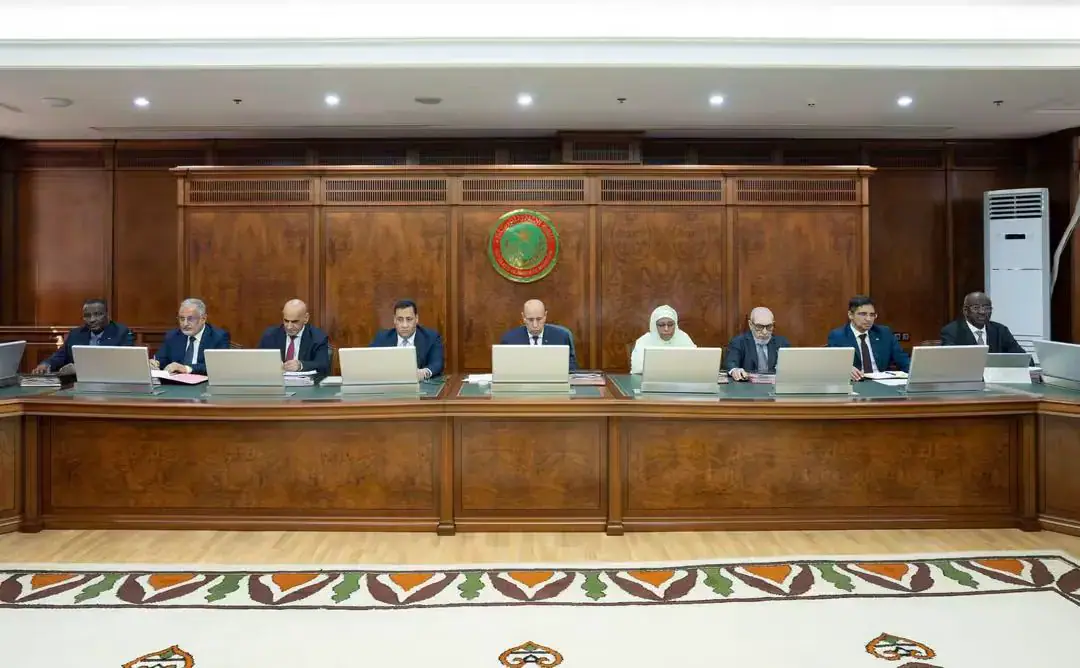
On November 4, 2026, Mauritania's cabinet met under the leadership of President Mohamed Ould Cheikh El Ghazouani. During the meeting, the cabinet reviewed and approved several significant projects and decrees aimed at enhancing the country's regulatory framework, improving governance, and promoting national development. These projects included reforms to the public procurement code, customs regulations, and the basic system for teachers and higher education researchers.
One of the key projects approved was a decree to apply Law No. 2026-026, dated June 10, 2026, related to the public procurement code. This decree aims to reform the regulatory framework for public procurement, aligning it with international best practices. It establishes the necessary regulatory tools for implementing the law, including the creation of a public procurement regulatory authority, a monitoring committee, and public procurement contract committees.
The new public procurement code decree introduces several improvements, including the enhancement of the institutional framework, professionalization of public procurement actors, and promotion of good governance and transparency. It also aims to reduce corruption risks by requiring public procurement actors to declare their assets and interests and by gradually digitalizing public procurement procedures. Furthermore, the decree seeks to improve contract execution monitoring and reduce timelines throughout the contract conclusion and life cycle.
In addition to the public procurement code, the cabinet approved a decree amending and completing some provisions of Decree No. 2025-119, dated August 14, 2025, related to the application of Law No. 2025-013, dated May 19, 2025, on the basic customs system. This amendment aims to correct translation issues and ensure consistency with military and security terminology. It also seeks to adjust and complete human resource management arrangements, including training, evaluation, compensation, and retirement, to align with similar systems for military and security personnel.
Another significant project approved was a decree establishing a special system for teachers and higher education researchers. This decree aims to unify and update the regulatory framework for these professionals, harmonize career management rules, and enhance the role of academic qualifications in recruitment and career progression. It also clarifies conditions for recruitment and career advancement, defines professional rights and duties, and integrates research workers from the Mauritanian Institute for Ocean and Fisheries Research (IMROP) into a coherent regulatory framework.
The cabinet also made several key appointments, including the president of the board of directors of the Mauritanian Hydrocarbons Company, and the president and members of the board of directors of the Mauritanian Maritime Affairs Agency and the National Laboratory for Public Works. These appointments are expected to contribute to the effective management and development of key sectors in Mauritania.
Following the cabinet meeting, the Prime Minister presented an outline of the government's general policy statement, which will be submitted to the National Assembly in accordance with Article 42 of the Constitution. The Minister of Foreign Affairs and Cooperation presented a report on the international situation, while the Minister of Interior, Decentralization, and Local Development reported on the domestic situation.
Key points
- The Mauritanian cabinet approved several key decrees and appointments aimed at enhancing governance, promoting national development, and improving regulatory frameworks.
- The new public procurement code decree aims to align the country's regulatory framework with international best practices and promote transparency and good governance.
- The cabinet also made significant appointments to key positions, including the Mauritanian Hydrocarbons Company and the Mauritanian Maritime Affairs Agency.