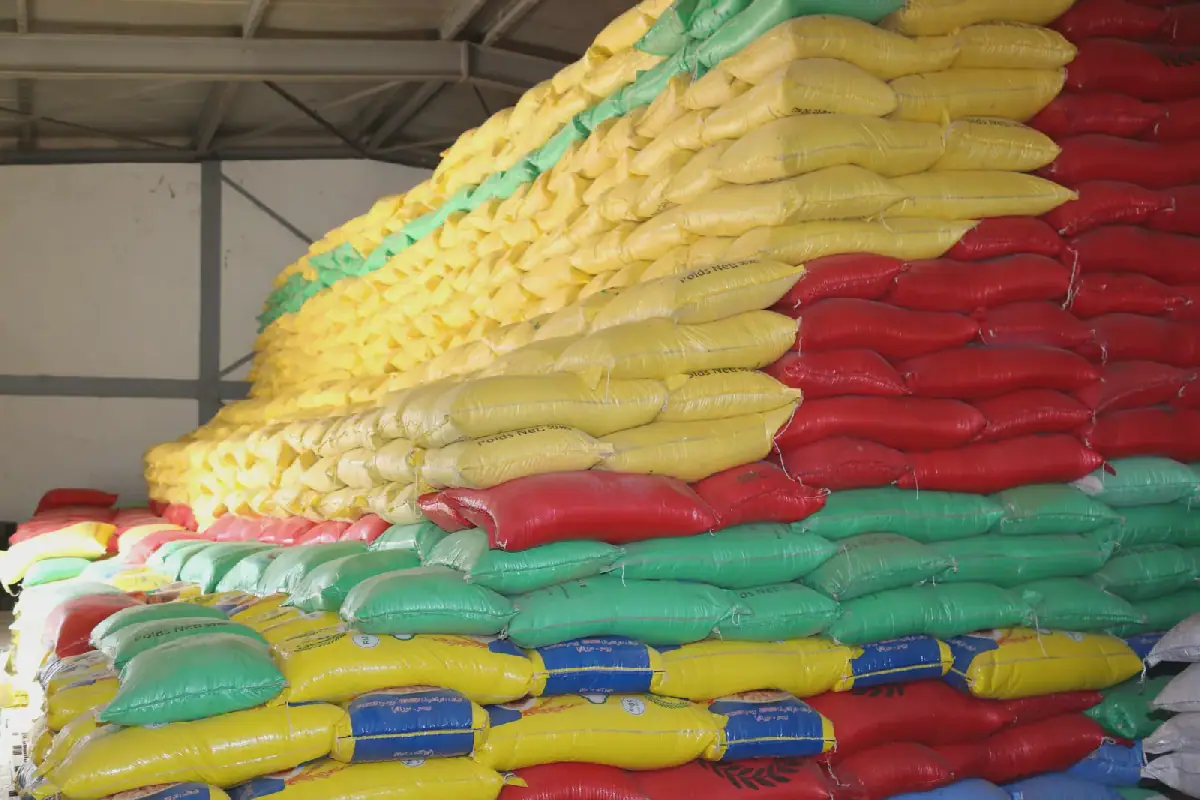
In Mauritania, securing essential supplies has become a major concern for the government. To address this issue, the Centrale des achats et d’approvisionnement des marchés (CAAM) was established in October 2021 under the initiative of President Mohamed Ould Cheikh El Ghazouani. The CAAM has progressively become a key instrument in supporting national policies related to food security, protecting purchasing power, and promoting agricultural production. Since its inception, the CAAM has been involved in mobilizing food products, livestock feed, and agricultural inputs to meet the needs of the population and support agricultural campaigns.
The CAAM's efforts have yielded significant results, with over 337,000 tonnes of products mobilized in 2022. This momentum has continued in subsequent years, with a particular focus on social programs, including TEMWIN. In 2025, the CAAM acquired nearly 42,000 tonnes of fertilizers, in addition to food supplies and herbicides. The acquisitions made in 2024, 2025, and 2026 demonstrate the CAAM's diversified and strengthened interventions. Notably, in 2024, the CAAM acquired 19,725 tonnes of fertilizers and 545,000 liters of herbicides.
To fulfill its missions, the CAAM engages in prospecting, competitive bidding, and negotiation with suppliers. These operations aim to guarantee product quality and secure suitable delivery conditions. The CAAM's activities also involve coordination with institutions involved in financing, receiving, and distributing supplies. The CAAM's role extends beyond purchasing, as it also monitors markets and analyzes price formation mechanisms. It provides the secretariat for the Price Monitoring Commission and contributes to the development of essential product price structures.
The CAAM's analysis of import costs, exchange rates, approach fees, and distribution margins provides technical elements useful for decision-making by authorities. In a context of international market volatility, this analytical capacity represents an important lever for anticipating tensions and identifying favorable conditions for acquisitions. It also enables the CAAM to strengthen its understanding of changes that may affect essential product supplies.
Over the past five years, the CAAM has combined several complementary functions, including mobilizing supplies, monitoring markets, and supporting price regulation. This mission aligns with President El Ghazouani's orientations and supports the government's efforts to ensure food security in Mauritania. The CAAM's progress is a significant step towards achieving these goals.
The CAAM's activities have contributed to a more stable food supply in Mauritania. By acquiring essential products, the CAAM helps to regulate prices and ensure that the population has access to necessary goods. The CAAM's efforts also support local agricultural production, which is critical for the country's economic development.
As the CAAM continues to strengthen its role in food security and price control, it is likely to play an increasingly important part in Mauritania's economic landscape. With its diversified interventions and analytical capacity, the CAAM is well-positioned to address the challenges of food security and price volatility in the region.
Key points
- The CAAM has acquired significant quantities of essential products, including fertilizers, food supplies, and herbicides, to support Mauritania's food security and agricultural production.