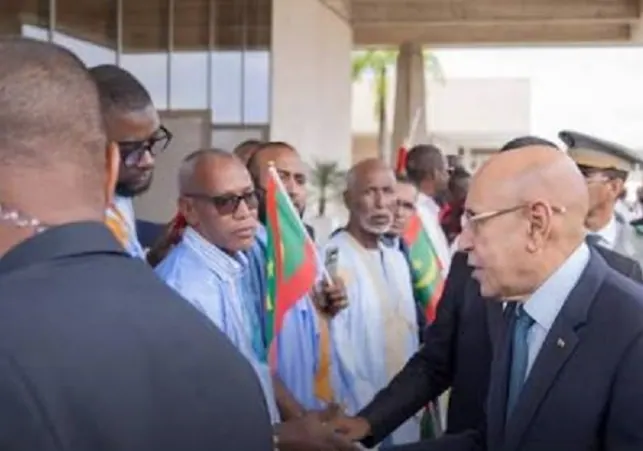
The Mauritanian government, led by President Mohamed Cheikh Ould Ghazouani, has announced plans to host a diaspora forum in Nouakchott from October 29-30, 2026. According to a communiqué released after a cabinet meeting on September 16, 2026, the forum aims to engage with the Mauritanian diaspora and tap into their expertise and resources. This move comes at a time when the country is facing significant challenges, including a tense political climate, economic hardship, and energy and water crises.
This is not the first time a Mauritanian government has organized a diaspora forum. In 2007, under President Ely Ould Mohamed Vall, the country's first scientific conference was held, bringing together experts from the diaspora to discuss development issues. The event was seen as an attempt by the military regime to legitimize its rule and demonstrate a commitment to democratic reforms. However, the forum was criticized for being overly focused on technical expertise, with limited representation from the broader diaspora community.
In 2013, President Mohamed Abdel Aziz organized a colloquium for the diaspora, which was attended by dozens of experts and researchers from around the world. The event was designed to promote Mauritania's development and economic growth, and to mobilize resources from the diaspora. However, the colloquium was criticized for being overly focused on promoting the president's agenda, rather than fostering genuine dialogue and inclusion.
The 2026 forum is expected to differ from its predecessors in several key ways. For the first time, the event will focus on the "communities" of the diaspora, rather than just individual experts or researchers. This approach is seen as an attempt to promote greater inclusivity and representation, particularly for historically marginalized groups such as the Harratines, Ma'alamine, and Igawans.
The upcoming forum is also taking place in a different context than its predecessors. The Mauritanian diaspora has grown significantly in recent years, and is now more diverse, connected, and critical of the government. Many in the diaspora are demanding greater democracy, justice, and recognition, and are hoping that the forum will provide a platform for their voices to be heard.
According to sources, the 2026 forum will provide an opportunity for the diaspora to engage with the government on key issues, including economic development, social justice, and human rights. The event is also expected to feature discussions on the role of the diaspora in promoting national development, and on ways to strengthen ties between the diaspora and the Mauritanian government.
As the 2026 diaspora forum approaches, many are watching to see whether it will live up to its promise of promoting greater inclusion and representation. With its focus on communities and inclusivity, the event has the potential to mark a significant shift in the government's approach to engaging with the diaspora.
Key points
- The 2026 diaspora forum will focus on the "communities" of the diaspora, rather than just individual experts or researchers.
- The event aims to promote greater inclusivity and representation, particularly for historically marginalized groups.
- The forum will provide an opportunity for the diaspora to engage with the government on key issues, including economic development, social justice, and human rights.