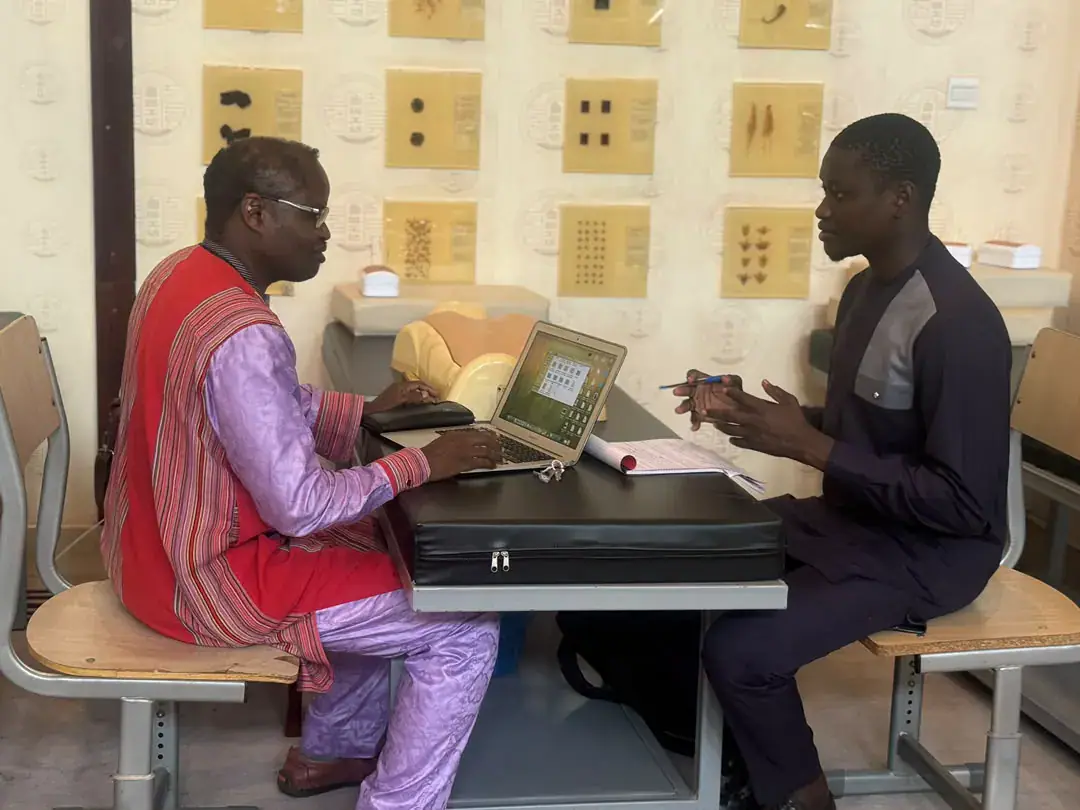
In a recent interview with Mali's National Press Agency, Pr Boubacar Diarra, director of Mali's Luban Workshop, discussed the structure's mission and its cooperation with China. The Luban Workshop, established in 2019, aims to promote professional cooperation between China and Mali in traditional medicine. It offers theoretical and practical training to Malian students, facilitating exchanges, talent development, and know-how sharing. This initiative is part of a long-standing effort to develop traditional medicine in Mali, dating back to the country's early years of independence.
The Luban Workshop focuses on providing training in traditional Chinese medicine, including theoretical foundations, acupuncture, Tuina massage, identification and preparation of medicinal plants, and diagnosis and treatment of certain conditions. These training programs combine theoretical teachings with practical exercises, aiming to qualify Malian technicians and enhance local capacities. By integrating traditional Chinese medicine practices, Mali can improve its healthcare services, particularly in pain management, an area where acupuncture can make a significant contribution.
According to Pr Diarra, the Sino-Malian cooperation is crucial to the development of the Luban Workshop. This partnership involves competent structures from both countries, as well as Malian and Chinese universities. The Chinese side provides teachers, educational programs, equipment, and teaching resources. This collaboration enables Malian students to benefit from China's experience in traditional medicine and facilitates the transfer of techniques and expertise.
The Luban Workshop addresses the need for structured professional training, competency reinforcement, and experience transfer between China and Mali. By creating a platform for exchanges between traditional Chinese and Malian medicine, the workshop promotes a better understanding of traditional practices. This initiative aligns with Mali's earlier efforts to develop traditional medicine, including the establishment of a specialized research institute, one of the first in Africa.
Pr Diarra emphasizes the importance of investing in research and valorizing traditional knowledge to enhance Mali's healthcare sovereignty. He advocates for strengthened research, training, and infrastructure to make traditional medicine a vital component of the country's healthcare system. By leveraging traditional medicine, Mali can improve its healthcare services and reduce reliance on external aid.
The Luban Workshop has been operational since its creation in 2019, with a focus on building local capacities in traditional medicine. The initiative has the potential to contribute significantly to Mali's healthcare development, particularly in rural areas where access to conventional healthcare services is limited. By promoting traditional medicine, Mali can tap into its rich cultural heritage and develop a more comprehensive healthcare system.
As Mali continues to explore the potential of traditional medicine, the country is likely to face challenges in terms of infrastructure and resources. However, with the support of international partners like China, Mali can overcome these challenges and develop a thriving traditional medicine sector. Pr Diarra's advocacy for increased investment in research and traditional knowledge valorization is expected to continue, as Mali seeks to harness the benefits of traditional medicine for its healthcare system.
Key points
- Pr Boubacar Diarra calls for increased investment in traditional medicine research and valorization of local knowledge.
- The Luban Workshop, established in 2019, promotes Sino-Malian cooperation in traditional medicine.
- Mali aims to leverage traditional medicine to enhance its healthcare sovereignty.