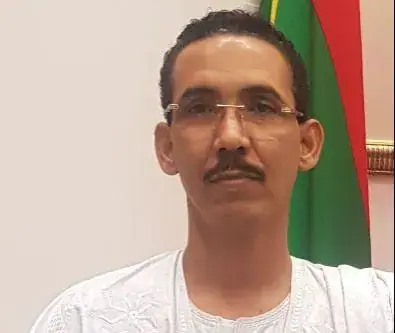
Mauritania is commemorating its 66th independence anniversary, marking over six decades of state-building and institutional development. The country has witnessed significant transformations and achievements across various sectors, despite facing challenges on its path to development and modernization. As the nation reflects on its journey, it is evaluating the progress made during the past seven years under President Mohamed Ould Cheikh El Ghazouani's leadership.
A key area of focus is the road network, which has seen substantial improvement. Prior to 2019, approximately 5,720 kilometers of roads were built during previous presidential terms. However, over 3,000 kilometers of paved roads have been constructed since 2019, including new roads and the rehabilitation and expansion of urban networks. This represents over 52% of the total roads built during previous terms, demonstrating significant progress. Additionally, three bridges have been built, and work is underway on five more as part of the second phase of Nouakchott's development program.
The education sector has also experienced a notable transformation. Since 2019, around 7,600 classrooms have been built, accounting for nearly 40% of the total number of classrooms constructed since independence. This brings the total number of classrooms to approximately 19,000. Furthermore, 19,581 teachers have been recruited, making up about 72.5% of the current teaching staff of 27,000. Six school dormitories have also been opened, providing accommodation and meals for students, particularly in areas with limited access to educational institutions.
In the healthcare sector, significant strides have been made in expanding health coverage. The number of individuals benefiting from health insurance has increased from around 496,000 in 2019 to over 1.4 million currently. This expansion includes the addition of parents to the health insurance system, broadening the scope of social protection to encompass families. The government has also invested in infrastructure, building and equipping 12 hospitals, 65 health centers, and numerous health posts.
The water supply sector has seen substantial improvements, addressing the long-standing issue of water scarcity. The production capacity of the Adini water treatment plant has increased from 45,000 cubic meters per day to between 100,000 and 105,000 cubic meters. The Afotou coastal project, with a production capacity of 125,000 cubic meters per day, is undergoing expansion to raise its capacity to 225,000 cubic meters. Similar projects are underway in Nouadhibou and other areas to enhance water supply and distribution.
The cultural sector has also received attention, with efforts to preserve and promote Mauritania's historical and cultural heritage. The city of Chinguetti in the Korcool region has been the focus of a cultural initiative, with President El Ghazouani personally overseeing the launch of a cultural festival to highlight the city's historical and scientific significance.
The government's commitment to strategic projects is evident in its increased investment in national development programs. Projects such as the Emergency Program for Universal Access to Basic Services for Local Development have a financial envelope exceeding 270 billion ouguiyas. The Nouakchott City Development Program has also been launched, with an initial phase costing around 69 billion ouguiyas and a second phase allocated 115 billion ouguiyas. These investments reflect a shift towards more comprehensive and integrated development programs.
Key points
- Significant progress has been made in infrastructure development, including roads, education, and healthcare.
- The government has invested heavily in strategic projects, including water supply and cultural initiatives.
- The expansion of health insurance coverage has increased social protection for Mauritanian citizens.