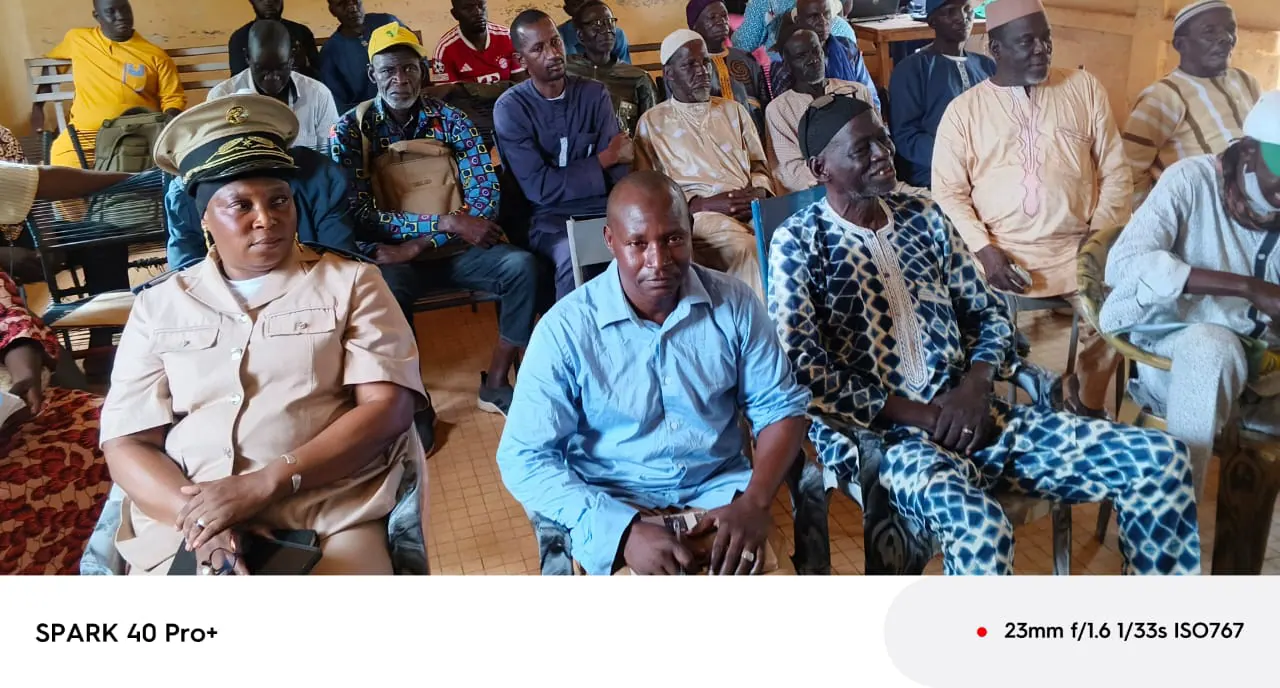
A local consultation was held in Kolondièba, Mauritania, on October 2-3, 2026, as part of the National States of Livestock, Fishing, and Aquaculture (EGEPA). The meeting, presided over by First Deputy Prefect Ibrahima Dougnon, brought together administrative authorities, territorial collectives, technical services, and civil society actors. The consultation aimed to identify key constraints hindering the development of these sectors.
The meeting gathered various stakeholders, including sub-prefects, mayors of Fakola and Kolondièba, technical services responsible for agriculture, livestock, and animal production, as well as representatives of the village chief and civil society. Participants examined major constraints, existing opportunities, priority investments, and necessary reforms. They also identified issues requiring national orientation and guidance.
The consultation is part of a broader process to assess the state of these sectors, identify progress, weaknesses, and structural constraints, and formulate recommendations tailored to local realities. The process involves local and regional consultations to account for territorial specificities, climate change effects, and crisis consequences. The goal is to achieve a sustainable consensus among actors and strengthen social cohesion.
The livestock and fishing department aims to promote peace and social cohesion among farmers, breeders, and fishermen through these consultations. The EGEPA was officially launched on July 7, 2026, in Bamako, with government members and technical and financial partners in attendance. Local consultations will help address specific challenges facing these sectors in different regions.
The Kolondièba consultation is an essential step in local development, according to the First Deputy Prefect. He expressed gratitude to participants for their contributions, which will inform future decisions and actions. Similar consultations are expected to take place in other regions to ensure a comprehensive understanding of the challenges and opportunities facing these sectors.
The stakeholders discussed constraints and opportunities in the livestock, fishing, and aquaculture sectors, with a focus on identifying solutions and recommendations. The consultation also aimed to promote collaboration and coordination among actors, which is crucial for sustainable development. By engaging local stakeholders, the government can develop targeted strategies to address specific challenges.
The outcomes of the consultation will inform national policies and strategies for the development of the livestock, fishing, and aquaculture sectors. The Mauritanian government is committed to promoting sustainable development and improving the livelihoods of communities dependent on these sectors. The EGEPA process will continue with further consultations and analysis to ensure a comprehensive approach to addressing the challenges facing these sectors.
Key points
- The Mauritanian government launched the National States of Livestock, Fishing, and Aquaculture (EGEPA) in July 2026 to address challenges facing these sectors.