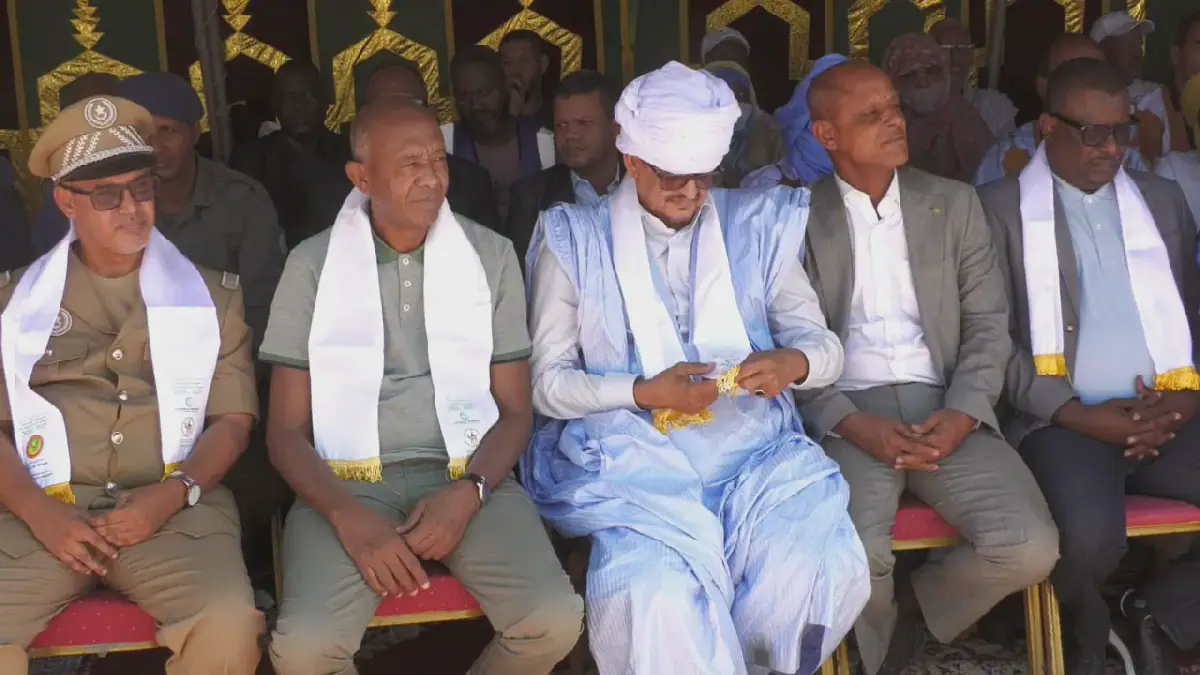
Mauritania's Minister of Livestock, Hmedeitt Ould Chein, officially launched the 2026-2027 national livestock vaccination campaign in the town of Chinguetti on November 12, 2026. The event was attended by local authorities, including the Wali of Brakna, Mohamed Ahmed El Mouna, and the President of the Brakna Regional Council, Mohamed El Moustapha Ould Mahmoud. The campaign aims to protect the country's livestock, a crucial sector for the national economy and rural development.
The livestock sector is a fundamental pillar of Mauritania's economy and a primary driver of rural development, according to Minister Hmedeitt Ould Chein. The minister emphasized the government's commitment to this sector, as highlighted by President Mohamed Ould Cheikh El Ghazouani. The vaccination campaign is based on data from the 2024 general livestock census, which will target 10 million small ruminants against the peste des petits ruminants (PPR) and 3.5 million cattle against the péripneumonie contagieuse bovine (PPCB).
The vaccination campaign will be implemented over four months, with 66 veterinary teams deployed across the country's wilayas. The teams will be equipped with vaccines against priority animal diseases identified by local breeders. The campaign is supported by the second phase of the Regional Program for Pastoralism Support in the Sahel (PRAPS 2), funded by the World Bank. Minister Hmedeitt Ould Chein expressed his gratitude for the World Bank's constant support.
Local authorities and breeders' representatives attended the launch event, highlighting the challenges faced by pastoralists in the region. The mayor of Bouhdida, Ahmed Ould Abeidi Ould Mouloud, drew attention to the lack of designated pastoral areas in his commune, calling for a sustainable solution to secure breeders' activities. They also requested urgent supplies of animal feed and veterinary medicines in light of this year's rainfall deficit.
The representatives of the National Assembly of Pastoral Associations and the National Federation of Breeders reaffirmed their commitment to mobilizing producers to ensure the success of this health prevention campaign. The campaign's objectives are ambitious, with a focus on protecting the country's livestock against priority diseases. The government has allocated significant resources to implement this campaign.
The vaccination campaign is a critical component of the government's efforts to support the livestock sector. The sector provides a source of income for many Mauritanian families and plays a vital role in the country's food security. The government has taken steps to address the challenges faced by breeders, including the provision of animal feed and veterinary medicines.
The launch of the vaccination campaign marks an important step towards protecting Mauritania's livestock and supporting the country's rural development. The campaign's success will depend on the collaboration of local authorities, breeders, and other stakeholders. The government has expressed its commitment to working with all stakeholders to ensure the success of this critical initiative.
Key points
- The vaccination campaign targets 10 million small ruminants and 3.5 million cattle against priority animal diseases.
- The campaign is supported by the World Bank-funded PRAPS 2 program.
- Local authorities and breeders' representatives have highlighted the challenges faced by pastoralists, including the lack of pastoral areas and animal feed.