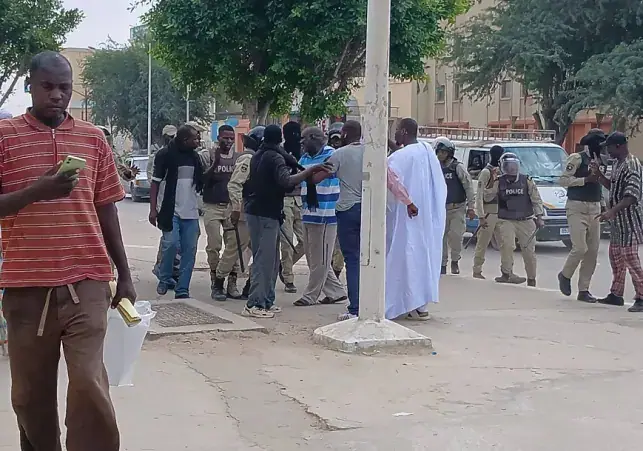
On Wednesday, November 5, 2026, Mauritanian police violently repressed a peaceful sit-in organized by anti-slavery activists from the IRA (Initiative for the Resurgence of Abolitionism) in front of the Ministry of Justice. The protesters were demanding the release of three imprisoned colleagues: Abdallahi Abou Diop, El Hadj Id, and Bounass Ahmeida, who were sentenced to four years in prison for exposing a case of slavery.
Several IRA activists were arrested, and many others were injured and taken to the national hospital. Journalists covering the event were also beaten by police, and their work was disrupted. One journalist described the situation as worse than what occurred during military regimes, stating that democracy in Mauritania remains an illusion and that only the "democracy of generals" prevails.
IRA figures stated that the protest was announced in advance and that their activities are part of their mission as a legally recognized organization. They vowed to continue protesting against the regime's injustices, despite repression. The imprisonment and conviction of the three IRA leaders demonstrate, according to activists, the regime's intention to stifle dissenting voices, particularly on issues related to slavery and protecting slave owners.
The IRA movement's communiqué condemned the violence and ill-treatment inflicted on its activists, describing it as unacceptable and unjustifiable. The communiqué addressed President Mohamed Ould Cheikh Ghazouani and his government, stating that repression is not a solution and that silencing voices will not create stability but will instead increase resentment and erode trust.
The protest was attended by several prominent IRA figures, including the wife of leader and deputy Birame Dah Abeid, Leïla Ahmed, and deputy Marième Cheikh Dieng, who was also a victim of losing her parliamentary seat. Activists argue that the regime's actions are part of a broader pattern of human rights abuses and impunity in Mauritania.
The IRA movement is demanding an end to the repression and persecution of its activists, as well as respect for citizens' rights and dignity. Activists emphasize that their struggle is for a state based on the rule of law, where citizens' rights are protected, and those responsible for abuses are held accountable.
The incident has sparked widespread condemnation of the Mauritanian government's handling of the protest. The IRA movement's determination to continue advocating for human rights and an end to slavery in Mauritania remains unwavering, despite the repression and challenges they face.
Key points
- The Mauritanian government has been criticized for its handling of the protest, with activists and journalists condemning the use of violence against peaceful demonstrators.
- The IRA movement is demanding the release of three imprisoned colleagues who were sentenced to four years in prison for exposing a case of slavery.
- The incident highlights the ongoing challenges faced by human rights activists in Mauritania, particularly those advocating for an end to slavery and impunity.