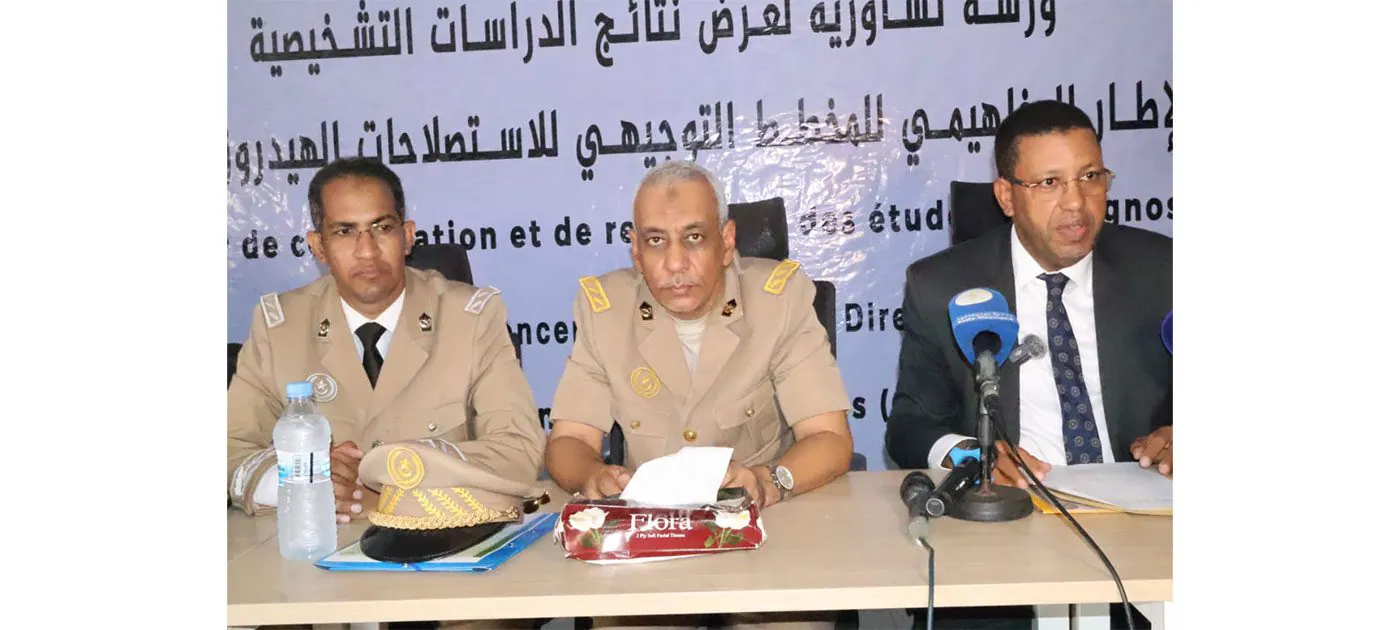
On October 2, 2026, Mauritania's Ministry of Agriculture and Food Sovereignty, in collaboration with the National Company for Rural Development (SONADER), hosted a consultative workshop in Kihid. The event aimed to present the final report on the diagnosis and conceptual framework for the country's hydro-agricultural development plan. The plan focuses on the Mauritanian part of the Senegal River, with the goal of providing a reference for organizing and directing irrigated agricultural development.
The workshop brought together various stakeholders, including authorities, elected officials, farmers, and technical actors. The plan's development is supported by the Food and Agriculture Organization (FAO) of the United Nations, the World Bank, and the French Development Agency. According to Mauritania's Ministry of Agriculture, the plan seeks to develop a long-term vision for hydro-agricultural development in the region, improving land and water resource utilization, and enhancing infrastructure.
The plan's preparation is based on a comprehensive diagnosis of the agricultural, environmental, social, and economic situations in the region. This diagnosis includes an evaluation of hydro-agricultural infrastructure, soil studies, and the development of an agricultural information platform. The platform aims to gather and organize data related to agricultural areas and development, providing a basis for planning and decision-making.
During the workshop, participants discussed the results of studies conducted on the region's agricultural potential, soil conditions, and water resources. The studies' findings will inform the development of the hydro-agricultural plan, which is expected to provide a framework for sustainable agricultural development in the region. The plan's implementation is expected to improve agricultural productivity, enhance food security, and promote sustainable development.
The Mauritanian government has emphasized the importance of stakeholder engagement in the plan's development. The workshop provided a platform for participants to share their observations and suggestions, which will be incorporated into the plan's finalization. According to the government, the plan's success depends on the active participation of all stakeholders, including farmers, local communities, and technical actors.
The FAO representative in Mauritania, Maki Abdou Rahman, praised SONADER's role in implementing the studies, which have contributed to identifying areas of intervention and defining project needs. Rahman emphasized the importance of basing the plan on national expertise and international experiences, ensuring that the plan's recommendations are practical and feasible.
The workshop's outcomes are expected to contribute to the development of a comprehensive hydro-agricultural plan for Mauritania. The plan's implementation will depend on the effective collaboration of all stakeholders, including government agencies, international organizations, and local communities. Key points include:
Key points
- The plan aims to improve agricultural productivity and enhance food security in Mauritania.
- The plan's development is supported by international organizations, including the FAO, World Bank, and French Development Agency.
- The plan's success depends on the active participation of all stakeholders, including farmers, local communities, and technical actors.