An independent commission of inquiry in Mauritania has uncovered several irregularities and shortcomings in the implementation of the emergency program by the National Electricity Company (Somelec). The commission's report highlights issues with the attribution of a market to an unqualified bidder, changes to cable manufacturers and specifications without prior proof of equivalence, and the commissioning of the project without a protocol in place. These irregularities involved various stakeholders, including the Ministry of Energy and Oil, Somelec, and several individuals.
The commission's report notes that the Ministry of Energy and Oil, as the project owner, failed to formalize the monitoring of the convention, lacked proof of periodic reports on the program's progress, and had gaps in administrative, financial, and technical supervision. Somelec, as the delegated project owner and operator, was also found to have shortcomings, including a lack of prior technical studies, irregularities in the bidding process, and delays in recruiting a consulting engineer due to a lack of internal expertise.
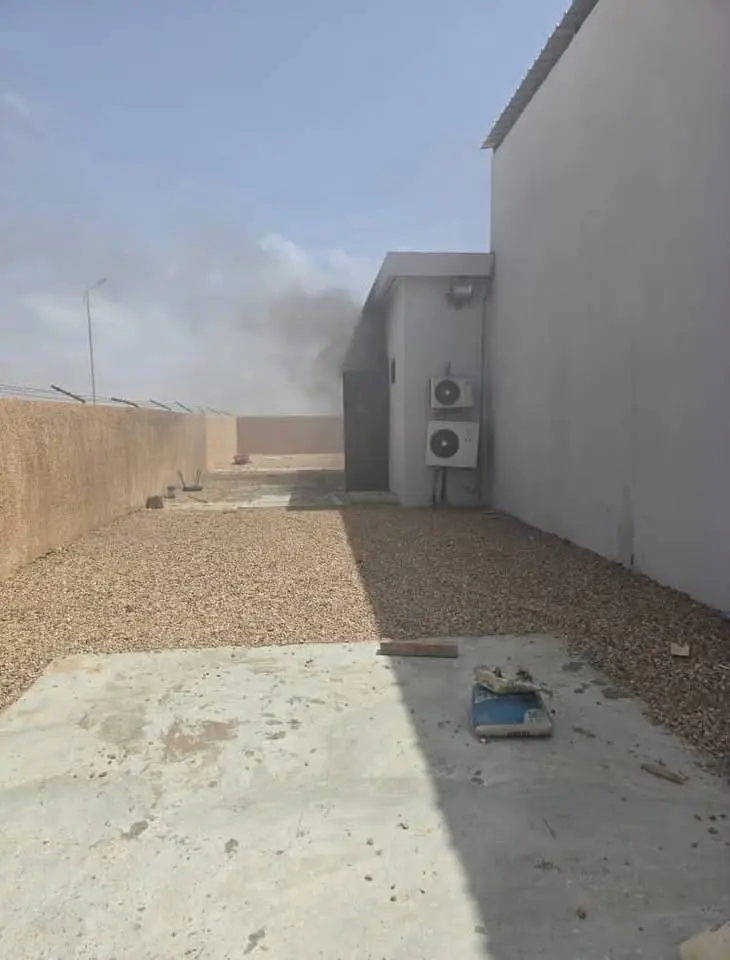
The commission's investigation revealed that the project was commissioned without a protocol in place, despite outstanding reservations and incomplete protection systems. Additionally, there were gaps in fire prevention and risk management. The report also highlights shortcomings in the system of monitoring and control within the Ministry of Energy and Oil and the supervision of structures responsible for implementing the program.
The commission's report identifies specific responsibilities of various individuals, including the former Director General of Somelec, Sidi Ould Salem, who launched the project without prior technical studies and made decisions that weakened the control system. The current Director General of Somelec, Akhrambali Lahbib, was also found to have shortcomings in monitoring the project, including the delivery and loading of cables, and not applying delay penalties.
The commission's report notes that the Director General of Electricity and Renewable Energies had responsibilities that included technical and documentary checks, examining payment requests, and justifying opinions and correspondence related to validations. The report also highlights the role of the Central Director of Distribution and Program Coordinator, who had shortcomings in technical monitoring and approving technical specifications.
The commission's investigation found that the market was awarded to an unqualified bidder, CTM Bâtiments, and that the company's document was not validated by the issuing authority. The report also notes that there were no preventive measures in place to isolate the other two connections after the first incident.
The commission's report outlines several key recommendations and findings, highlighting the need for improved monitoring, supervision, and technical expertise in the implementation of emergency programs. The report emphasizes the importance of adhering to protocols and ensuring the conformity of equipment with contractual obligations.
Key points
- The Mauritanian commission of inquiry found significant irregularities in the implementation of the National Electricity Company's emergency program, including the attribution of a market to an unqualified bidder and shortcomings in technical monitoring and supervision.
- The report highlights the responsibilities of various individuals, including the former and current Directors General of Somelec, and the Central Director of Distribution and Program Coordinator.
- The commission's findings emphasize the need for improved monitoring, supervision, and technical expertise in the implementation of emergency programs in Mauritania.